Pages

Showing posts with label grains. Show all posts

Monday, October 14, 2013

Frugal Foodie on a British Pound: Efficiency

One of the economic principles often thrown around, even in everyday parlance, is "economies of scale." The idea, whether in manufacturing cars or growing food, is that once there is a system in place to produce something (let's say an assembly line for a Chevy Volt), the added cost of producing an extra unit is minimal. Those large, upfront capital expenses have already been spent, so each extra car you churn out just makes each extra car more profitable. Ok, now this is grossly simplified, and there is a point at which this concept no longer holds, but you get the idea.
So, why on earth am I giving you an economics lesson? Well, this idea holds some water when you try eating on a budget. First of all, there are the economies of scale in purchasing food. You are going to spend more money buying a sandwich everyday from a local shop than if you purchased a loaf of bread, some peanut butter (don't get me started about the UK and PB...), and a jar of jam to last you a week or two. It's also generally cheaper to purchase 2 kg of beans than 250 g. Now, if you have a short attention span or tire of the same or similar foods quickly, then skip to the end of make some mung beans.

If you are like me and don't mind reruns throughout the week, then consider how economies of scale can apply to meal preparation. I can spend an hour and a half or two cooking up some barley, mung beans, and roasted cauliflower, stow it away in Rachel-sized tupperwares, and be set for the next four days. As a student (or a busy working professional, or a parent, or almost anybody really), where other food options are dishearteningly costly and/or unhealthy, there is great utility in this. Don't get me wrong; I am fully supportive of non-economic meals, where solo or with a group, one can spend hours crafting a delicious dinner, sit down and eat at a leisurely pace. But sadly, this is not always possible in our modern society, and sometimes we just have to fall back on industrial revolution thinking.

All of this, though, is just to preface a tasty bowl of tandoori-spiced mung beans and barley, with a side of oven-roasted cauliflower! Easy meal to prep in larger quanities (this amount usually is good for 3-4 lunches or dinners for me, but you could definitely scale up). If you get bored easily, try changing this up by lining up a side veggie, topping a salad green, or adding in some vegetable stock for a soupy transformation.

A Practical Pulse
1 cup dry mung beans, soaked overnight
1 cup dry hulled barley, soaked overnight
3-4 cups water
2 medium carrots, chopped
1/2 onion, chopped
2 garlic cloves, minced
1 tsp coconut oil
3 tsp tandoori spices (mix ginger, cumin, corriander, paprika, turmeric, and cayenne in equal parts, or go fancy and try this!)
Salt to taste

1. Heat oil over medium-high in a pot. Once melted sautee onion until starting to become translucent, then add in carrots and garlic. Cook for another five minutes.
2. Add 3 cups of water and bring to a boil before throwing in the mung beans and barley. Cook covered for about 15-20 minutes, until tender, checking every five minutes or so and adding water as needed.
3. Once liquid has all been absorbed or evaporated, season with spices and salt. Serve with some roasted cauliflower or on top of a bed of kale.

Enjoy! Sub in some short-grain brown rice instead of barley, if going gluten-free. And make sure to check out other tasty meals at Wellness Weekends!

Monday, October 7, 2013

Frugal Foodie on a British Pound: An Orphan Crop

Quinoa has been the talk of the town for a few years now. It's the vegetarian superfood - a powerhouse of protein and micronutrients, all the while gluten-free. That may be true, but it's not the be-all and end-all of grain-like substances. In fact, during my first brush with the Live Below the Line Challenge, I honed in on millet as a very inexpensive, nutritious, and satisfying staple. However, millet is likely more of an "orphan crop" than its more well-known counterpart, quinoa. Orphan crops are those that generally lack institutional funding in research and development for improving the yield and production practices of crop varieties, or building strong connections with markets and trade.

Millets, another group of small-seeded grasses, is most widely consumed by humans and livestock in developing countries, where 97% of the production takes place. And although the centre of origin for millets is likely situated in Africa, it has been cultivated as a staple in East Asia for the past 10,000 years. What makes millet so enticing, is its ability to grow in poor and infertile soils, and under drought conditions. More recent research programs are exploring the diversity within millet that could help boost nutrition while also weathering some of these impending shifts in growing environment. Though finger and pearled millets are the most common around the world, Proso millet is cultivated in the United States and is likely the variety you will find on your grocery shelves.

Curried Millet Sweet Potato Cakes
1/2 cup cooked millet
1/3 cup brown lentils, dry
1 medium sweet potato, roasted in oven until soft
1/4 yellow onion, chopped
1 small clove garlic, minced
1 tsp curry powder
Salt to taste
2 tsp olive oil, for skillet

1.  Heat 1 tsp of oil in a skillet on medium-high heat. Sautee onions for about 3-5 minutes, until beginning to become translucent, then add in garlic. Pour in 1/2 cup of water and bring to a boil. Add lentils and cook for 15-20 minutes until lentils are soft.
2. Remove skin from sweet potato. In a bowl, mash the potato flesh and lentil mix until pretty smooth. Add in cooked quinoa, curry, and salt and combine until even.
3. Heat remaining oil in a skillet over medium-high heat. Form balls (about 3), flatten, and then place onto skillet when oil is hot. Cook until one side is brown, then flip, for about five minutes on each side.
4. Serve over a bed of greens and enjoy!

See also my Millet and Mung Beans. Check out more scrumptious vegan and gluten-free delights on this Wellness Weekend!

Saturday, September 28, 2013

Changes Afoot: A Fruitful Holiday in Sicily

I feel like my posts of late have begun all too frequently with apologies. Apologies for the infrequent postings. Apologies for the lack of recipes or for the lack of originality. After a solid two weeks since you last heard from me, I believe another apology is in order, and perhaps an explanation.

For the past three years, I have inhabited the District of Columbia, our nation’s capital. However, the past four weeks have seen my life thrown up in the air, with the pieces landing all in a mess; some semblance of order has begun to take shape over the past few days. I’ve taken a leap across the Atlantic, briefly popping into Iceland, embracing a mindful week of yoga in Sicily, and finally starting as a master’s student in geography in the UK next week. What this means is that changes are afoot.

Considering all of this, and a probable paucity of blog-writing time, My Munchable Musings will also experience some scaling back. I’m going to attempt to post a couple of shorter items and one longer thought piece weekly and see how it all goes. With new surroundings, there should be no shortage of material! In the meantime, let’s play a bit of catch-up.

Sicilia. Yes, back again. This time, though, the island managed to outdo itself in seasonal produce. Fruit was in abundance. I was pleased to see that the peaches and plums I had only just abandoned in the US were still plentiful at Sicilian markets. Figs were on their way out, but I was able to get in my fill of nature’s candy. And then there was the melone giallo. We likely would not have given it a shot, a second thought, had the previous visitors not left one in our house. It was juicy, sweet, and absolutely delicious. What’s more, they were grown and sold everywhere!

In fact, these melons (Paceco Cartucciaru) are so plentiful, they are literally left to rot in the fields. They are also exported around Europe (still in markets here in the UK!), and they can hold up two months, just getting sweeter and more flavorful, like a good aged wine (?!). I'm leaving you with a recipe, albeit not one related to melons.

Orzo con Ficchi e Mandorle
1 medium onion, chopped
1 clove garlic, minced
1 pint ripe figs, quartered (about 1 cup)
½ cup toasted almonds, chopped
1.5 cups barley, soaked overnight
2 cups water, plus more as needed
1 tbs olive oil
Salt to taste

1.     Heat oil in a skillet over medium-high heat. Add onions and cook about five minutes until translucent, adding garlic after 3 minutes or so.
2.     Pour in water, salt lightly, and bring to a boil. Pour in barley and cook covered for about 20 minutes until tender and water has all been absorbed. Add additional liquid if the barley isn’t done and the water is gone.
3.     Cook another five minutes with the figs and almonds. Serve warm with a delightful citrusy salad.

Wednesday, April 24, 2013

My Munchable Soapbox: Loving the Lentils

This post has sat in my drafts folder for many weeks now, waiting for the right motivation to hit. In fact, it has languished since the NPR article on lentils came out nearly two months ago. But now, with the Live Below the Line Challenge less than a week away, lentils are very much on my mind. Why does the prospect of subsisting on $1.50 per day conjure up visions of little legumes? Well, lentils happen to provide a whole lot of calories, protein, and fiber for very little cost

Lentils are particularly attractive for the poor and hungry - they are high in protein; don't require much, if any, added fertilizer (they fix their own nitrogen); store easily when dried; and can grow in poor soils and harsh environments. A testament to this, the Consultative Group on International Agricultural Research (CGIAR) estimates that 70% of the lentils produced stay in developing countries. And people have relied on the little lentil for sustenance for over eight millennium!

While there are many ways to cook a lentil, a common thread seems to pervade dishes throughout the world. In Praise of the Humble Lentil begins with an anecdote of a simple lentil-rice dish, Mudardara. Variations of this exist around Mediterranean regions, but also legume+grain dishes are the staple of most people around the globe. Think maize and beans in Latin America. Or cowpeas and sorghum in Africa. Or, mung beans (or lentil dal, yum) and rice in South Asia. Regardless of where you are on the planet, however, this mix of protein and carbs is generally satisfying and nourishing. While not providing the slew of micronutrients that colorful vegetables bestow, it is a critical contributor to feeding a hungry population.

Check back in on Monday to see what's on the menu for the week! And consider contributing to my efforts to raise funds for the Rainforest Foundation.

Photo Credit: ICRISAT

Monday, April 22, 2013

What's Cooking? On the Wild Side

Today is the 43rd observance of Earth Day. While some might argue about the futility of an uphill environmental battle - how far have we really progress in close to half a century? - to me the encouraging piece is how much the shape of the discussion really has changed. Today is not your 1970's America, where a burgeoning environmental movement would be considered hippie-fringe. Sure, back in 1962 Rachel Carson had brought to the forefront the serious impacts of disregard for environmental well-being on nature and human health. But a growing awareness among the general public and active, vocal opposition are quite different.

This is not to say that acceptance and consideration for the environment is entirely mainstream, or that goals of the movement are even being met. It seems like now every cause has its celebrity (including the range of environmental issues), and that the facade, the image, holds more weight than tangible outcomes. All that said, the globalization of environmental awareness and growing urgency and pressure to act has never been stronger. This year's Earth Day theme is "Faces of Climate Change," which I think is particularly indicative of the shift from a domestic, 'my back yard' approach to conservation and environmental issues, to a better understanding of the interconnections between each of our actions and sustainability. Particularly with a challenge such as climate change, which really is a problem on a global scale, it can not be solely about one individual or one country's action.

While not really related to Earth Day or global environmental or food security issues, wild rice for some reason makes me feel closer to the planet on which we leave. Perhaps because it's more rustic, less refined, and is actually native to North America. Who knows? But bringing up food and how we grow it on Earth Day especially is critical. Rice crops themselves are hugely impactful around the world - using considerable water resources and oftentimes involving significant inputs of pesticides and fertilizers. At the same time, depending on who you ask, between one and three billion people depend on rice for calories and nutrition. Wild rice, while probably deviating some now that it is sold in grocery stores, is a grain traditionally foraged by Native Americans (though also grown in China and other places) in swampy areas and more nutritious than polished and processed white rice that dominates the world's markets. I'm not saying that it is even feasible to feed the world on wild rice (that would be neat), but that both nutrition and environmental concerns are inherent in discussing the ubiquitous rice crop. More next week when rice makes up a much more significant portion of my own diet!

Wild Side Rice Salad
1/2 cup wild black rice, soaked for 2-5 days (in refrigerator)
1/4 cup pistachio nuts, shelled
1 sweet potato, cubed, roasted
1 tbs orange juice or orange vinegar
2 tsp dijon mustard, coarse grain
Salt to taste
Cinnamon or cardamom to taste (optional)
3-4 dried apricots, chopped (optional)

This is one of those toss-n-go salads. There is a bit of foresight necessary...or you can start soaking wild rice and then forget about it for close to a week like me. Regardless, toss all component pieces together until evenly coated. Enjoy!

I'm also posting this on Wellness Weekends and Slightly Indulgent Tuesdays. Also, awesome Google Doodle...

Friday, November 30, 2012

Best of MMM: Of Mungbeans and Millet

Let's follow Wednesday's vein of grains, and re-examine this notion of 'orphan crops' (explained below). I added a bit of Asian flare to this post from last year, and thought it would be timely to bring it back out, considering my current location. Also, happy last day of November...
---
Wheat, rice, soy, and corn make up the majority of the crops traded on a world market and providing about one third of calories to people around the globe. While these commodities obviously play a critical role in food security, a large segment of crops remains out of the limelight, but still very much vital to allaying hunger primarily in developing countries. These edibles, local in production and consumption and neglected in the area of agricultural investment, are known as 'Orphan Crops.' To feed a hungry planet, more investment needs to go towards propagating and improving these varieties.

Millet is one of the orphan crops adapted to dry conditions. Cultivation dates back 10,000 years in Eastern Asia, and it seems to have predated rice on the Asian continent. Now, India produces the greatest quantities of millet, though it is also widely grown in parts of Africa and China. Like quinoa, this grainlike seed actually comes from a grass, and is used largely as a flour, porridge, and animal feedstock. In Taiwan you can even get millet beer, or the liquor rakshi in Nepal!

Mung Beans are another ancient crop native to Pakistan and India. Where in Asia, Africa, and parts of Latin America, mung beans are a nutritious legume for consumption in soups and curries, in the U.S. the beans are really only recognized as your salad bar sprouts! They are also ground into flour to produce cellophane noodles and are rich in fiber and protein.
Last night, I took my inspiration from the Indian tradition of Moong Dhal, a dish that is supposed to balance the three doshas in the Ayurvedic tradition. For my millet, I based my recipe on Mark Bittman's Autumn Millet Bake.

Depth of Winter Millet Madness (serves 2 - vg/gf)

1/2 cup dry millet
2/3 cup water or mild vegetable stock
1 tbs olive oil
1/2 delicata squash, quartered and sliced (no need to skin)
seeds from squash, pulp removed
2 large collard greens or lacinato kale leaves, roughly chopped
1/2 tsp cinnamon
1 tbs agave nectar
salt to taste

1. Heat half the olive oil in a sauce pan over medium heat, and toast the millet for 2-3 minutes until lightly toasted. Add liquid and raise heat to bring to a boil. Reduce heat, cover, and simmer for 20-30 minutes, check to see if more liquid is needed or desired texture has been reached.
2. Meanwhile, in a preheated 375F oven place a an oiled (with the rest of alottment) pan with squash and seeds, salted and spread evenly. Bake for 10 minutes, and then remove the seeds and let cool. Flip the squash and cook another 20 minutes until very tender.
3. Once millet is cooked - I like mine slightly toothy - add greens, cinnamon, and agave. Cook until greens are thoroughly wilted. Throw in your squash and seeds. Salt to taste. Serve with a good and nourishing dhal!

Although I might be enjoying these orphans for their nutritional benefits and overall flavor, what role do they have in an ever-consolidating world food economy? Stanford Professor (and my World Food Economy Prof!) argues that investing in these locally-adapted crops will prove to be critical to adapting to global changes and feeding the growing population in the developing world.

Wednesday, November 28, 2012

Best of MMM: Ancient Grains

As you probably gathered from Monday's rerun, I'm not in the good ol' U.S. of A at the moment. But I happen to be spending the week in the birthplace of our grain crops! Today I'm dusting off some musings on ancient grains...
---
Not the literally 3,000 year-old grains...
Grains make up a large portion of our diets. In fact, the three main grain commodities - wheat, rice, maize - make up nearly 2/3 of the global human energy intake! These crops are essentially grasses that we've cultivated over thousands of years to produce larger, edible fruits - the grains (composed of endosperm, germ, and bran). Some 12,000 years ago the first of the cereal crops, namely emmer, wheat and barley, were domesticated in the Fertile Crescent (yup, that region of all the Middle East unrest).

But there are other cereals that are now staples in certain regions. Sorghum and millet are staple (gluten-free!) grains of Asia and Africa. Quinoa is a pseudo-cereal grown in the Andes. Our focus today, though, is amaranth, another pseudo-cereal originally from South America and now prevalent in Africa.

Cultivation of amaranth began around 8,000 years ago by the ancient Aztecs. In fact, the dates of 7 - 26 December comprise the Aztec month dedicated to the hummingbird god Huitzilopochtli and celebrated with a wide uses of amaranth. The grain was revered for its nourishing and energizing qualities, but fell out of use when Europeans invaded the content. There are approximately 60 known varieties, however, they are often considered to be weeds. Even so, it is high in protein, fiber, amino acids, calcium, and iron! Anywho, amaranth has a long and interesting history, in addition to its currently lauded status of being a gluten-free grain.

Amaranth Porridge
1/2 cup dry amaranth
1 cup water (I subbed in 1/4 cup coconut milk; can also use cider!)
1/4 cup chopped walnuts
1/4 cup chopped apple
1 tsp cinnamon
10 drops vanilla stevia

1. Bring liquid to boil in a small saucepan. Add amaranth. Cook for about 20 minutes until grains soften (should be similar to quinoa).
2. Add stevia and cinnamon. Stir and then top with chopped apple and walnuts (or other nuts...pecans would be lovely) for a hearty breakfast...or even dessert!

Want other recipes for amaranth? Try these:

And visit Wellness Weekends for some other health gluten-free, vegan recipes!

Monday, August 27, 2012

What's Cooking? Roasted Corn Farrotto

Another month come and gone. It's been a good two weeks since I last wrote (yikes!), which means summer has progressed considerably. We've moved from blueberry season past the height of peaches (which was two weeks early), and now there are corn and tomatoes to spare. After an afternoon canning to my heart's content, I had tomato stock leftover. This delightful risotto, made with barley (you can also use farro), employs the produce available as summer comes to an end.

Roasted Corn Farrotto
1/2 cup white beans, pureed with 1 tsp olive oil
1 ear corn, shaved and roasted
2/3 cup pearled barley, dry
1 1/3 cup vegetable or tomato stock (I used the leftover liquid from making tomato sauce)
Salt to taste
3-4 leaves basil, chopped (optional)

1. Bring stock to a boil. Add barley and cook until just about tender.
2. Combine bean puree and continue to cook another five minutes, until thick.
3. Mix in corn (and basil, if including). Serve!

Squeezing this into Wellness Weekends!

Monday, May 7, 2012

What's Cooking? The Plan


That day has arrived, the first in a week of eating below the poverty line. Some of my friends have voiced concern over nutrition, and others are convinced I'll just starve. I will let you judge; here is what's on the menu (dry quantities):

Breakfast:
1/4 cup millet
1 banana

Lunch:
1/2 cup pearl barley
1/2 cup green lentils
1 carrot

Dinner:
1/4 cup millet
1/2 cup soybeans
1 carrot

So because it is a bit monotonous, and lacking in leafy greenery, a day's repertoire provides a pretty skewed nutritional profile. It is low in calories, fat, calcium, vitamin B12, and fresh produce. It is high in protein and fiber. Calories: 1500; Fat: 23g; Protein: 76g; Fiber: 60g. Recommended Daily Allowance (RDA): Calories: 2200; Fat: 70g (30%); Protein: 70g (active female); Fiber 20-35g. And so while this is not ideal, people can subsist off of these grains and legumes (see tomorrow's post on what the world eats!).

So, cost. Amazingly, I purchased almost everything from Whole Foods! I did my homework, checked different grocery stores, and ultimately found the bulk beans for certain staples to be the most economic. And guess what? I even had seven whole cents to spend on sea salt! Here's the breakdown:

16 oz bag carrots (organic), Trader Joe's - $0.89
6 bananas, Trader Joe's - $1.14
16 oz green lentils (bulk dry), Whole Foods - $1.49
15 oz yellow soybeans (bulk dry), Whole Foods - $1.28
16 oz pearled barley (bulk dry), Whole Foods - $1.39
14 oz millet (bulk dry) Whole Foods - $1.24
35 g salt (scaled price), Trader Joe's - $0.07

Total: $7.50

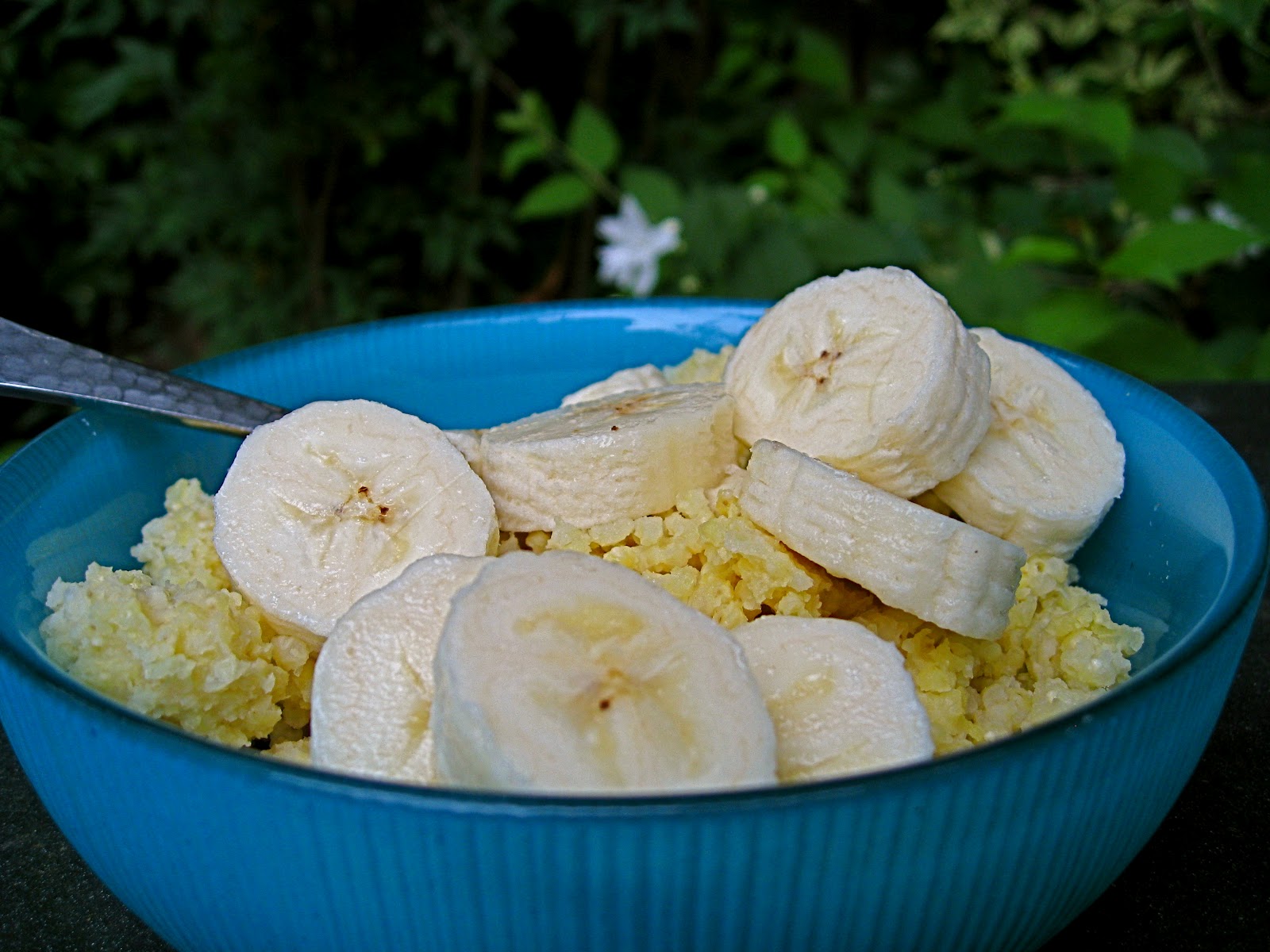
Finally, even though it is really not much of a recipe, I do want to mention my week's breakfast option - Banana Millet Morning Mush! Take 1/4 cup millet and boiling 1/2-2/3 cup water, cook until millet has absorbed all water and is soft. More water means more mush. Either slice (my preferred, not very ripe banana) or smash the banana and add along with a pinch of salt. Voila. Cheap, filling, relatively nutritious (oh, walnuts would make this!), and vegan, gluten and sugar free!

Despite its simplicity, I'm still posting it on Wellness Weekends.
Also, check out A recent NPR article on rice and beans as a major staple dish in the world.

Monday, April 16, 2012

What's Cooking? A Weeknd in the Woods

Some times, with all of the concrete and buildings. the motivation to escape the city limits and venture into less charted territory becomes overwhelming. On this fine weekend in April, I flew the coop. Traipsing along trails in the in the George Washington National Forest, it was great not to think about the things that bog down life - including internet and email (sigh) - and to get some more "tree" time in. 


One of my favorite things about hiking is, what I feel, justified free reign to consume trail mix to my heart's content. With chipmunk-like tendencies, any way, I seem drawn to the mixture of nuts, seeds, dried fruit, and chocolate. But, by the end of a day of hiking, it is often nice to have a cooked meal. Though my outing experience is not extensive, I have become relatively adept at concocting relatively "gourmet" camping dinners. Usually, these rely on quick-cooking dried soups and grains. This time, some couscous, smooshed tomatoes, leftover salad mix, and a seasoning packet (called Poultry Magic, but no fowl play there...) made a really delightful meal.

Cookstove Couscous (serves 3-4)
1 cup dry couscous (or quinoa*)
1 cup water, boiling
1 cup salad mix/greens**
2 tomatoes, coarsely chopped
Seasoning (mix of paprika, onion, garlic, thyme, oregano, and salt)

1. Bring water to boil in a camping stove. Turn off gas and add couscous. Allow to sit for five minutes. 
2. Mix in chopping tomatoes and seasonings. Add greens right before consuming. Voila!

* I added in a quinoa option for a gluten-free, and more nutrient-dense option. Please note, that the preparation is slightly different for this, and will require more time. Add an extra half cup of water, add quinoa while water is boiling and let cook for about 20 minutes. Once the quinoa has cooked, you can add other ingredients. I have made quinoa on camping trips before, so am confident it works!
** Fresh greens not recommended past a day or so without refrigeration (unless it's pretty cold outside).

Check out this recipe and more on Wellness Weekend and Slightly Indulgent Tuesday!

Monday, January 9, 2012

What's Cooking? Lickity Split

Remember how when you were little there were foods you didn't want to see, smell, or even know existed? Like those brussel sprouts your mother would steam and serve, or that unappetizing blog of green jell-o with celery, cranberries and walnuts inside ("shape" as they call it in Britain...). Well, split pea soup is what comes to my mind when I think of foods kids wouldn't want to consume, let alone be seen anywhere near. No no, I did not have a traumatic experience with the green mush as a child. In fact, I do not recall a single time in which my mother served it to us.

I believe my first encounter with the split pea was in high school in the form of Amy's Organic soup, after my vegetarian reformation. Now, years later, I've come to realize the beauty of the legume. It is low in fat, high in protein and fiber, and dirt cheap. Yup, green split peas are probably the cheapest dried bean to get in bulk. They also date back to ancient times, bearing mention in the bible and cropping up in archaeological sites. So if you want an ancient protein to go with your ancient grain, try out split peas!

Split Pea Stew
1/2 cup wheat berries, soaked overnight and cooked
1/2 cup green split peas (soaked overnight - optional)
1/2 onion, chopped
1 medium carrot, chopped
2/3 cup vegetable stock (or just water)
15-16oz jar or can of tomatoes
2 tsp curry powder
1 tsp cumin
1 tsp paprika
1 tsp olive oil
salt to taste

1. Saute onions and oil in a medium-high skillet until beginning to become translucent.
2. Pour in water/stock and bring to a boil. Add split peas and carrots, cooking until peas are almost fork tender.
3. Combine tomatoes, spices, and salt, cooking until excess liquid has boiled away. Serve over wheat berries!

I just barely sneaked this one into Wellness Weekends, though sadly without a photograph!
For a vegetarian twist on the classic split pea soup, check out 101 Cookbooks.

Monday, December 19, 2011

What's Cooking? Ancient Grains!

Not the literally 3,000 year-old grains...
Grains make up a large portion of our diets. In fact, the three main grain commodities - wheat, rice, maize - make up nearly 2/3 of the global human energy intake! These crops are essentially grasses that we've cultivated over thousands of years to produce larger, edible fruits - the grains (composed of endosperm, germ, and bran). Some 12,000 years ago the first of the cereal crops, namely emmer, wheat and barley, were domesticated in the Fertile Crescent (yup, that region of all the Middle East unrest).

But there are other cereals that are now staples in certain regions. Sorghum and millet are staple (gluten-free!) grains of Asia and Africa. Quinoa is a pseudo-cereal grown in the Andes. Our focus today, though, is amaranth, another pseudo-cereal originally from South America and now prevalent in Africa.

Cultivation of amaranth began around 8,000 years ago by the ancient Aztecs. In fact, the dates of 7 - 26 December comprise the Aztec month dedicated to the hummingbird god Huitzilopochtli and celebrated with a wide uses of amaranth. The grain was revered for its nourishing and energizing qualities, but fell out of use when Europeans invaded the content. There are approximately 60 known varieties, however, they are often considered to be weeds. Even so, it is high in protein, fiber, amino acids, calcium, and iron! Anywho, amaranth has a long and interesting history, in addition to its currently lauded status of being a gluten-free grain.

Amaranth Porridge
1/2 cup dry amaranth
1 cup water (I subbed in 1/4 cup coconut milk; can also use cider!)
1/4 cup chopped walnuts
1/4 cup chopped apple
1 tsp cinnamon
10 drops vanilla stevia

1. Bring liquid to boil in a small saucepan. Add amaranth. Cook for about 20 minutes until grains soften (should be similar to quinoa).
2. Add stevia and cinnamon. Stir and then top with chopped apple and walnuts (or other nuts...pecans would be lovely) for a hearty breakfast...or even dessert!

Want other recipes for amaranth? Try these:
Butternut Squash, Turnip, and Green Bean Amaranth
Herbed Amaranth Veggie Patties
Mini Veggie Burgers
Leek and Amaranth Polenta
Lemon Blueberry Muffins 
Amaranth and Carrot Porridge

And visit Wellness Weekends for some other health gluten-free, vegan recipes!

Sunday, January 30, 2011

Of Mungbeans and Millet

Wheat, rice, soy, and corn make up the majority of the crops traded on a world market and providing about one third of calories to people around the globe. While these commodities obviously play a critical role in food security, a large segment of crops remains out of the limelight, but still very much vital to allaying hunger primarily in developing countries. These edibles, local in production and consumption and neglected in the area of agricultural investment, are known as 'Orphan Crops.' To feed a hungry planet, more investment needs to go towards propagating and improving these varieties.

Millet is one of the orphan crops adapted to dry conditions. Cultivation dates back 10,000 years in Eastern Asia, and it seems to have predated rice on the Asian continent. Now, India produces the greatest quantities of millet, though it is also widely grown in parts of Africa and China. Like quinoa, this grainlike seed actually comes from a grass, and is used largely as a flour, porridge, and animal feedstock. In Taiwan you can even get millet beer, or the liquor rakshi in Nepal!

Mung Beans are another ancient crop native to Pakistan and India. Where in Asia, Africa, and parts of Latin America, mung beans are a nutritious legume for consumption in soups and curries, in the U.S. the beans are really only recognized as your salad bar sprouts! They are also ground into flour to produce cellophane noodles and are rich in fiber and protein.
Last night, I took my inspiration from the Indian tradition of Moong Dhal, a dish that is supposed to balance the three doshas in the Ayurvedic tradition. For my millet, I based my recipe on Mark Bittman's Autumn Millet Bake.

Depth of Winter Millet Madness (serves 2 - vg/gf)

1/2 cup dry millet
2/3 cup water or mild vegetable stock
1 tbs olive oil
1/2 delicata squash, quartered and sliced (no need to skin)
seeds from squash, pulp removed
2 large collard greens or lacinato kale leaves, roughly chopped
1/2 tsp cinnamon
1 tbs agave nectar
salt to taste

1. Heat half the olive oil in a sauce pan over medium heat, and toast the millet for 2-3 minutes until lightly toasted. Add liquid and raise heat to bring to a boil. Reduce heat, cover, and simmer for 20-30 minutes, check to see if more liquid is needed or desired texture has been reached.
2. Meanwhile, in a preheated 375F oven place a an oiled (with the rest of alottment) pan with squash and seeds, salted and spread evenly. Bake for 10 minutes, and then remove the seeds and let cool. Flip the squash and cook another 20 minutes until very tender.
3. Once millet is cooked - I like mine slightly toothy - add greens, cinnamon, and agave. Cook until greens are thoroughly wilted. Throw in your squash and seeds. Salt to taste. Serve with a good and nourishing dhal!

Although I might be enjoying these orphans for their nutritional benefits and overall flavor, what role do they have in an ever-consolidating world food economy? Stanford Professor (and my World Food Economy Prof!) argues that investing in these locally-adapted crops will prove to be critical to adapting to global changes and feeding the growing population in the developing world.