Pages

Showing posts with label chocolate with a soul. Show all posts

Saturday, March 10, 2018

Cinta Coklat: Indonesia and the Cacao Scene

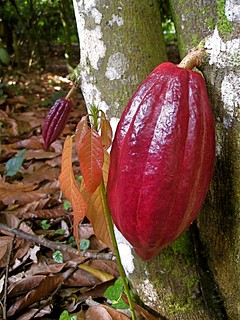
Cacao in Central Region, Ghana
When you think of agricultural products from Indonesia, palm oil is probably the first thing that pops into your head. While the bulk of global cacao still comes from West Africa - particularly Cote D'Ivoire and Ghana - Indonesia clocks in as a close third in terms of the world's largest producers. For the most part, all these beans are exported unprocessed to the US, Malaysia, Singapore (or from Africa, Europe) to be made into chocolate. Unlike West Africa, where there is a narrow band of suitable habitat and climatic conditions - the high forest zone running toward the south - basically, all of Indonesia could viably grow cacao. Right now, about the same area is under cultivation as in Ghana - just for scale, Indonesia has about 8 times the land area - and Sulawesi makes up the bulk of the production area (about 75%), followed by Java and Sumatera.

At this point you may be asking yourselves, "why is she rambling on about cacao again? I thought that was over and community forestry was the new topic du jour." Well, the two are actually related! Very exciting. Cacao is one of these awesome crops that is traditionally grown in the understory of a forest. Young cacao needs shade to protect it during vulnerable stages, and older trees can benefit from the retained moisture and moderate temperatures. Yes, there are also production downsides, but agroforestry models of cacao production are tuned for the long-term, maintaining benefits like soil fertility and structure better than monocropped trees.

Rubber in West Kalimantan, Indonesia
As such, along with coffee, bamboo, rattan, and rubber, cacao has been considered as a potential forest-based "alternative livelihood". Old habits die hard (especially when there is no desire for them to die at all...), so you can imagine my elation when cacao came up in conversations with community forest managers. (... up in northern Borneo, we quickly decided I would have to come back in 2-3 years to "help", once the trees had matured...). Though the prospect may be rather alluring, cacao is still a bit of a mystery to many Indonesian smallholder farmers and forest community.

Why? Well, I don't have a solid answer, so my musings will have to suffice. With regards to the other non-timber forest products: bamboo has always called Asia home and frankly grows like a weed; rattan is a natural forest crop in Southeast Asia that locals have used for centuries in household items; and although rubber is native to Latin America, it received years of attention during the colonial era and has largely remained a smallholder crop. Coffee has its roots in East Africa and a history in the region similar to cacao, yet somehow the product of this understory shrub has fed the global market for centuries and recently embedded itself in Indonesian culture (ngopi much?). Mysteriously, even though cacao - also indigenous to the Americas - has actually been present in the region since the 17th century, and cultivated in Indonesia since the late 18th century, it hasn't garnered the same interest. The crop didn't experience the same colonial heyday as in West Africa, and farmer disinterest combined with pest problems early on meant production remained limited until the latter half of the 20th century. 

But Indonesia's time may have come. It happens to be an ideal place to set up shop in terms of the regional consumer demand and climate suitability. It also offers an opportunity to support multi-use forestry and provide a high-value cash crop for locals in areas where forests may be on the chopping blocks. That said, despite my enthusiasm for cacao as a potential agroforestry crop in community forests, I definitely have a few qualms.

First off, this involves planting non-native species. Not that we haven't already introduced a crazy amount of agricultural products into novel places (hmm, like oil palm, rubber trees, and coffee, to name a few here in Indonesia), but in this case it means doing so within forests meant to be restored or conserved for limited non-timber uses. Would we be losing some of the ecological value in deference to economic by planting non-natives? Or would the benefits outweigh the costs if it means maintaining higher biodiversity and general forest cover than business-as-usual?

Second, it's a slippery slope, towards commercialisation and global markets. In Ghana, cacao started as an understory crop, as well. But over time it has moved to being grown predominantly in full-sun. With government policy supporting the use of chemicals and new sun-loving varieties for greater production, soils have become exhausted, and problems like erosion arise. Would Indonesia follow a similar trend?

And finally, is there the support available to ensure capacity for sustainable production? Fair trade, Rainforest Alliance, UTZ certification, etc. are all active across African and South American growing regions (and present in Indonesia, though more quietly...). There are major research centres in Costa Rica (CATIE) and Colombia (CIAT) that both have cacao programmes and are active in trials and training on both continents (though there is the Indonesian Coffee and Cocoa Research Institute). Asia, well, is new to the scene and generally underrepresented. The industry will continue to be developed here regardless, especially since cacao in other parts of the world is likely to bear the brunt of climate change, so making sure does so with sustainability at its core is essential. 

All of this is to say, if anyone is looking for a cacao agroforestry enthusiast (with little agronomic training but plenty of passion), I'll be on the market for gainful employment in roughly 18 months :)

AND If you're on the lookout for existing awesome Indonesian chocolate, give these a try:
Pipiltin Cocoa is a Jakarta-based bean-to-bar chocolate company that directly sources beans from Bali, Aceh, East Java, and Flores. [more from the founder]
Krakakao is an organic chocolate company that sources directly from farmers in South Sumatra, providing training and support sustainable practices around the Bukit Barisan Selatan National Park. They also have a few bars from Bali, Sulawesi, and North Kalimantan, including my favourite bar, packaged with a slow loris on it ...
Pod Bali was founded on its namesake island and sources all the ingredients locally and supports communities producing cacao in high conservation value areas.

Read More:
The Rise of Southeast Asia Chocolatiers - Michelin Guide Singapore, 2017

Monday, February 26, 2018

Weathering Change: Women Farm Cocoa, Too

You have probably read an article or two (or more) about how climate change is going to be the end of chocolate. Compounded by potential losses of our other favourite indulgences - coffee and wine - this is nothing short of tragic. But what these articles don't really discuss is what happens to the farmers who grow these valuable export crops. Studies documenting how climate change affects rural people generally point out that they're likely to lose income, and that women are particularly at risk of experiencing negative effects. But not everything is about money, and not all women are in the same boat. The coarse resolution at which poverty and gender are often treated means we may get a skewed picture of who is actually vulnerable to climate change and for what reasons.

Back in 2014, I was working on surviving my MPhil degree, and reveling in the joys of fieldwork. From June to September, I was in the Central Region of Ghana, chatting with women in cocoa farming communities about their lives, their work, and the stresses they face. The idea was to get a sense from past experiences of "weather events" - the usual droughts and floods, mostly - in order to get an idea of how climate change could alter the lives of these farmers in the future. While the dissertation may have long since been done and dusted, one piece has lingered in the shadows. After 2.5 years since its first draft, some of the insights from this project finally made it through the peer-review process to see the light of day!

Yes, Kakum looks like a seahorse. Credit: Alex Morel
It's a bit off-point from the usual ecology fare (or maybe that's not so usual these days...). The idea of our little study was to get a better sense of who among cocoa farmers is vulnerable to climate change and how. While by no means the definitive works, the paper describes how women involved in producing cacao are vulnerable in different ways. Because I've been told it's acceptable to celebrate your first first-authored paper, I'm unabashedly taking this time to share the highlights.

First off, why cacao? Besides the logical reason of its being the precursor to chocolate, cacao is an interesting case in a changing climate. A bit of a "Goldilocks" crop - it is best suit to a limited area around the globe - it needs certain amounts of rain, a tight temperature range, and both these things at the right times. So shifts in climate may have severe consequences for cacao crops. One finding from the study was that women who own cacao farms may become more exposed to adverse weather conditions - merely because the crop is particularly finicky - in comparison to those women who don't and grow a range of vegetables and starchy staples that have different optimal growing conditions.
But that's where the relative benefits of not owning cacao seem to end. Farmers are very much like investors - they diversify their portfolios of activities to reduce their sensitivities to any single unfortunate event. Cacao can be a highly profitable cash crop, and the women I spoke with who managed their own cacao had more disposable income and independence to take up a variety of income streams. They could spread their nest eggs across many baskets. Independence was not just about finances, though. The confidence and sense of empowerment that came along with owning cacao differed considerably from the pessimism and hopelessness expressed by many of the women who did not. Someone must have said that "success is a state of mind", and while tangible resources do help, having a proactive attitude can make all the difference in responding and adapting to challenges, not the least of which is climate change.

Couldn't have managed without Auntie Fausti,
who looked out for us while Homaho!
Last of all, while not explicitly part of the analysis, I did notice a strong tendency for women with cacao to point out the importance of ecological stewardship. Perhaps because it is harder for women generally to obtain fertilisers and pesticides used in cacao production; perhaps because many also cultivate the veg that they then feed to their families (and who wouldn't want to feed their kids safe and nutritious food?); or perhaps it's because many have inherited land after farming all their lives and building up knowledge of ecology over time, rather than receiving agricultural extension training focused on technology and inputs (also largely unavailable for women). Perhaps that is a question for another research project!

Unfortunately, none of this solves our chocolate predicament. But hopefully it's a step toward more nuanced ideas for helping farmers face the current and pending climate changes.

Read the full paper, if you're feeling ambitious...
Vulnerability of Ghanaian women cocoa farmers to climate change: A typology. Climate and Development. doi: 10.1080/17565529.2018.1442806

Related Posts:
So much thanks to my co-authors- Mark and Emily, Rebecca for constructive comments on the paper and support in the field, and all of the ECOLIMITS team for letting me tag onto the project. This would not have been at all possible without the amazing interpretation skills of Anne, the local know-how and tech support of Mike and Prosper, and of course all the women who gave their time (and often food and hospitality) in opening up about their lives and contributing to this project. I'm forever grateful, and hope one day this can help in some small way. Medaase!

Saturday, August 19, 2017

For the Love of Chocolate

-->
Hola devoted readers! I’m writing to you after a little adventure in Colombia recently came to a close. While I voyaged across the great ocean in order to present at the International Congress on Conservation Biology (yes, I did do some work…), I stayed for the biodiversity and agroforestry.
Colombia is a biodiversity hot spot, with endemic species of fauna and flora, as well as a range of alluring ecosystems to explore – from montane rainforests to savannas, beaches, and deserts. Even staying along the Caribbean coast, I found the elevation gradient provided a wealth of possibilities - sandy beaches bordering bathtub-warm water; sticky tropical rainforests, and the cooler montane forests that seem perpetually on the cusp of being shrouded in clouds. While the country is a birder’s paradise (over 1900 speceies), the attraction for me was in the coffee and cacao farms scattered around.
I was won over by Minca, a town about 45 minutes drive outside of Santa Marta, which climbs into the mountains a couple thousand meters above sea level. We stayed for a night on a coffee farm, turned bed-and-breakfast/retreat, tucked into the hills. Then I trekked up the next day to La Candelaria coffee and cacao farm for a bit of a tour from bean to belly. The owner, Eugenio, inherited this 85-year-old farm from his father (and grandfather before that), which spans 10 hectares of coffee, cacao (2 ha), and fruit tree, plus pasture for mules (so about 10 sports fields...). At the moment, he is in the process of converting to organic certification, which follows three main principles:
  • To foster bird habitat on the farm, there are dozens of different types of fruit, including mangos, oranges, and ten types of bananas!
  • No chemical inputs are used, so compost replaces fertilizer, salt water stands in for the fungicide against black pod disease, and frequent harvesting saves cacao pods from pesky birds and squirrels.
  • And while he didn’t provide details, fair and safe labour practices are an element of certification. 
As a small farm, they don’t have the capacity to make and sell fully processed chocolate bars, so I escaped with bags of pure cacao (think unsweetened chocolate bar). You're not going to find this stuff in your local chocolate shop.

But you might find the coffee ... well, you might find Colombian coffee with beans from many farms. Eugenio admitted that most of his sales are to domestic restaurants/cafes and tourists. That's because coffee gets a bit political. The Federacion Nacional de Cafeteros de Colombia controls all coffee exported from the country, requiring permissions if farmers want to ship any of their product overseas. While this is not necessarily a bad thing, as it ensures a standard of quality for coffee and helps to avoid prices fluctuations, it also can make things difficult for a small farmer who has higher marginal costs for the amount of coffee he produces.

This has some implications for the "direct trade" coffee en vogue at the moment. The idea behind this concept is to cut out the middleman between coffee farmers and roasters, so that more of the value is captured by those growing the beans. For coffee connosieurs, it also means roasters have more control over the beans they are getting and the subtle distinctions causes by soil, climate, and farming practices. While it's not without problems, for many it can mean longer-term, more trusting relationships between suppliers and buyers. For now, I'll just be satisfied with my directly traded coffee and cacao in small quantity...

Saturday, May 14, 2016

Chocolate: When Could does not Mean Should

IMG_4232
We haven't talked about chocolate in a long time. This would be the time when your friends notice something's amiss, and start asking if everything is alright. So before anyone gets too concerned about the recent lack of chocolate on My Munchable, let's turn to the Australian cacao producers. Now, before we get too far, it's worth mentioning that yesterday was World Fair Trade Day, which in principle is great - striving for fair wages and labour conditions, as well environmentally responsible practices. If you've been reading this blog for a while, you will know I'm a bit skeptical and have found little convincing evidence about the efficacy of Fair Trade in achieving its stated goals. Chocolate has been one of the biggest targets of Fair Trade efforts, largely because of the outrage over child labour practices in Cote D'Ivoire and other West African countries, and the resulting campaigns against major brands like Hershey's.

But I want to take a slightly different look at the fairness of trade in the global cocoa sector, and particularly transboundary issues. Why? Well, as you know I recently moved to Australia. While a vast country spanning a large number of ecological and climatic zones, the far northern reaches are suitable for growing certain tropical commodity crops - tea, sugar cane, coffee, and - yes you guessed it - cacao. A residue of a colonial past, it's pretty well established that the consumption of these crops is usually some place other than where they're grown. Ghana may be the second largest producer, but the amount per capita consumed (~0.5kg per year) falls even below India! While still only half of what the Swiss manage, Australians eat around 6kg per person per year! And although it's pretty atypical for one of these top consumers to also grow the crop, Australia produces such an insignificant amount that I can't even find a statistic from the Department of Agriculture or the FAO statistics (compared to Ghana with over 800,000 tonnes in 2013)!


http://www.qcida.com/#!pioneering/cvfu
But people are talking, and to some extent doing. With nearly 3/4 of the world's cocoa production taking place in West Africa - a region expected to become increasingly less viable for the crop due to climate change - there has been a growing fear that the world may run into a cocoa shortage. Cadbury announced big plans for investing in cultivation trials in Australia back in 2013. Then there are a number of small farms popping up in Northern Queensland, trying to get in early on the action. Daintree Estates has been in operation for five years now; the North Queensland Chocolate Company creates raw bars; and Charley's Chocolate Factory has a few Austrlian origin bars in addition to their Pacific varieties. A big barrier to growing cocoa in the country is costs, because of the relatively higher cost of land and more stringent minimum wage and labour condition standards. The latter (and frankly, the size of the industry) make a Fair Trade label essentially unnecessary.

So the 'local' food enthusiast in me was rejoicing, when an article from about a decade ago highlighted how ethical consumption is a bit more complicated. It argued (though not very extensively) that growing cocoa in Australia is not fair to the millions of farmers in neighbouring developing countries whose livelihoods depend on the commodity. So this is a can of worms I'm not interested in opening at the moment, because I think it brings the discussion of 'fair trade' beyond individual instances of justice to tackling issues of historical legacy (ie colonialism...) and the responsibilities of global citizenship. While I don't believe there is much danger of Australia stealing away business from smallholders in developing countries, this does raise ethical questions around unintended (but probably anticipated) consequences of such development. Because we now live in a very globalized food economy, demand from halfway around the world has resounding consequences for suppliers. Coffee is a good example of how changing global demand can lead to boom and bust cycles, where fluctuations may complete undermine the livelihoods of smallscale farmers and most assuredly hinder long-term agricultural planning. Finally, it is aruably environmentally irresponsible to grow another commodity crop in the highly biodiverse, and continually threatened, northwestern region of Australia. But all of these for another day.

Image Credits: Queensland Cocoa Industry Development Association (QCIDA)

Tuesday, July 22, 2014

My Munchable Soapbox: Unfair Trade

It’s interesting how one can write on a topic for a good number of years – relying on reports and media – and have based so many actions and critiques on second or third hand information. And yet, when actually confronted with the reality of something, it is evident how simplified and dumbed-down it may become. Fair trade seems to fit this bill – attempting to distill very complex socio-economic (and to some extent ecological) commodity systems down to a mere label

As many of you know, I am in Ghana this summer chatting with cocoa farmers. As the third (almost second) largest producer of cocoa, Ghana provides an interesting study in where this ideal system of “fairness” breaks down. There are a number of companies, as you would imagine, operating in the country, including Akuapa Cooperative – the exclusive supplier of cocoa to the Fair Trade chocolate manufacturer, Divine. While it does provide community development project support for things like schools, it is hard to track down direct benefits to the thousands of cooperative “members”. In fact, few of the farmers with whom we spoke even seemed to realize that it is a cooperative, nor had any clue about types of certifications. I am sure if I had a conversation with someone at Kuapa Co., a more satisfactory answered could be supplied, but from this point, it smells a bit fishy that there is such little awareness of what the cooperative claims to do.

The other issue that makes something like Fair Trade in the country perhaps a bit misleading is the fact that Ghana’s Cocoa Board places a fixed price on cocoa. This can be very useful in relieving uncertainty and avoiding massive fluctuations in price that cocoa farmers in other parts of the world experience. On the other hand, it is hard to financially reward farmers for good management or producing high quality beans. One of the purchasing clerks (the individual who weigh the beans and send to the company’s depot) was showing us the difference in beans that are properly dried and those that not. Despite the higher price it likely fetches at some point along the value chain, the farmer sees none of that, no positive reinforcement for proper management and processing. What frustrates me is that someone gets rich; and that is someone other than the farmer.

It is sad, because so little thought goes into this dilemma on the consumer end. You can easily hand over a dollar for a large Hershey’s bar, or a Cadbury bar in the UK, without a care about those that ultimately lose out, those who actually produce the raw material and yet never see the finished product. I’m not quite sure what the answer is, though I think after this summer, it will be hard to stomach any more big brand cheap chocolate. Trusting a single label is an error, but it is possible to track down companies who practice more direct trade and try conducting some or all processing at the origin. The costs are higher, but when you think about what goes into a single bar of chocolate, anything else seems like highway robbery!

Read more about Fair Trade and Kuapo Kokoo.

Tuesday, June 11, 2013

A Sad Day for Chocolate

Chocolate - grown, processed, packaged, and marketed - with an eye to both social and environmental responsibility, while maintaining the unique character of a high-quality, small-batch chocolate bar, is a hard thing to come by. This was one of the motivations for the Chocolate with a Soul interview series I did a few years back. Well, I'm pulling out one of those posts - an interview with Mott Green of Grenada Chocolate Company - in honor of his life (and sadly, recent and untimely death). 
It is always fun to try new chocolate, particularly one from a single origin. At a recent chocolate shop visit, I happened upon a bar sourced straight from the Caribbean! Grenada Chocolate has its own unique flavour and its own unique story. Founder and local Grenada resident, Mott Green, took time out to answer a few of my burning questions about this tasty and colourfully-wrapped chocolate.

First off, we are all curious about how Grenada Chocolate came to be.
During the 12 years before starting the chocolate company, I lived in a little bamboo house that I built in the mountains here in Grenada and experimented with growing my own food and living alone in the woods with very little money. There were cocoa trees all around, and I fell in love with both the cocoa and Grenada.

I founded The Grenada Chocolate Company with two friends after dreaming about the idea for many years. In 1999, one friend from the U.S., Doug Browne, offered a start-up loan and became a partner, together with myself and my oldest friend in Grenada, Edmond Brown. We researched and learned to make chocolate on a shoe-string, and built most of our own machines at the beginning. Over the years, we have found antique machines to refurbish and bought some new machines.

Wow, what a story. So why choose a bean-to-bar operation?
Well, my idea was what I now call "Tree to Bar." It is a way of ensuring fairness with cocoa farmers, in which actual laborers are in a cooperative with chocolate-makers. Everyone benefits equally, creating much more value for the cocoa beans by making fine chocolate in the region in which it is grown. So, of course, this meant bean to bar as well.

What factors do you consider in the choice of your current source of cacao?
We take any cocoa farm into our cooperative as long as they are truly committed to only using organic methods on their farm. All of the cocoa grown in Grenada is fantastic quality cocoa, very fine flavour.

What is the most rewarding aspect of working so closely with a community?
I love the people here in Grenada, so it is rewarding for me to be well loved and prominent in the local community. It feels right, as well, to work with farmers and people from the village where I live to make chocolate; it is like a family business!

What are the biggest challenges of running a responsible chocolate company?
Well, for me, the idea was to ensure social responsibility and fairness by manufacturing the chocolate bars right here at the cocoa farms. That is the only way to really guarantee true fairness. This, however, is a big challenge because it is difficult to produce chocolate in hot and humid climates. Being an isolated little island, it is also very expensive to import machines, parts, packaging material and the cost of energy is very high here. We are half solar-powered, which feels right, and also was a costly initial investment. 

Where do you see the company headed? Any exciting upcoming developments?
More Organic cocoa farms, more chocolate, more sales internationally. New types of chocolate bars. Soon, we will have a 100% cocoa bar. And, later maybe a sea salt bar.

Describe your favourite chocolate bar.
I like our 82% and our Nib-a-Licious the best, depending on my mood

That 82% is pretty darn good, and I like the sound of the 100% cocoa bar! Grenada Chocolate can be found online or at certain specialty chocolate shops (like Biagio in DC). Thanks to Mott for chatting with me!

Wednesday, November 7, 2012

My Munchable Soapbox: Discussing Fair Trade


Last Thursday I had the opportunity to consume delicious chocolate in the company of a dozen or so eco-minded women. Once a month, the DC Eco-Women group holds a mini book club. Yes, you heard right; we in the Nation's Capitol like our reading material in brief or memo format. Held at Scrap DC, the evening discussion tackled one of my favorite topics, chocolate. And not just any chocolate, but the environmentally and socially responsible.

Ah, the readings (and viewings). The Green America Blog reported on the recent announcement from Hershey Company that it plans to reach 100% certified cocoa by 2020. While it's unclear what that really means, and it could be a step in the right direction, the blog implores Hershey to go further, strive for Fair Trade certification, and address the child labor and slavery issues in its supply chain. Fair Trade Your Supermarket addresses the consumer side of the ethical chocolate consumption. And finally, check out the BBC special on child trafficking the chocolate industry.

With this as our base and some serious Divine Chocolate on the table, we delved into the details on Fair Trade chocolate. Ok, so first of all, what does it actually mean to be Fair Trade? And what is the difference between that and some other certifications? According to the Divine representative, the major distinguishing characteristic of Fair Trade is the child labor and equitable wage standards. And while there are some criteria for environmental performance, certifications such as Rainforest Alliance and Organic make this their focal point. In choosing a bar with a label, it all comes down to what your priorities are.

That's all well and good, but what about the big companies - Hershey, Kraft, Nestle, Mars, Cadbury? Do their pledges to source only "certified" cocoa hold many beans of truth? How guilty should I feel about Halloween? This was a more sobering conversation. Yes, commitments by such big players in the food and ag world are important strides. However, it is unclear whether by some distant date in the future, these commitments will actually be kept. Cadbury, for one, has moved forward with Fair Trade across the brand. 

If not Hershey, then what? We subsequently moved onto how our favorite bars fare. Endangered Species Chocolate, with the cute cuddly animals all over the wrapping, has no certification and an ambiguous claim to donate money to conservation. Sadness. Chocolove has pretty wrapping, sappy love poems, and absolutely no declaration of any kind about ethical inclination. Disappointing, but not unexpected. Green and Black's, a UK brand, has good intentions and is moving toward Fair Trade. Theo Chocolate and Madecasse (you can guess whose favorite those are...) we already know and love. Divine, which was our confection of the evening, sources Fair Trade and from cooperatively-owned cocoa. Hopefully, we'll have a deeper look at them in the near future!

So, the significance of the heavy lifters making commitments of certification, or of small manufacturers trying to do the right thing, also depends on our theory of change. Do we believe in small-scale purchasing power, or go for the clout of the big guys? What do you think?

Wednesday, October 3, 2012

My Munchable Soapbox: Tasting Chocolate with a Soul

If you have been with me for a couple of years (yes, mom and dad...), you may remember my 24th birthday affair. We tried an excessive number of chocolate bars and settled on a few favorites. Well, it had been too long since hosting the last chocolate tasting. This September, I decided to take some of the lessons learned from my Chocolate with a Soul series, scale back on the number of bars (only eight), and focus in on ones with a particularly ethical bent...some may overlap with the original tasting and others will provide the basis for a second round of soulful interviews!

What did we try?
 

Original Beans – Beni Wild Harvest 66%
The Origin: Bolivian Amazon
The Bar: This chocolate bar begins in the origin of all cacao and the largest rainforest region in the world, the Amazon basin. The 75,000 square kilometers (29,000 square miles) of the Beni savannah region in the Southwestern Amazon basin are marked by environmental extremes: seasons vacillate between fire and flooding. 66% Direct Trade Wild. 44% Certified Organic

The Company: Original Beans operates under ten guiding principles, including conserving critical biodiversity; protecting the biodiversity of cacao bean varieties; trading directly with smallholder farmers and co-ops to guarantee full traceability of the cacao and pay a standard premium that is 6.5 times the fair trade premium; certifying independently; leaving a positive eco-footprint through use of renewable energy and waste; replenishing forestry through active replanting efforts; and tracking and monitoring the ecological and social impact of the company.

The Verdict: Our favorite, unanimously! Smooth, citrus notes, and not too bitter.
 
Madécasse – 70%
The Origin:  Madagascar
The Bar: Farmers cultivate each pod by hand in a naturally organic environment, although not certified. Direct Trade - Bean to Bar at Origin

The Company: Founded by two former Peace Corps volunteers, the company was set up to create and retain profit and sustainability in the country. All the cocoa is sourced from one small village, in a remote corner of Madagascar, home of the Ezaka Cooperative. Through their partnership, Madécasse provides Ezaka with training, equipment and a stable market.

The Verdict: This was a bit hit or miss. Malagasy chocolate has a very distinct flavor and takes a bit of getting used to.

Theo Chocolate – Jane Goodall Dark 70%
The Origin: Currently, the sources of beans is primarily the Democratic Republic of Congo, Ecuador, the Dominican Republic, Costa Rica and Peru.
The Bar: Through the partnership between Theo and Jane Goodall, proceeds from the sale of these chocolate bars will benefit cocoa farmers, promote conservation in the tropical rainforest, and directly contribute to the Jane Goodall Institute’s efforts to save chimpanzees, develop community centered conservation efforts, and direct youth education programs around the world. Fair forLife. USDA Organic. NON GMO Project - Verified.

The Company: The cocoa beans are grown sustainably in ways that promote biodiversity and positively impact the lives of the farmers they buy from. Theo's works with farmer groups and grower cooperatives throughout the world, partnering by providing technical assistance and sharing knowledge and understanding of what is required to make great chocolate. They work with farmer partners to support their ability to utilize sustainable growing practices, such as integrated pest management, biodiverse farming, and reforestation.

The Verdict: This was one of the favorites. It's a bit earthier and more bitter than the first bar.

The Origin: Colombia

The Company: Chocolate Santander, the only single origin chocolate produced in Colombia and one of South America’s most special, takes its name from the State of Santander, Eastern Colombia. The special features of Chocolate Santander, its natural origin, the mix of Trinitario and Criollo cacao, rural tradition, and modern processing and quality-control technology are the pride of Compañía Nacional de Chocolates. Its policy has been that of building an equitable and fair model that benefits producers and consumers alike and contributes to the country’s development.

The company has been promoting good cultivation practices among growers like the use of organic fertilizers, species improvement and soil protection through adequate shading in planted forests that protect water sources and mountain slopes.

The Verdict: Another favorite. It is smooth, with a slight coffee flavor.
Trader Joe’s – Belgian Dark 72%
Origin: Unknown
The Bar: Fair for Life. USDA Organic. Certified Organic by Quality Assurance International

The Verdict: Run-of-the-mill chocolate. Tones of banana and sweeter than some of the others. Also, it was nearly impossible to get any sort of information on sourcing for this bar. The lack of transparency in this particular bar is indicative of some of the larger issues with the chocolate industry.
 
Pacari – Los Ríos 72%
The Origin: Ecuador
The Bar: USDA and EU Organic. Bean to Bar at Origin

The Company: Pacari Chocolate is a family-owned company, dedicated to making the high quality organic chocolate from Ecuador, and the first single-origin organic chocolate made entirely in the country. The company pays a premium over market prices so that the producers capture sufficient value for their hard work and can continue their sustainable farming methods, preserving the genetic diversity of cacao in Ecuador. And because the company is located only a few hours drive from most of the producers, they have developed long term commitments with each of their producers.

The company works directly with traditional cacao growers, striving to protect the genetic stock of Ecuadorian cacao that is largely preserved on the diverse cocoa agroforestry systems on family farms. This is particularly important as it reduces risk of a plague destroying Ecuadorian cacao trees.

The Verdict: Not a hit among the tasters. Harder, grassy, and a bit too bitter. I've had some of the other bars, which are better.

El Ceibo – Heritage Dark 75%
Origin: Bolivia 
The Bar: The Heritage chocolate bar is made from beans from wild cacao trees that have never been cultivated or genetically altered by man. Certified Organic. Bean-to-Bar at Origin
The Company: El Ceibo is a cooperative entirely owned by its membership of over 1200 families. El Ceibo enriches and protects the environment by creating microclimates through successional agroforestry systems. Trees are cared for using organic standards and no chemical pesticides or fertilizers are used. Cacao cultivation and harvesting is accompanied by the planting of plantain, banana, papaya, and other trees.

Farmers share knowledge about cocoa farming among each other to increase productivity and improve quality. El Ceibo’s technical staff is in charge of visiting farmers periodically. They provide technical advice and ensure that organic farming methods are observed. El Ceibo also promotes the incorporation of new organic cocoa farmers by promoting the increase of organic cocoa farming in a sustainable fashion and in harmony with the environment. El Ceibo recently created a non-profit organization in Sapecho, PIAF - El Ceibo Foundation to serve its associates as well as non-associates.

The Verdict: Not a favorite of the group...in fact, least favorite. Very earthy.

Salazon - Sea Salt and Turbinado Sugar 57%
Origin: Dominican Republic
The Bar: Cacao is 100% organic, Rainforest Alliance Certified; the salt is from the Southern Atlantic and solar dried.

The Company: Based in Maryland, this company is founded on principles of environmental and social responsibility. They are a member of 1% for the Planet, donating 1% of their annual revenues to environmental organizations.

The Verdict: Warning, this bar is addictive. Everyone enjoyed it, but some thought it was slightly too sweet. 

Wednesday, September 7, 2011

Lessons from Chocolate with a Soul

For the past couple of months, we have been exploring the practices and stories behind some bean-to-bar chocolate makers. While these chats have been quite enjoyable, they have also been extraordinarily illuminating. Several key themes surfaced during my chocolaty conversations, and I thought we might take some time to explore this further.

1.     Labels aren’t everything – while eco-labels have become very handy indications for us lay-folk in distinguishing products that strive toward the greater good, they are not silver bullets. In fact, most of the chocolate makers with whom I spoke were more inclined to work directly with farming communities to determine the most beneficial arrangement, rather than purchase cacao from a fair trade organization. Moreover, workin

2.     More bang for your bean – bean-to-bar operations that complete the whole production cycle within the country of origin retain much more value for the local, regional, and national economies. Keeping the jobs of growing, processing, and packaging within the country of origin also keeps the economic benefits there. Similarly, skipping the middlemen and working straight with the producers to improve their practices and the quality of their beans results in not only a better bar, but more money staying in the community and going to the farmer.

3.     Where there is passion, there is a way – each of the companies I interviewed started from a small seed, a passion for chocolate, and for some a love of a place. Artisan chocolate is a niche market, so there are huge challenges to overcome when bumping heads with the big guys like Hershey’s and Nestle. The passion and drive of the founders seems to have kept the businesses on the map.

4.     Think systems – without even overtly acknowledging this, each chocolate maker approached their business considering the entire system. It’s not just about the integrity of the ecosystems; the access to training and markets to earn a decent wage; or even what happens on the farm itself. Every point on the chocolate value chain is important.

5.     Savor, don’t stuff – like many tropical imported commodities, a $1 bar of chocolate does not reflect the true costs associated with making the treats. But we are talking about the food of the gods here! The strength of good chocolate is that there are complex flavors, subtle notes, and a richness that the other stuff lacks. I know (believe me, I do) it’s difficult to just each a piece or two, but consider the complex route that chocolate took to get to your mouth, and really savor each bite. It will be all the more enjoyable!

I guess the message from this is very similar to Michael Pollan’s food rules: eat chocolate (with a soul, hehe), not too much, mostly dark, from a company you know and trust.

This was so much fun, that I want to explore more! If you have suggestions for other environmentally/socially responsible chocolate companies (and contacts?), please let me know. Also, I’m toying with ideas for some other commodity crops and will gladly take requests.

Tuesday, August 30, 2011

For the Love of Chocolate

Photo compliments of Amano Chocolate

There seems to be a trend among artisan chocolate makers – creative, handy, entrepreneurial types. Well, the founders of Amano Chocolate, based outside of Salt Lake City, UT, are no exception. A marriage of a love of designing and building and a passion for chocolate, Amano lives up to its namesake – Italian for “by hand” or “they love.” (oh, Italians…). I had the pleasure of speaking with one of the founders, Art Pollard, about the story behind the confection and the inner workings of the business.

Let’s start at the beginning. What set things in motion for you to go into chocolate-making?

Oddly enough, you can probably track my passion for chocolate back to a physics lab. I grew up in Los Alamos, NM where the National Laboratory is located. By the time I was thirteen years old, I was working in several different university nuclear research labs. Through college, I designed and built equipment for my university's physics department – the same one where I started working on the various nuclear projects. It was there, while eating a chocolate bar, that I first contemplated making my own chocolate… My co-workers said I couldn't do it and first informed me that chocolate, in fact, comes from cocoa beans!

Years later, a $2 truffle from a Belgian company with an outlet in Hawaii took chocolate to a whole new level for me. My business partner, Clark, and I have put our lab background and love of creating and building to good use. While we started out working as programmers with chocolate making as a side business or hobby, it has slowly taken over. I flew out to Europe to study at a confectionery school, searched for the right machinery to make the chocolate, and visited cocoa plantations around the world to find the right beans. Once we found a space and started experimenting with the beans, it was a matter of choosing when to test the market.

Somehow, National Public Radio (NPR) managed to get hold of one of our early batches, and began touting our chocolate as one of the best in the country (and featured in NPR’s 2007 Valentine’s Day article). While we weren't officially launched yet, when the NPR attention centered on us, Clark and I looked at each other and said, “I guess we’ve launched!”. But seriously, the artisan chocolate industry is just about everything I enjoy in life. I get to rebuild machines that are close to 100 years old. I have always enjoyed horticulture. And I am also a dire-hard foodie. So it’s the perfect combination.

How did you choose your current sources of cacao? Single origin vs. mixed?

We choose our sources of cacao based entirely on flavor. It’s a lot of work to figure out the best way to process the beans, which is why we can’t pursue every source of bean that comes to us. At this point, each of our chocolate bars is single-origin. While it would be a great challenge to pursue a high-quality mixed-source bar, I’m having too much fun making single origin chocolate right now!

In what ways do you consider the long-term social, economic, and environmental sustainability of the company as a whole?

Well, every area is different. But as far as cocoa is concerned, I don’t think that Fair Trade really works. The premium is barely 5%, and little of the price premium consumers pay actually reaches the farmers. On the other hand, working directly with farmers, helping them learn to grow and harvest quality cocoa, opens the door for chocolatiers willing to pay more for quality. We are paying at minimum twice market rate and as much as four times. None of the money goes to a certifier in a developed nation – it goes directly to the community where it belongs.

I noticed that you travel a lot! Do you interact directly with cacao growing communities, and if so, what is the most rewarding aspect of working at this level?

We interact with farmers at various levels, both on large plantations and cooperatives, as well as small-scale farmers. We also obtain differing quantities of cacao from the different growers.

Whenever we finish a chocolate bar, we always make an effort to take the finished product back to the communities for them to try. In general, it is tough to get chocolate in the tropics, because of the hurdles in storing it, and the opportunity for farmers to eat chocolate made with their own beans is a rare treat. For me, it’s a honor getting to know a farmer who really cares about what he does, meeting his family, and being entrusted with his entire year’s crop. It is a great responsibility to have the cacao in the factory, with the imperative to do something truly special with it.

Where do you see the company headed? Any exciting upcoming developments?

We are developing some new origin bars, but the details are still under lock and key!

Final (and most important…) question – if you could eat any chocolate, which would it be?

They are all my babies! It is totally a mood thing, though. The Chuao bar from Venezuela is spectacular, and for that we are paying four times the market rate. Our Madagascar is beautiful. The Dos Rios from Dominican Republic is also a favorite. Ecuador has some really wonderful beans, but the finished chocolate sold today has not been spectacular. Our Guayas bar has met with success where these other tries have failed. No matter what, each has its own unique tale and own individual flavor profile. It just depends on the time of day, my mood, etc. And like I said, each of them is like one of my babies!

Wow, another unique and not-at-all linear path to the chocolate biz. Thanks to Art for a lively and enlightening conversation, and best of luck on the mysterious future plans! In the meantime, I think I’ll go have another piece of that Madagascar bar sitting in my room…