Pages

Showing posts with label Environment. Show all posts

Sunday, February 10, 2019

These Feet were Made for Walking


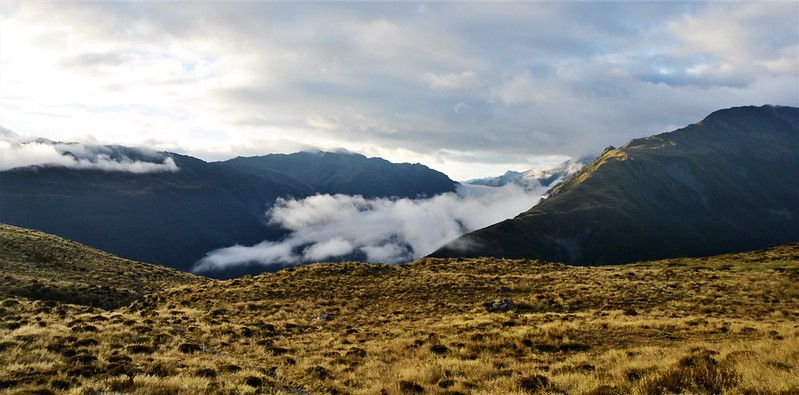
Worth noting this is from a NZ meander, not Brisbane
It was about a month ago. I finally made the leap and ventured on my first bushwalking trip using only public transit and my feet. It only took the nearly three years I've been living in Brisbane. Now, while I love sharing a good wander with a few moderately adventurous, low-key individuals, this little experiment was toute-seule. That meant I had a fair bit of time for thinking - after the work-related list-making and self-reflexive soul-searching, my mind started wandering to an apt topic: the act of walking.

Walking is such a simple, pedestrian activity for many of us, that day-to-day we don't tend to consider what incredible experiences we have at the tips of our toes. By all means, walking can take on considerable, even spiritual, significance. Consider El Camino de Santiago in Spain (and southern France), which sees upwards of 200,000 walkers (now not quite the religious bunch of yesteryears). While ultimately the goal is to reach holy sites, the journey itself is a central part of the experience. 

Unlike many forms of transport, walking requires patience and persistence (where you've pushed past the point of exhaustion) to get from A to B. There isn't the immediate reward, and sometimes it can be hard to stay motivated when there is no end in sight. However, once you've arrived, oh, that is an achievement to revel in.

It's more than that, though. If you think about it, walking is quite empowering.* Place one foot and then the other, propelling yourself forward with determination. And feet can take you to places you can get to no other way, or along routes that are themselves sites to see. Scrambling up creek beds or inching along narrow cliff-side tracks. But also down narrow alleys in old cities, or winding through bustling marketplaces. Walking to reach some place can make you realise that it is, in fact, possible to trust your feet. And I can't count the number of times those very same feet have surprised me with the feat of covering large distances.

Finally, I wanted to give a nod to urban walking. Not every place is designed to make walking enjoyable, easy, or safe. But yesterday, navigating my way around Jakarta jalan-jalan kaki, I got to thinking about how walking cultivates a very different perspective of the city. Rather than a taxi, a bus, or in some places underground rail, going by foot puts you right in the thick of life. You pass through the calm, tree-lined streets (yes, they exist) and the chaotic commercial thoroughfares. Not saying I care much for Jakarta, but I appreciate the experience.

I'm going to end on a quote from John Muir, which I think captures the greater nuances of the words we use to describe movement (here in the context of the word "hike") -
“I don't like either the word [hike] or the thing. People ought to saunter in the mountains - not 'hike!' Do you know the origin of that word saunter? It's a beautiful word. Away back in the middle ages people used to go on pilgrimages to the Holy Land, and when people in the villages through which they passed asked where they were going they would reply, 'A la sainte terre', 'To the Holy Land.' And so they became known as sainte-terre-ers or saunterers. Now these mountains are our Holy Land, and we ought to saunter through them reverently, not 'hike' through them.”
Thanks for listening to my rambles ... perhaps it's time for another ramble! 

BONUS: One of my favourite (related) posts - An Ode to Chacos
 
* I realise that walking is not always possible, so please don't take this as a judgement in any way. It is one thing that I take great joy in, but understand that others do/must find satisfaction with other forms of transport and movement.

Wednesday, January 2, 2019

Another Year in the Books

DSC_3244
That's a wrap. So long 2018. One of my favourite traditions on New Years is to read over the past year's blog posts. Now, in the last few years, there has been a lot less to read than during My Munchable's early years (say, 2009-2013). But despite the confusing speed with which 2018 flew by, there was a lot of substance to cover.

It wasn't the most uplifting of years, between all the political, social, and natural disasters. An early post from last year discussed the significance of rain under climate change. Then mid-way through 2018, the best scientific minds gave the world a demoralising climate change update (so I wrote down some food for thought). Even followed adhoc, the climate-related news from the last year was pretty overwhelming. Cobbling together these developments in tweet form, we see hurricanes and fires (again), political inaction and youth protesters, and some pretty dire projections. Unfortunately, all that bearing of bad news hasn't resulted in the kick-in-the-pants we seem to need.

If climate change hasn't gotten you down enough, some of the violence and social injustices might. Border walls and mass shootings made headlines with regularity. My first post of 2018 discussed indigenous rights and conservation in Australia, and I published the first chapter of my PhD looking at social justice in conservation. This was the seventh year I've Lived Below the Line, and so did some reflecting as usual, including on how we define what is poor. There is obviously a long way still to go for a socially equitable world...

... but, at least there is baking to set things right in the meantime..

DSC_3691
For my part, there was lots of (too much ... 4.5 months away) travel. Two trips to Indonesia for my PhD project sparked some musings on the benefits of travel, trials and tribulations of interviews in research , and unsurprisingly chocolate! More recently, the annual visit home involved "slow travel" with a Grand Tour of the USA by rail.

Now, 2018 was by no stretch of the imagination one of the more notable years. Like any year, there were ups and downs (though there seemed to be more downs). I'm hoping that 2019 will sit a little higher up on the roller coaster!

Read Years Passed

Friday, November 16, 2018

Food for Thought on Climate Change

It feels as though every time I read the news these days, it seems like the world is falling apart. Whether that's because of the political climate or the actual climate, well, it's hard to tease apart sometimes. It's hard to stomach the actions and inflammatory language of intolerance and prejudice, openly condoned by supposed 'leaders'. But it's also increasingly terrifying to imagine the future world we seemed to have built for ourselves. Only about a month ago, the Intergovernmental Panel on Climate Change (IPCC) released one of its semi-regular reports on the state of our understanding of climate change - the anticipated impacts based on potential scenarios of greenhouse gas emissions. While the past few reports have stressed the importance of a low-carbon pathway forward, the conclusions of this report reached a new level of concern and urgency. To avoid catastrophic warming - 1.5 degrees Celsius - we have about a decade to get our act together as a planet (though a few countries really need to pull their weight).

Now, it's not like we're completely devoid of ideas how to do this. Most of the world has made the important step of recognising climate change is an important issue and pledging to do something (albeit, too little) to halt it. Alternative energy technologies have made amazing progress in terms of efficiency and affordability. Private companies and local government alike have taken steps to curb their emissions and adopt environmentally-friendly practices. While these disparate actions are important contributions and make a statement, we need something bigger and more concerted. And we will have to sacrifice now so as not to suffer too greatly in the future. 

So a couple of weeks ago now, I went to a seminar on climate change beliefs and behaviours. The speaker Neil Lewis Jr of Cornell University raised a key point of debate - should those interested in climate-related behaviours focus on individuals or policy? The scale of the problem - and the fact our atmospheric pollution is a massive tragedy of the commons - necessitates broad sweeping changes likely instigated by policy. But without public pressure to elect officials that will push for those policies, and some willingness to make the sacrifices (I like to think of them more as opportunities...) those policies would require, we're not going to get anywhere (...smile for the new congress!). 

Now Dr. Lewis noted that people often agree that something needs to be done, but not that it must be done by them. So in theory policy change is acceptable, but when it might raise costs (e.g. the carbon fee on Washington State's ballot), then it's a no-go. But people can and do change their behaviour, and perhaps the thinking around meat consumption is a good current example. According to a recent report by by the UN, dropping meat and dairy from our diets would contribute substantially to curbing greenhouse gas emissions. This isn't really news - I mean it made the news - even right after arriving in Australia, I reflected on some recent studies on the topic of meat consumption and environmental problems. While I definitely don't expect everyone to jump ship and turn vegan overnight, people are generally eating less meat and younger generations are more likely to go vegetarian. 

And over the years, we've learned a thing or two about what influences people to change ingrained behaviours. Psychologists have demonstrated there are a number of structural and psychological barriers to changing behaviours - not the least of which is that facts don't seem to matter much when they fly in the face of strongly held views (#fakenews). A crucial point here is that motivations vary between people and backgrounds - so for food choices climate, the environment, or even animal rights (which is sometimes but not always related to the environment) aren't always forefront. But health and costs also may be deciding factors. To me, this suggests we need to do a better job of framing, and in the case of climate change actions doing so in terms of so-call 'co-beneits'!

As a final point, I just want to highlight that climate change mitigation presents challenges from behavioural psychology that don't apply as much to shifting diets, namely timing and proximity. Regarding the first, even William Nordhaus, who pioneered early work on discount rates for climate change action and one of this year's Nobel prizes in economics, has warned that it's too late to wait. However, discounting is very much in-line with how people approach planning and problem-solving. The future is distant, and very much future-self's problem. The immediate costs seem far greater than the avoided ones months, years, decades down the line - let's just say we prefer instant gratification and hate the feeling of loss. For the second, researchers have noted that there is a disparity between countries that emit the most greenhouse gases and those that will suffer most from the impacts of climate change. The U.S., for instance, has started to experience some of the effects with increased wildfire risks and greater intensity storms; but for the most part, the impacts are still this geographically distant phenomenon that don't directly affect many people's lives. Again, psychological studies have shown that people are much more likely to believe in and act on things related to personal experiences. 

Ok, so at the end of the day, where does that leave us? Lots of super smart people are grappling with this question. But as with many problems related to common-pool resources (the atmosphere is everywhere!), it often requires some sort of rules in place to govern how people use it. Although it seems like there are so many causes we can be vocal and active about these days, climate change is not one that can wait, as it threatens the very existence of life on this planet.

Friday, May 11, 2018

Lessons from an Empty Stomach

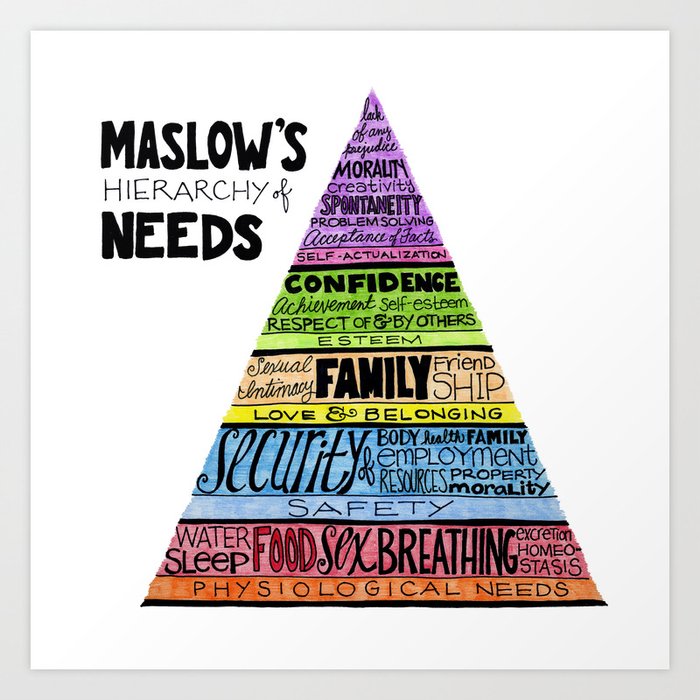
https://society6.com/product/maslows-hierarchy-of-needs-ii_print
This morning I woke up with a nice a cup of tea and some avocado on kalamata olive toast. It seemed extravagant after five days of sliced banana on basic wholemeal. And while I can't say my calorie count was dangerously low over this past week of Living Below the Line, I still seemed to be perpetually hungry (and there was the whole lack of coffee...). Not only that, but thoughts of my next meal filled most waking hours. 

This isn't surprising. If your basic needs - food, water, shelter - aren't met, it's difficult to think of other more frivolous things. Abraham Maslow got at this idea in his 1943 paper, "A Theory of Human Motivation". Also referred to as "Maslow's Hierarchy of Needs", his theory outlines five levels of needs: physiological, safety, love & belonging, esteem, and self-actualization. Deficiency in a lower level of needs causes anxiety, and means an individual will prioritise fulfilling those needs first and foremost. "Where will I get my next meal" would supercede "how well am I doing at work" or "should I hang out with friends tonight". Chronic deficiency of these basic needs can ultimately hinder people from reaching their potential, and society as a whole from being more enlightened and just (see the "growth" tier: self-actualisation). And, as one can imagine, things like poverty and conflict can lead to perpetual loops in the bottom rungs of the hierarchy.

https://doi.org/10.1016/j.ocecoaman.2004.09.002
Cinner & Polnac (2004) on coral reef conservation
This hierarchy also offers some insight if we care about the environment and conservation. Particularly in the early years, "fortress conservation" dominated the agenda. This largely entailed putting tracks of land - say, tropical rainforest - under protection, kicking out any people that lived in the area, and barring entry and use. Besides this being morally questionable, it also often fails to protect the area of interest. This isn't to say that we should get rid of all protected areas - save Yosemite! -  but rather that the needs of people living around and reliant on protected areas must be considered. Studies have shown that socio-economic factors influence people's perceptions of conservation, and thus need to be accounted for to develop appropriate strategies. You can imagine that someone with an income too low to purchase food, but who lives near a forest with deer and other tasty critters, might prioritise his need to eat and feed a family over the value of an intact protected forest. Some of the strategies to address this tension have included buffer zones around protected areas, where local people can harvest non-timber products like honey or bamboo; and community-managed marine and forest areas, which allows people to use certain resources to meet their needs while fostering the motivation and capacity to sustainably manage them. These, too, don't always work out as planned, but they are steps toward more just and equitable conservation that address humanity's hierarchy of needs.

Thanks to all the support from friends and family during the week, and for contributing to the Oaktree Foundation's mission! It made all the difference (and contributed to the 'esteem' level of my needs).

Read More:
How just and just how? A systematic review of social equity in conservation research - Me, Liz Law, Nathan Bennett, Chris Ives, Jess Thorn, and Kerrie Wilson, 2018 (open access)

Friday, April 27, 2018

How Just, and Just How?

 It’s a long-standing ambition, for society to reach some sort of just and equitable ideal. What that means in practice differs, depending on the time, place, and people involved. But it does seem that meeting basic human rights and needs and the notion of ‘fairness’ are prevalent across discussions of social justice and equity. Things like poverty and hunger connect pretty clearly to equity. For conservation, however, it’s a bit fuzzier. In theory, conservation is driven by values around making the world a better place. Yet we also have to ask ourselves - who gets to decide how conservation happens, where, and who benefits or suffers. 

A few other researchers and I recently thought we’d try to get a better sense of how research in conservation has so far approached equity - especially how it’s defined, measured, and evaluated in studies. We sifted through a mound of papers, synthesizing information from the 138 that considered how social equity and conservation fit together. Besides a general upward trends in the amount of research explicitly on this topic (and alphabet soup present as SDGs, REDD, and CBD have become prominent), there are also some trends in what and how.

Equity is 3D. According to people who spend a whole lot of time thinking about equity, we should consider not only the distribution of costs and benefits, but also the procedure of making things happen (e.g. who gets to make decisions) and the recognition for rights, types of knowledge, cultural factors, and the like. The conservation literature has often defaulted to analysing distributional equity, adopting a stance of equity as egalitarian or fair allocation of costs and benefits and capitalizing on concrete and easy-to-measure things … like money. And what is considered ‘equitable’ may be a bit fuzzy or obscured, but making it very clear is essential for keep tabs and evaluating progress.

While the limited view of equity adopted by conservation and insufficient definition are important things to recognise, there are other lessons we can take away from the state of our current equity and conservation research. If we backup and consider why researchers study conservation and equity in the first place, we often see a utilitarian perspective, this romantic notion that social equity and conservation success go hand-in-hand. However, there may in fact be trade-offs between social equity and conservation (or even between those different dimensions of equity). In both research and practice we need to be more critical of our underlying motivations and examine more closely the knock-on effects of any given action.

Like a lot of the research in conservation, there are also some discrepancies between who is carrying out the research and where conservation is taking place. For example, very little research is happening on conservation and equity in Europe or North America, but much of the research is coming from institutes in those regions. This makes it a bit hard to tell how much studies reflect the researchers’ own notions of equity or what is relevant to the local context.

I guess the burning question is still, is conservation equitable? Well, it’s complicated (and inconclusive). We found that studies reported negative or mixed outcomes - so conservation less frequently resulted in positive equity results. But all those elements above (and many more) will influence these endpoints.

If you found this all super-intriguing, you can get even more detail from our review paper in Environmental Research Letters! AND, while we’re on the topic of social equity … During Live Below the Line this May, I’m raising funds again for this awesome foundation that works to end poverty and empower youth. Definitely fighting injustice!

Friedman, R.S., Law, E.A., Bennett, N.J., Ives, C.D., Thorn, J.P.R., & Wilson, K.A. 2018. How just and just how? A systematic review of social equity in conservation research. Environmental Research Letters, 13(5). Doi: 10.1088/1748-9326/aabcde 

Monday, February 26, 2018

Weathering Change: Women Farm Cocoa, Too

You have probably read an article or two (or more) about how climate change is going to be the end of chocolate. Compounded by potential losses of our other favourite indulgences - coffee and wine - this is nothing short of tragic. But what these articles don't really discuss is what happens to the farmers who grow these valuable export crops. Studies documenting how climate change affects rural people generally point out that they're likely to lose income, and that women are particularly at risk of experiencing negative effects. But not everything is about money, and not all women are in the same boat. The coarse resolution at which poverty and gender are often treated means we may get a skewed picture of who is actually vulnerable to climate change and for what reasons.

Back in 2014, I was working on surviving my MPhil degree, and reveling in the joys of fieldwork. From June to September, I was in the Central Region of Ghana, chatting with women in cocoa farming communities about their lives, their work, and the stresses they face. The idea was to get a sense from past experiences of "weather events" - the usual droughts and floods, mostly - in order to get an idea of how climate change could alter the lives of these farmers in the future. While the dissertation may have long since been done and dusted, one piece has lingered in the shadows. After 2.5 years since its first draft, some of the insights from this project finally made it through the peer-review process to see the light of day!

Yes, Kakum looks like a seahorse. Credit: Alex Morel
It's a bit off-point from the usual ecology fare (or maybe that's not so usual these days...). The idea of our little study was to get a better sense of who among cocoa farmers is vulnerable to climate change and how. While by no means the definitive works, the paper describes how women involved in producing cacao are vulnerable in different ways. Because I've been told it's acceptable to celebrate your first first-authored paper, I'm unabashedly taking this time to share the highlights.

First off, why cacao? Besides the logical reason of its being the precursor to chocolate, cacao is an interesting case in a changing climate. A bit of a "Goldilocks" crop - it is best suit to a limited area around the globe - it needs certain amounts of rain, a tight temperature range, and both these things at the right times. So shifts in climate may have severe consequences for cacao crops. One finding from the study was that women who own cacao farms may become more exposed to adverse weather conditions - merely because the crop is particularly finicky - in comparison to those women who don't and grow a range of vegetables and starchy staples that have different optimal growing conditions.
But that's where the relative benefits of not owning cacao seem to end. Farmers are very much like investors - they diversify their portfolios of activities to reduce their sensitivities to any single unfortunate event. Cacao can be a highly profitable cash crop, and the women I spoke with who managed their own cacao had more disposable income and independence to take up a variety of income streams. They could spread their nest eggs across many baskets. Independence was not just about finances, though. The confidence and sense of empowerment that came along with owning cacao differed considerably from the pessimism and hopelessness expressed by many of the women who did not. Someone must have said that "success is a state of mind", and while tangible resources do help, having a proactive attitude can make all the difference in responding and adapting to challenges, not the least of which is climate change.

Couldn't have managed without Auntie Fausti,
who looked out for us while Homaho!
Last of all, while not explicitly part of the analysis, I did notice a strong tendency for women with cacao to point out the importance of ecological stewardship. Perhaps because it is harder for women generally to obtain fertilisers and pesticides used in cacao production; perhaps because many also cultivate the veg that they then feed to their families (and who wouldn't want to feed their kids safe and nutritious food?); or perhaps it's because many have inherited land after farming all their lives and building up knowledge of ecology over time, rather than receiving agricultural extension training focused on technology and inputs (also largely unavailable for women). Perhaps that is a question for another research project!

Unfortunately, none of this solves our chocolate predicament. But hopefully it's a step toward more nuanced ideas for helping farmers face the current and pending climate changes.

Read the full paper, if you're feeling ambitious...
Vulnerability of Ghanaian women cocoa farmers to climate change: A typology. Climate and Development. doi: 10.1080/17565529.2018.1442806

Related Posts:
So much thanks to my co-authors- Mark and Emily, Rebecca for constructive comments on the paper and support in the field, and all of the ECOLIMITS team for letting me tag onto the project. This would not have been at all possible without the amazing interpretation skills of Anne, the local know-how and tech support of Mike and Prosper, and of course all the women who gave their time (and often food and hospitality) in opening up about their lives and contributing to this project. I'm forever grateful, and hope one day this can help in some small way. Medaase!

Monday, June 5, 2017

Sweating the Small Stuff

This wasn't exactly a glowing week leading up to World Environment Day yesterday. However, while mitigating climate changes we've put in motion requires more globally coordinated action and government intervention (... the atmosphere is the ultimate common pool resource, no?), there are heaps of other environmental travesties that emerge in large part due to our decisions as consumers. World Environment Day's theme this year is about reconnecting to "nature", which is a lovely message with very little depth. Although hitting up green spaces - parks, wilderness areas, etc. - often benefits both human health and encourages positive environmental values, this idea of needing to "reconnect" implies we live apart from nature. The ambitions of this year's World Environment Day seem a bit modest for the scale of the problem, making the proffered actions far less meaningful if not connected to the consequences of our actions during daily existence.

But it's not a huge leap to connect our daily doings with the health of the planet. In Australia - and the UK before that - a pretty nifty three part series about the War on Waste tried to expose the nature of our "Throw-Away Society" and the consequences for the environment. for Oz, the numbers are staggering, ranging from 20% of our groceries ending up in the bin to 6,000 kilograms of fast fashion in the rubbish every ten minutes to 113 take-away coffee cups discarded every four seconds (that's 2.4 million in a day)! But plastics seem to be making the headlines these days.

Australia uses nearly 4 billion plastic bags per year, the majority of which end up in landfill (or inevitably waterways). Some researchers calculated that worldwide approximately 8 million tonnes of plastic waste ends up in the oceans each year. Once some of the most pristine beaches in the world are now littered in plastic debris. While this is an eyesore, a visual reminder of our plastic addiction, there are more hidden and insidious impacts. Almost every seabird on the planet has eaten plastic - which may not always kill the bird, but can't be particularly good for it. But plastics also break down into smaller and smaller particles. These then accumulate along the food chain, similar to other toxins in our environment like mercury in tuna. We don't yet know how harmful all of this is, but we can make sure it doesn't get worse. 

This last week, UQ sustainability challenged staff and students to contain all single-use plastics in a small jar - mine was 350mL to be precise. The idea was to be more aware of our frequent and often thoughtless use of disposable plastics, and to consider steps to take to reduce. Sure, recycling is a good first step, but it's not a guiltless affair. Not every plastic is recyclable nor gets recycled, and even if it does, it takes energy to go from plastic bottle to new plastic something or other.

But the alternatives are hard, because they rely on people changing their daily actions and breaking habits ... and let's face it, even the well-meaning of us just can't be bothered if something seems like too much effort. Making your own shampoo may seem like an impossibility, but there are plenty of low-hanging fruit. Bring a cloth bag or a reusable mug, and don't succumb to the draws of straws or pre-bagged produce. It's just a matter of making simple behaviour changes part of your routine. Easy.

So on this World Environment Day, rather than just "reconnect with nature", try reconnecting with your personal impact on the planet and commit to doing something about it.

In case you're also interested in food waste, it's a favourite topic...
Jingle the Waste Away
Smashing Pumpkins
America the Wasteful

Tuesday, May 2, 2017

A Peasant Diet for the Planet

Ok, I admit it, I like charts...
This week I'm eating like a peasant. Now that (or more likely, this post's title) might have rubbed you the wrong way. For some, it conjures up unpleasant images of feudalism, toiling under rich landlords; for others it may have too many associations with colonialism and hearkening to an era where rural people in developing countries were somehow seen as inferior beings. But at its root, the word means country dweller.* And most people living in poverty live in rural areas.

"I'm eating like the average resident of a developing country" would have been a more accurate statement. If you look where my calories are coming from over the course of the Live Below the Line Challenge, it's quite similar - although missing the eggs, fish, and other animal products that do feature in most diets. Cereal grains (oats and rice) comprise nearly two-thirds of my daily 2000 calorie intake, and pulses are a major source of protein. Now take Asia for instance, which houses the majority of the world's poor (and population as a whole). Rice is the staple food, making up 50-66% of caloric intake in the region (with the higher values corresponding to the less economically developed countries). Pulses (e.g lentils) are also staple foods that, although usually contribute only a small fraction of calories, can actually make up close to half of protein intake. Roots and tubers (e.g. sweet potato and cassava) have historically made up nearly half of calories in many African countries, but this begun falling during the Green Revolution.

A familiar picture, my food for five days of Living Below
Now, the ubiquity of such a diet doesn't mean it's the way forward. For one, although grain-heavy diets provide enough calories, they often lack important micronutrients. Often referred to as the "hidden hunger", insufficient intake of vitamin A, iron, zinc, and folate is particularly concerning in children, who can suffer stunting and hindered brain development. While things like home gardens have been proposed as means of curbing such deficiencies, the poorest of the poor also often face difficulties getting their hands on land. Besides being a human health issue, a healthy and diverse diet is increasingly considered a human right. It is also disempowering not to have the resources to choose what to eat, when, and how much.

But there are also lessons to be learned from how the majority of the world's poor about how to eat for the planet. On average people in East Asia and the Pacific consume around 1/3 the amount of meat as North Americans and Europeans, and in Sub-Saharan Africa it's about 1/8th. Eating a primarily plant-based diet is generally acknowledged to have a lower carbon and water footprint than one heavy in meat (especially beef and lamb). According to the World Resources Institute, if the world's top 2 billion consumers reduced their meat and dairy intake by 40%, we could free up land double the size of India and avoid greenhouse gas emissions three times the global amount in 2009. Furthermore in many developing countries, what animals are consumed are eaten in low enough quantities to be sustainably harvested, or domesticated ones serve multiple purposes on the land - livestock can produce milk as well as manure for crops, or fish ponds can provide fertilizer for crops and feed for livestock. At the end of the day, I think a glimpse of a poverty-line diet is taking a taste of moderation that the big consumers in the world greatly need.

So while I miss green veggies (and chocolate), I'm pretty thankful and content with the bounty that even AU$2 per day can bring. Consider expressing your own gratitude, and sharing your good fortune by support this year's Live Below the Line campaign!

* Old French paisent ‘country dweller’, based on Latin pagus ‘country district’ (Wikipedia)

Saturday, April 22, 2017

A Dose of Subdued Earth Optimism

Somewhere in the world it is still Earth Day. Dating back to 1970, this now global celebration marked the heightened awareness of manmade threats to the natural environment. The safeguards introduced at that time - the clean air, clean water, and endangered species acts in the USA - have faced decades of opposition from major industrial interests and now (not even 50 years later) the possibility of scaling back or disintegration. In what many of us would consider a more enlightened age - we have been studying environmental phenomena for decades - it's astounding that there is still this war on nature and the crucial services that it provides and which humanity depends on.*

IMG_4335
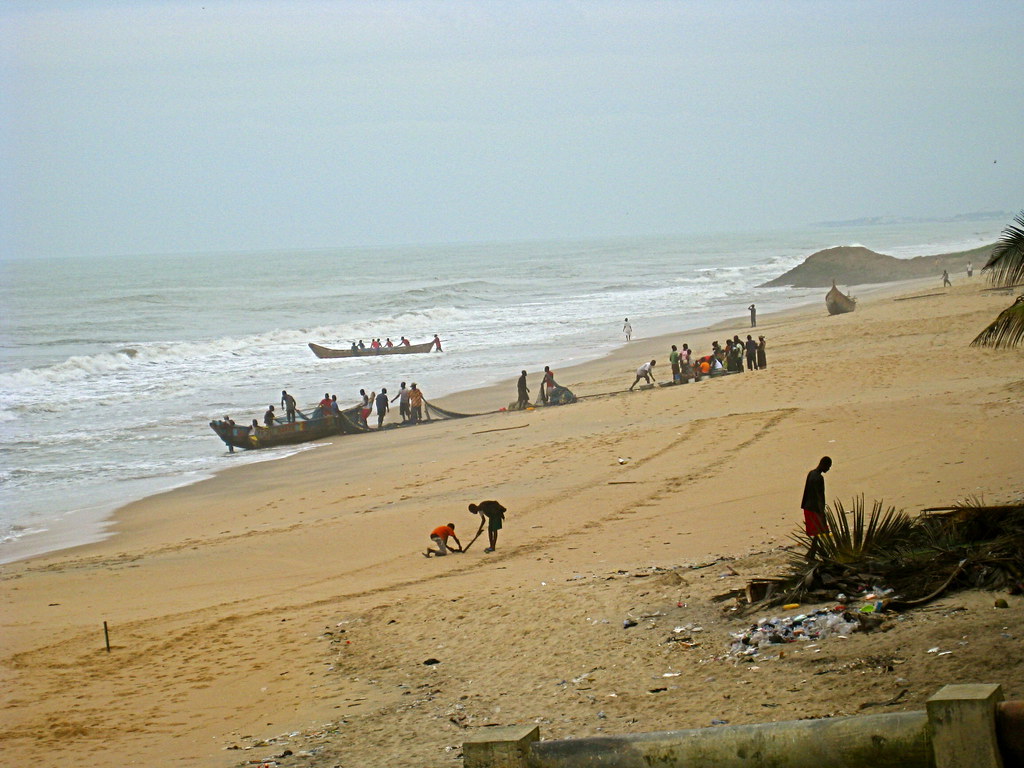
Fishermen in Ghana negotiate rubbish-ridden beaches
But I would argue that much of the environmental activism comes from a place of privilege (I include myself here), and I wonder how much we are successfully giving voice to those whose health, happiness, and livelihood are much more intimately tied to the condition of the natural environment. Sure, we all suffer if the air is unbreathable, and eventually most everywhere in the world will suffer the negative consequences of climate change, but oftentimes the hardest hit by polluted drinking water or habitat conversion or extensive droughts are those least capable of taking action or raising an outcry.

I bring this issue up on Earth Day, because I'm still of the opinion that the poor and marginalized make it into environmental discussion too infrequently ... and in development circles environmental health doesn't come in as a necessity that underlies food, water, income, and other usual indicators of poverty. A recent article in the Conversation called this issue into focus, introducing the concept of "environmentally-adjusted measures of multidimensional poverty". It suggests that we are actually overestimating the impact of increases in GDP and other econo-centric measures of growth and progress. This is not to say we shouldn't celebrate the strides made in reducing poverty and hunger (or as #EarthOptimism is highlighting, in conservation), but we should also be wary of getting too complacent and continue to strive toward recognizing how interconnected is the wellbeing of nature and humanity.

This blog post is just a week before participating in the Live Below the Line Challenge. If you have a moment, please consider donating to the charity sponsoring this effort to raise awareness and support education.

Live Below the Line 2017 Posts:
Related post: Valuation for Poverty Alleviation (2015) 

* Not to mention an increasing combativeness towards the scientific evidence that supports the importance of the planet's natural systems.

Tuesday, March 28, 2017

Below the Line in Trumplandia?

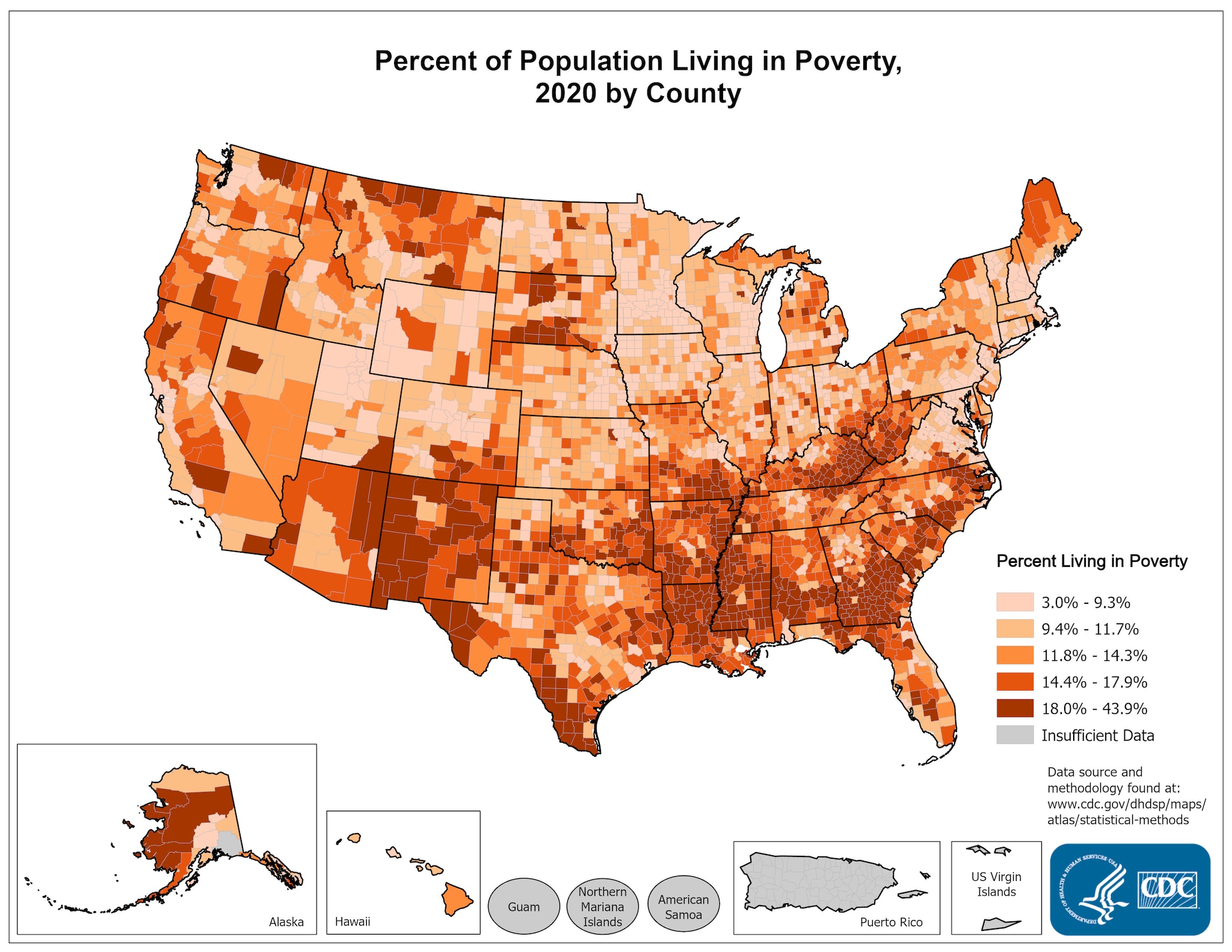
https://www.cdc.gov/dhdsp/maps/sd_poverty.htm
I'm not sure where to begin; it's been a while (and feels like longer...). This blog post is actually my first for 2017 - a testament to the craziness of the last three months. It's also creeping dangerously into annual Live Below the Line territory. For those of you just joining us, each year since 2012 I've participated in this challenge, where for one week you eat on a budget at the poverty line and raise money for a charity working on issues related topics. Strikingly, the topics on tap each year - poverty, income inequality, food security - have stayed relatively stable. While this suggests that we're just not getting it right when addressing these insidious problems, the injustice of it all makes me increasingly frustrated.

What do I mean? Well for one, the most poor and vulnerable have the least say over decisions that could make their lives better. What is happening in the US right now is an excellent example of how politics can rapidly turn the tide. As president, Obama passed healthcare reform, tax benefits for the lower income brackets, and ramped up anti-poverty spending (e.g. food stamps), arguably doing more to reduce inequality among Americans than any previous administrations. It's hard to imagine any of this being particularly unpalatable, and yet barely a breath after power shifts we see tax breaks for the wealthy and budget cuts to social support programmes. According to an Atlantic article, "it will be much hard being poor in America"...while the government doesn't directly control economic growth, its policies determine "how growth is shared."

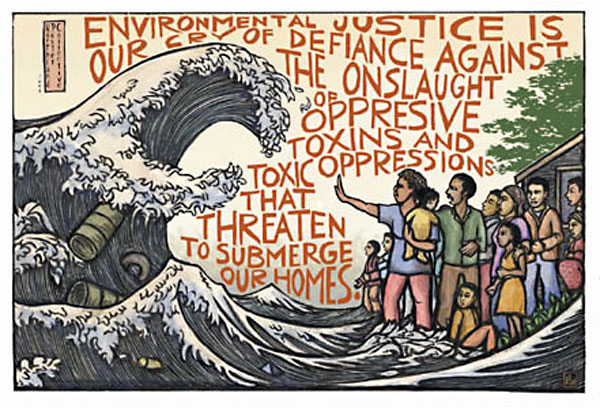
http://www.columbia.edu/cu/EJ/casestudies_domestic.htmlThat's just the short of it. There are quite a few worries about what the Trump presidency will mean for the poor further afield. At present, the US contributes 22% to the UN budget and 29% of global peacekeeping efforts. An 'America First' mentality and a budget proposal that slashes foreign aid expenditures may have serious consequences for some of the most impoverished in the world. It's still not really America first, though, is it? Is rolling back environmental regulations that hold companies accountable for water and air pollution, easing protections on endangered species, and flat-out denying combating climate change is worth a nickle really making America a better place for the majority of citizens. Because environmental degradation often disproportionately affects the marginalized and minorities, this weakening of the environmental protection is expected to have implications for social justice

While I suppose society simply weathers the ebb and flow of political inclinations, we must acknowledge the collateral damage. Live Below the Line runs from 1-5 May this year in Oz, supporting Oaktree, a youth-led organization that aims to alleviate poverty. Check out my fundraising page and keep tabs on this year's Live Below the Line challenge.

What happened during LBL in...

Saturday, December 31, 2016

The Best of Times, The Worst of Times

I think all of us can agree that 2016 had a bit of a rough run. It was politically charged; it was tragic and sorrowful; it was also beautiful in many ways; and I hope it will open the door to some much needed healing in the year to come. Holding with tradition for the eighth year running, I put together a bit of a recap of the past year seen through the eyes of My Munchable Musings.

This year seemed particularly replete with environmental and social grievances, as if the Anthropocene - the age of Homo sapiens - had finally come into its own. Despite international efforts to overcome poverty and injustice, we are still battling inequalities reminiscent of bygone eras. This was my fifth year Living Below the Line, contemplating the trade-offs the food insecure face in terms of costs, calories, and nutrition. Perhaps a product of my own news filters - thanks selection bias and algorithms for reinforcing our bubbles - but there also seemed to be considerable coverage of human-induced environmental problems and social justice issues. Imminent climate change catastrophes made late headlines, victims of environmental exploitation made small waves, and the world watched rather silently (or preoccupied) loss of human rights and dignity. Thanks Twitter for making the world's atrocities so much more accessible (and Storify for allowing me to rehash it all).

Going back through my actual blog posts from the year, however, there seemed to be much more to celebrate. In true Munchable fashion, we took a bit of a tour through through the beauty of biodiversity and food, at the intersection where art and agriculture collide. About halfway through the year, a challenge to compile a week of photos depicting beauty in nature made its way around the interwebs. A lunchtime conversation spurred a post on the amazing tuber diversity. And of course I could not go a full year without pontificating on the joys inherent in the art of bread-baking. These may seem like small potatoes, but to me they seem more like beacons of hope amidst stormy weather.
  
Finally, this year saw many developments here at command central. At the end of January, I left the damp of England after 2.5 years and moved to Australia in order to continue the over-education process. On the two month journey between the two Commonwealth countries, I made a second transcontinental rail trip to see immediate family in the US, followed by a first foray into Southeast Asia (including some history lessons and another train trip). Starting the PhD has helped me finally come to terms with my identity NOT as an ecologist, but as intentionally straddling disciplines (good luck with that...).

Mid-way through the year, I did some stock-taking as a 30th birthday exercise. Almost as a physical reminder of this aging, I proceeded to tear my ACL and menisci (...lesson to all that gymnastics takes hours of training, particularly when you are no longer 17). To ensure the year ended on a high note, I scheduled in my first surgery and overnight stay at a hospital the week before Christmas. I suppose out of necessity, the new year will be one of recovery, and not just for me, but hopefully more broadly from all the cruelty, divisiveness, and hatred that has taken place recently. Here's to a more enlightened 2017.

Read Years Passed

Monday, October 31, 2016

A Bitter-Sweet Reflection on Reefs

http://theconversation.com/great-barrier-reef-bleaching-stats-are-bad-enough-without-media-misreporting-58283It was only a few days ago, the panicked cry that made brief headlines in the news. On the eastern coast of Australia, in the portion of the Great Barrier Reef north of Port Douglas, researchers have proclaimed that most corals are dead. It's the worst bleaching event recorded in the Barrier Reef. The decimation can be ascribed to a number of complaints - rising sea temperatures, strong El Nino conditions, crown of thorns attacks - yet there has been a longer history of impacts from degradation on the land and direct exploitation of the reef itself.

For the far north, temperature may be the biggest threat to corals. Moving further south in the Great Barrier Reef Catchment, there are other forces at work that derive closer to home. The sugarcane industry in Queensland dates back to 1861, fueled by south sea indentured (and forced) labour, not unlike its turbulent counterparts in Latin America and the Caribbean. But the troubled history of human rights infractions in most of the Western world is a topic for another time and place. Sugarcane, along with pasture and banana, replaced over half of the primary tropical forest in Northern Queensland. Even today, the management of grazing land and cane results in pollution that makes its way into coastal waters.

http://www.reefplan.qld.gov.au/about/regions/great-barrier-reef/gbr-first-report-card/Now those of you who are familiar with the challenges in the Gulf of Mexico, realize this is a similar (albeit, tropical in flavour) phenomenon. A large amount of cash crop (corn in the US, sugarcane in Queensland) is grown, using an associated amount of fertiliser and other chemicals. When there is a heavier rainfall, particularly during those summer storm months, soil is washed away along with the nitrogen, phosphorous, and pesticides, and eventually makes it to the Gulf or the Reef. This influx of nutrients stimulate the growth a algae (and the voracious crown of thorns starfish in the GBR), which ultimately use up oxygen when they die and decompose. The silt and other particulates block sunlight from penetrating the water column, making it difficult for marine plant life to survive. Basically, these conditions can become drastic enough that the coastal areas are uninhabitable for fish and other wildlife.

Now, the obituary to the Great Barrier Reef that has coral scientists up in arms may be a bit melodramatic, and could very well be counterproductive to actually doing something to increase the reef's resilience. Yet research shows that existing policies and management plans have so far proved inadequate to addressing the scale and severity of the problem. As an avid baker, it is quite concerning that by buying the Australian-grown cane sugar available in the grocery store, I inadvertently contribute to the reef's degradation. It's hard to find a meaningful indicator of sustainability when always worrying about greenwashing with labels, particularly when they involve partnerships between WWF and Coca Cola. But we do what we can, and try to stay informed as possible (particularly when feeding a bunch of conservationists...). For now, the Bonsucro certification (applicable to several sugar brands in Oz) does lay out thorough ecological and social standards that sugar production must meet - touching on labour, climate change, biodiversity, and downstream impacts. Maybe coral-inspired cookies will be my next [bitter]sweet baking adventure... 

Monday, October 17, 2016

Seven Years: A Blogiversary Post and Squash

On October 15th 2009,  I wrote the first substantive post on this blog (although technically My Munchable made its debut on the 11th). Under that third Blog Action Day's (BAD) theme of climate change, the logical subject was growing food, having recently returned from working on a small organic farm. Since then, we have cycled through a variety of topics from water resources to human rights and equality. However, this year there is no official theme; the organizers have suggested writing on "whatever you are most passionate about". Oh, no problem, there are only like a million things I feel passionate about (ok, exaggeration...). But then two things happened: World Food Day announced its theme of climate change adaptation and this article ran in the New York Times. We've come full circle.

The article introduces Sarah Frey, a midwestern farmer who just happens to be the largest supplier of pumpkins in the U.S. But what made news is her effort to shift public perception of pumpkins from ornamental to edible, to bring variety back to winter squash. Every now and then I muse about starting a pumpkin farm. While mostly in jest (unless you know of any eligible young farmers...), this draw to growing things stems not only from the physical connectedness to the land, but also an appreciation for the beauty and necessity of diversity among what we grow.

http://ngm.nationalgeographic.com/2011/07/food-ark/food-variety-graphicSo I wanted to spend the rest of this post talking about just that - the vast potential of we can grow. According to the UN Food and Agriculture Organization, over 250,000 types of plants have been document to grown in agricultural systems, yet a mere 3% are actually in use today. To further restrict that, three quarters of our food comes from just 12 crops, and rice, wheat, and maize comprise the bulk of that.

Now say instead this represented the collective expanse of wild plants and animals on the planet, and you were an ecologist or a conservation scientist. This would be tragic; people would be outraged that so much biodiversity had been allowed to ebb away. On one hand, this means the loss of considerable genetic diversity, reducing the chance of traits and mutations that might better suit a shift in climate or ecology. On the other hand, a focus of breeding efforts and training on just a handful of crops has probably contributed to the erosion of local diets. In some cases this has improved nutrition and reduced the prevalence of undernourishment related ailments (e.g. vitamin A deficiency and blindness), but in many instances this is leading to homogenization of diets. Our ubiquitous staples also seem to have very particular requirements in terms of optimal growing conditions - water, nutrients, etc. - that make them not-so-very adaptable to inter-annual variation and change over time.a

Wayward cabbage among squashes at Borough Market
So if we're talking about agriculture and climate change, a lot of the arguments around maintaining biodiversity go back to resilience theory - building redundancy into agriculture as an insurance mechanism. But back to the pumpkins. These thick-skinned orbs are not exactly at the heart of food security; yet it's hard to imagine the beauty of diversity more evident than in this collection of colourful cucurbites. While relegated to three species, the hundreds of varietals of Cucurbita maxima, moschata, and pepo span all sorts of shapes, sizes and shades. In the grocery store you may see only the typical butternut, acorn, and occasional spaghetti (unless you're in Oz, and Kents and Blues seem particularly prevalent), as with so many food crops the industry has downsized and streamlined. But pumpkins may also be at risk due to climate change. Perhaps we shouldn't let diversity slide too far; a little nudge from consumer demand may go a long way.


Finally, with Halloween only a couple of weeks off, it's also important to make sure your pumpkin doesn't contribute to climate change! Make sure to compost the remains...or better yet, cook it up before it goes off.

Read Previous B.A.D. Posts
BAD 2011: At What Cost?
BAD 2010: Water


Tuesday, October 11, 2016

Fasting for the Anthropocene

Around this time every year, millions of Jewish people shun food, from sundown to sundown. We don't eat or drink for those 24 hours in order to bring attention away from our physical beings and focus instead on repenting for the year's transgressions and seeking forgiveness from those we've wronged. Religious or not, I think we can all agree that a time for introspection and self-reflection is important. But while we fast from food on this day, there are other fasts we could undertake that are arguably more impactful, larger scale, and longer-lived.

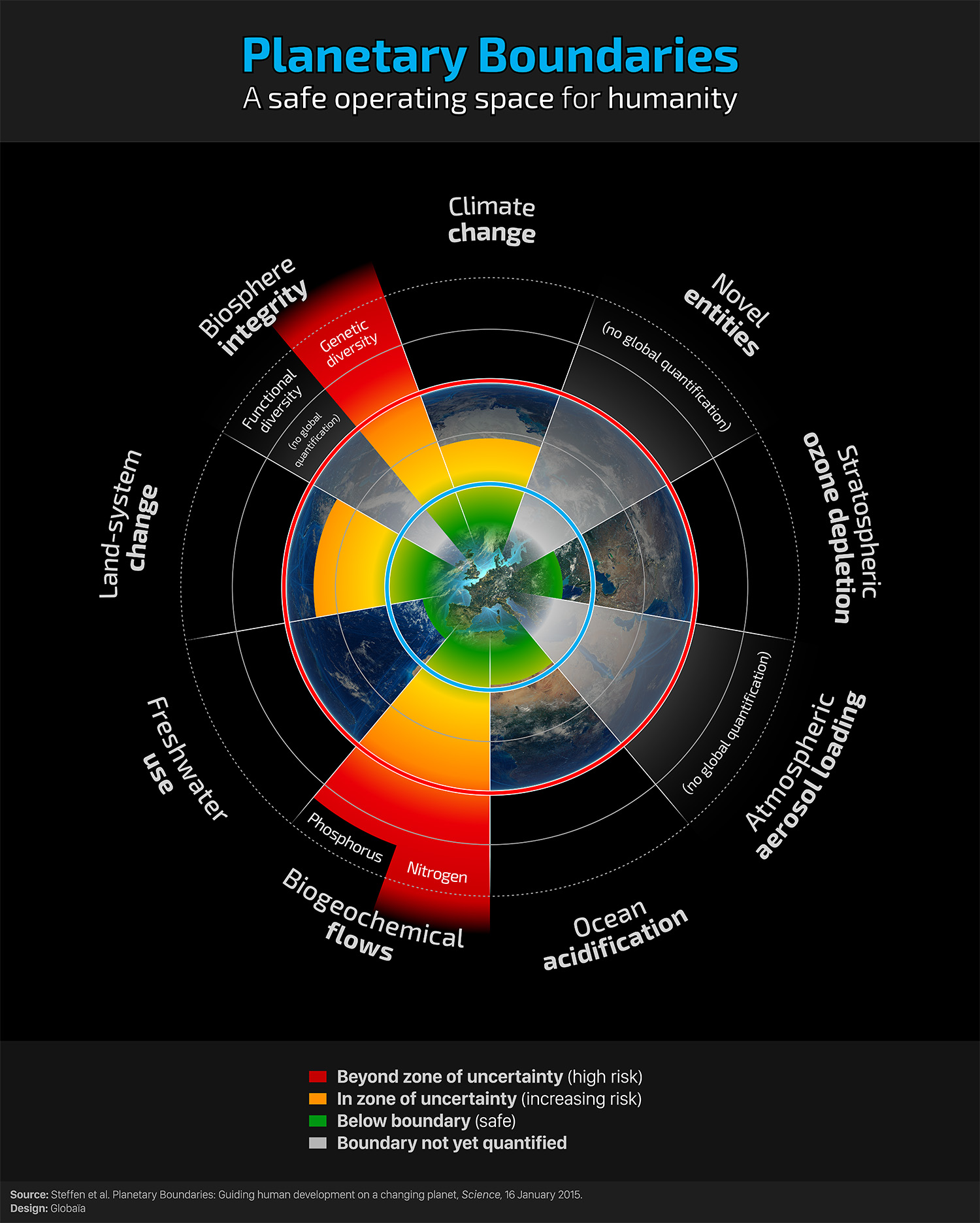
http://www.stockholmresilience.org/research/planetary-boundaries.htmlIn 2009, some scientists got together and said, you know, Earth probably has some limits in terms of safe operating space for humans (...we are a bit anthropoocentric). These 'Planetary Boundaries' consisted of biological and physical aspects of the Earth, such as freshwater, biological diversity, and  atmospheric composition, which underpin its ability to support most life. Within the past couple of years, scientists have broadly agreed that several of these boundaries have been surpassed. We can largely thank widespread agriculture for two of the big ones - loss of genetic diversity and changes in nitrogen and phosphorous cycling -  however, we have a much less complete understanding of things like invasive species and ocean acidification.

Right, so what does that have to do with Yom Kippur? Well, let's just say we have created a problem that could benefit from a bit of fasting. One of the major drivers of reaching and exceeding the planetary limits is the human population's level of consumption. We like 'stuff' and go through heaps of it: Americans trash 11 million tons of clothing annually (and buy 5 times as much as in 1980); Aussies exchange or upgrade their mobiles every 18 months; Brits put 3 billion disposable cups in the rubbish every year. Such consumption patterns can affect land and water systems both directly - through extraction of resources like timber, metals, and oil, to feed demand for this 'stuff' - and indirectly - by throwing away the used and unwanted (...even when there is no away) and polluting with this waste. They also have embedded impacts related to production, ranging from water and energy use to human rights infractions and labour conditions.

IMG_2800
Now is maybe a good time to note that the need to reduce humanity's level of consumption is not a new idea. Meadows & co addressed this issue back in their 1972 Limits to Growth, though the sheer quantity and ephemerality of consumables today would probably have been difficult to fathom back then. So recognizing the problem is not the tricky part - perhaps a 'fast' is a bit extreme, but humanity definitely needs to go on a bit of a diet. Yet coming up with feasible, effective, and equitable solutions is by no means easy, and is rife with challenges of feasibility and ethicality.  

One school of thought finds fault in the very nature of our growth driven economy, arguing the impossibility of a 'Green Growth' model that sees only an upward trajectory, contingent on consumption as a primary measure of success. Ultimately, we may just we have to choose: we either keep buying in to the system in order to grow our economy or live more simply to ensure our future existence. Sounds bleak. While this may seem austere, the principles are very practical and social. Proponents of the degrowth model support reaching for 'sufficiency' not simply 'efficiency'. This means repurposing existing infrastructure, buying second-hand, growing a "sharing economy", cultivating edible yards, and re-considering what makes us happy (I'm also partial to the tiny house phenomenon...). Nothing short of a revolution, that will ultimately involve changing the way our communities are designed and the laws and regulations in place. But many of these principles are already in practice at a small scale, and as individuals we can continue to take baby steps, and make more mindful choices as consumers. 

For those observing, have a safe, meaningful, and perhaps thought-provoking fast. For all of us, year-round, let's collectively move toward fasting from the unnecessary, the disposable, and the wasteful.