Pages

Showing posts with label sustainability. Show all posts

Friday, May 11, 2018

Lessons from an Empty Stomach

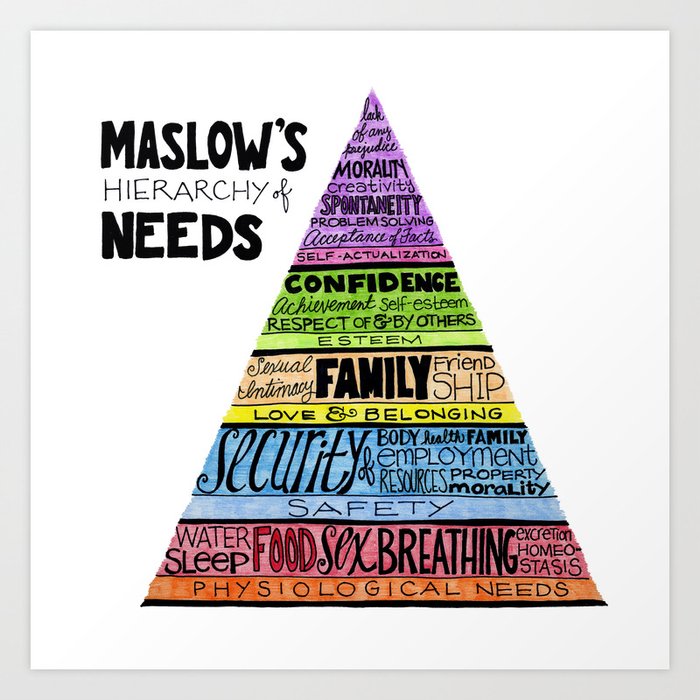
https://society6.com/product/maslows-hierarchy-of-needs-ii_print
This morning I woke up with a nice a cup of tea and some avocado on kalamata olive toast. It seemed extravagant after five days of sliced banana on basic wholemeal. And while I can't say my calorie count was dangerously low over this past week of Living Below the Line, I still seemed to be perpetually hungry (and there was the whole lack of coffee...). Not only that, but thoughts of my next meal filled most waking hours. 

This isn't surprising. If your basic needs - food, water, shelter - aren't met, it's difficult to think of other more frivolous things. Abraham Maslow got at this idea in his 1943 paper, "A Theory of Human Motivation". Also referred to as "Maslow's Hierarchy of Needs", his theory outlines five levels of needs: physiological, safety, love & belonging, esteem, and self-actualization. Deficiency in a lower level of needs causes anxiety, and means an individual will prioritise fulfilling those needs first and foremost. "Where will I get my next meal" would supercede "how well am I doing at work" or "should I hang out with friends tonight". Chronic deficiency of these basic needs can ultimately hinder people from reaching their potential, and society as a whole from being more enlightened and just (see the "growth" tier: self-actualisation). And, as one can imagine, things like poverty and conflict can lead to perpetual loops in the bottom rungs of the hierarchy.

https://doi.org/10.1016/j.ocecoaman.2004.09.002
Cinner & Polnac (2004) on coral reef conservation
This hierarchy also offers some insight if we care about the environment and conservation. Particularly in the early years, "fortress conservation" dominated the agenda. This largely entailed putting tracks of land - say, tropical rainforest - under protection, kicking out any people that lived in the area, and barring entry and use. Besides this being morally questionable, it also often fails to protect the area of interest. This isn't to say that we should get rid of all protected areas - save Yosemite! -  but rather that the needs of people living around and reliant on protected areas must be considered. Studies have shown that socio-economic factors influence people's perceptions of conservation, and thus need to be accounted for to develop appropriate strategies. You can imagine that someone with an income too low to purchase food, but who lives near a forest with deer and other tasty critters, might prioritise his need to eat and feed a family over the value of an intact protected forest. Some of the strategies to address this tension have included buffer zones around protected areas, where local people can harvest non-timber products like honey or bamboo; and community-managed marine and forest areas, which allows people to use certain resources to meet their needs while fostering the motivation and capacity to sustainably manage them. These, too, don't always work out as planned, but they are steps toward more just and equitable conservation that address humanity's hierarchy of needs.

Thanks to all the support from friends and family during the week, and for contributing to the Oaktree Foundation's mission! It made all the difference (and contributed to the 'esteem' level of my needs).

Read More:
How just and just how? A systematic review of social equity in conservation research - Me, Liz Law, Nathan Bennett, Chris Ives, Jess Thorn, and Kerrie Wilson, 2018 (open access)

Friday, April 27, 2018

How Just, and Just How?

 It’s a long-standing ambition, for society to reach some sort of just and equitable ideal. What that means in practice differs, depending on the time, place, and people involved. But it does seem that meeting basic human rights and needs and the notion of ‘fairness’ are prevalent across discussions of social justice and equity. Things like poverty and hunger connect pretty clearly to equity. For conservation, however, it’s a bit fuzzier. In theory, conservation is driven by values around making the world a better place. Yet we also have to ask ourselves - who gets to decide how conservation happens, where, and who benefits or suffers. 

A few other researchers and I recently thought we’d try to get a better sense of how research in conservation has so far approached equity - especially how it’s defined, measured, and evaluated in studies. We sifted through a mound of papers, synthesizing information from the 138 that considered how social equity and conservation fit together. Besides a general upward trends in the amount of research explicitly on this topic (and alphabet soup present as SDGs, REDD, and CBD have become prominent), there are also some trends in what and how.

Equity is 3D. According to people who spend a whole lot of time thinking about equity, we should consider not only the distribution of costs and benefits, but also the procedure of making things happen (e.g. who gets to make decisions) and the recognition for rights, types of knowledge, cultural factors, and the like. The conservation literature has often defaulted to analysing distributional equity, adopting a stance of equity as egalitarian or fair allocation of costs and benefits and capitalizing on concrete and easy-to-measure things … like money. And what is considered ‘equitable’ may be a bit fuzzy or obscured, but making it very clear is essential for keep tabs and evaluating progress.

While the limited view of equity adopted by conservation and insufficient definition are important things to recognise, there are other lessons we can take away from the state of our current equity and conservation research. If we backup and consider why researchers study conservation and equity in the first place, we often see a utilitarian perspective, this romantic notion that social equity and conservation success go hand-in-hand. However, there may in fact be trade-offs between social equity and conservation (or even between those different dimensions of equity). In both research and practice we need to be more critical of our underlying motivations and examine more closely the knock-on effects of any given action.

Like a lot of the research in conservation, there are also some discrepancies between who is carrying out the research and where conservation is taking place. For example, very little research is happening on conservation and equity in Europe or North America, but much of the research is coming from institutes in those regions. This makes it a bit hard to tell how much studies reflect the researchers’ own notions of equity or what is relevant to the local context.

I guess the burning question is still, is conservation equitable? Well, it’s complicated (and inconclusive). We found that studies reported negative or mixed outcomes - so conservation less frequently resulted in positive equity results. But all those elements above (and many more) will influence these endpoints.

If you found this all super-intriguing, you can get even more detail from our review paper in Environmental Research Letters! AND, while we’re on the topic of social equity … During Live Below the Line this May, I’m raising funds again for this awesome foundation that works to end poverty and empower youth. Definitely fighting injustice!

Friedman, R.S., Law, E.A., Bennett, N.J., Ives, C.D., Thorn, J.P.R., & Wilson, K.A. 2018. How just and just how? A systematic review of social equity in conservation research. Environmental Research Letters, 13(5). Doi: 10.1088/1748-9326/aabcde 

Saturday, March 10, 2018

Cinta Coklat: Indonesia and the Cacao Scene

Cacao in Central Region, Ghana
When you think of agricultural products from Indonesia, palm oil is probably the first thing that pops into your head. While the bulk of global cacao still comes from West Africa - particularly Cote D'Ivoire and Ghana - Indonesia clocks in as a close third in terms of the world's largest producers. For the most part, all these beans are exported unprocessed to the US, Malaysia, Singapore (or from Africa, Europe) to be made into chocolate. Unlike West Africa, where there is a narrow band of suitable habitat and climatic conditions - the high forest zone running toward the south - basically, all of Indonesia could viably grow cacao. Right now, about the same area is under cultivation as in Ghana - just for scale, Indonesia has about 8 times the land area - and Sulawesi makes up the bulk of the production area (about 75%), followed by Java and Sumatera.

At this point you may be asking yourselves, "why is she rambling on about cacao again? I thought that was over and community forestry was the new topic du jour." Well, the two are actually related! Very exciting. Cacao is one of these awesome crops that is traditionally grown in the understory of a forest. Young cacao needs shade to protect it during vulnerable stages, and older trees can benefit from the retained moisture and moderate temperatures. Yes, there are also production downsides, but agroforestry models of cacao production are tuned for the long-term, maintaining benefits like soil fertility and structure better than monocropped trees.

Rubber in West Kalimantan, Indonesia
As such, along with coffee, bamboo, rattan, and rubber, cacao has been considered as a potential forest-based "alternative livelihood". Old habits die hard (especially when there is no desire for them to die at all...), so you can imagine my elation when cacao came up in conversations with community forest managers. (... up in northern Borneo, we quickly decided I would have to come back in 2-3 years to "help", once the trees had matured...). Though the prospect may be rather alluring, cacao is still a bit of a mystery to many Indonesian smallholder farmers and forest community.

Why? Well, I don't have a solid answer, so my musings will have to suffice. With regards to the other non-timber forest products: bamboo has always called Asia home and frankly grows like a weed; rattan is a natural forest crop in Southeast Asia that locals have used for centuries in household items; and although rubber is native to Latin America, it received years of attention during the colonial era and has largely remained a smallholder crop. Coffee has its roots in East Africa and a history in the region similar to cacao, yet somehow the product of this understory shrub has fed the global market for centuries and recently embedded itself in Indonesian culture (ngopi much?). Mysteriously, even though cacao - also indigenous to the Americas - has actually been present in the region since the 17th century, and cultivated in Indonesia since the late 18th century, it hasn't garnered the same interest. The crop didn't experience the same colonial heyday as in West Africa, and farmer disinterest combined with pest problems early on meant production remained limited until the latter half of the 20th century. 

But Indonesia's time may have come. It happens to be an ideal place to set up shop in terms of the regional consumer demand and climate suitability. It also offers an opportunity to support multi-use forestry and provide a high-value cash crop for locals in areas where forests may be on the chopping blocks. That said, despite my enthusiasm for cacao as a potential agroforestry crop in community forests, I definitely have a few qualms.

First off, this involves planting non-native species. Not that we haven't already introduced a crazy amount of agricultural products into novel places (hmm, like oil palm, rubber trees, and coffee, to name a few here in Indonesia), but in this case it means doing so within forests meant to be restored or conserved for limited non-timber uses. Would we be losing some of the ecological value in deference to economic by planting non-natives? Or would the benefits outweigh the costs if it means maintaining higher biodiversity and general forest cover than business-as-usual?

Second, it's a slippery slope, towards commercialisation and global markets. In Ghana, cacao started as an understory crop, as well. But over time it has moved to being grown predominantly in full-sun. With government policy supporting the use of chemicals and new sun-loving varieties for greater production, soils have become exhausted, and problems like erosion arise. Would Indonesia follow a similar trend?

And finally, is there the support available to ensure capacity for sustainable production? Fair trade, Rainforest Alliance, UTZ certification, etc. are all active across African and South American growing regions (and present in Indonesia, though more quietly...). There are major research centres in Costa Rica (CATIE) and Colombia (CIAT) that both have cacao programmes and are active in trials and training on both continents (though there is the Indonesian Coffee and Cocoa Research Institute). Asia, well, is new to the scene and generally underrepresented. The industry will continue to be developed here regardless, especially since cacao in other parts of the world is likely to bear the brunt of climate change, so making sure does so with sustainability at its core is essential. 

All of this is to say, if anyone is looking for a cacao agroforestry enthusiast (with little agronomic training but plenty of passion), I'll be on the market for gainful employment in roughly 18 months :)

AND If you're on the lookout for existing awesome Indonesian chocolate, give these a try:
Pipiltin Cocoa is a Jakarta-based bean-to-bar chocolate company that directly sources beans from Bali, Aceh, East Java, and Flores. [more from the founder]
Krakakao is an organic chocolate company that sources directly from farmers in South Sumatra, providing training and support sustainable practices around the Bukit Barisan Selatan National Park. They also have a few bars from Bali, Sulawesi, and North Kalimantan, including my favourite bar, packaged with a slow loris on it ...
Pod Bali was founded on its namesake island and sources all the ingredients locally and supports communities producing cacao in high conservation value areas.

Read More:
The Rise of Southeast Asia Chocolatiers - Michelin Guide Singapore, 2017

Wednesday, February 7, 2018

Embrace the Cloudy Skies

We all have those days. You wake up to the light pitter-patter of raindrops on the roof. Peering tentatively out the window, and all you see is a blanket of gray. You pull the covers back over your head and hope no one notices you straggling in several hours late for work. 

DSC_0406
Last week, many of my Brisbane compatriots may have tried to pull off something along these lines, bemoaning the gray and rainy weather. Though I love the usually brilliant blue skies and sunny days of Brisneyland, I have to admit that my Seattle upbringing makes me crave dreariness and gloom (weather-wise) every now-and-again. But the lack of rain piques my interest (and concern) for another reason. It's indicative of a worrisome trend across the globe - one that is not just about how much water falls to the ground in a specific place, but at what time of year and how intensely. So, let's talk a bit about rain!

Queensland is home to the Great Barrier Reef and a belt of tropical rainforest. But it also seems to have a recurrent precipitation problem. During December, arguably the start of the wet season, rainfall and soil moisture were below average for most of the state. Here in Brisbane, like the rest of Southeast Queensland, we rely on capturing rainwater in reservoirs throughout the year to feed demands for drinking water, etc. While this is efficient during the frequent summer deluges, it leaves us at a bit of a risk when the skies are clear for too long.

Moving to a more arid region, Cape Town has made headlines repeatedly in the last week or two. This is because the South African city with a population of 4 million people is likely to run out of this year's water by around May. Growing water demand (i.e. more people) and record-level drought (potentially augmented by climate change) are being implicated in the urban water shortage. Ultimately, the city is drawing on its underground aquifers and rivers faster than rain can replenish. Indonesia's capitol city, Jakarta, also made headlines for unsustainable use of groundwater (caused by illegal well-digging), though the big concern here is the risk of land sinking and falling below sea level.

Our last case study of rain troubles is Seattle, WA. This is another story altogether. Here it rains. In fact, in 2017, Seattle got a year's worth of rain in just 5.5 months. Cool, so water shouldn't be an issue, right? Climate change predictions show Pacific Northwest of North America as getting wetter and warmer. Unlike arid Cape Town or sub-tropical Brisbane, much of Seattle's drinking water comes from spring snowmelt. And this, my friends, is reliant on the temperatures dropping low enough for winter snows to fall and remain in the upper parts of the watersheds. Or, if precipitation becomes more concentrated at certain times of year, when it is less likely to fall as snow, we are also likely to see water shortages.

So Brisbane is back to sunny skies, but rain should never be far from our minds. We had three different water supply stories, but a common thread of precarious precipitation ran throughout. It matters where, when, and how much, but perhaps we could still embrace those cloudy days just a bit more!

Monday, June 5, 2017

Sweating the Small Stuff

This wasn't exactly a glowing week leading up to World Environment Day yesterday. However, while mitigating climate changes we've put in motion requires more globally coordinated action and government intervention (... the atmosphere is the ultimate common pool resource, no?), there are heaps of other environmental travesties that emerge in large part due to our decisions as consumers. World Environment Day's theme this year is about reconnecting to "nature", which is a lovely message with very little depth. Although hitting up green spaces - parks, wilderness areas, etc. - often benefits both human health and encourages positive environmental values, this idea of needing to "reconnect" implies we live apart from nature. The ambitions of this year's World Environment Day seem a bit modest for the scale of the problem, making the proffered actions far less meaningful if not connected to the consequences of our actions during daily existence.

But it's not a huge leap to connect our daily doings with the health of the planet. In Australia - and the UK before that - a pretty nifty three part series about the War on Waste tried to expose the nature of our "Throw-Away Society" and the consequences for the environment. for Oz, the numbers are staggering, ranging from 20% of our groceries ending up in the bin to 6,000 kilograms of fast fashion in the rubbish every ten minutes to 113 take-away coffee cups discarded every four seconds (that's 2.4 million in a day)! But plastics seem to be making the headlines these days.

Australia uses nearly 4 billion plastic bags per year, the majority of which end up in landfill (or inevitably waterways). Some researchers calculated that worldwide approximately 8 million tonnes of plastic waste ends up in the oceans each year. Once some of the most pristine beaches in the world are now littered in plastic debris. While this is an eyesore, a visual reminder of our plastic addiction, there are more hidden and insidious impacts. Almost every seabird on the planet has eaten plastic - which may not always kill the bird, but can't be particularly good for it. But plastics also break down into smaller and smaller particles. These then accumulate along the food chain, similar to other toxins in our environment like mercury in tuna. We don't yet know how harmful all of this is, but we can make sure it doesn't get worse. 

This last week, UQ sustainability challenged staff and students to contain all single-use plastics in a small jar - mine was 350mL to be precise. The idea was to be more aware of our frequent and often thoughtless use of disposable plastics, and to consider steps to take to reduce. Sure, recycling is a good first step, but it's not a guiltless affair. Not every plastic is recyclable nor gets recycled, and even if it does, it takes energy to go from plastic bottle to new plastic something or other.

But the alternatives are hard, because they rely on people changing their daily actions and breaking habits ... and let's face it, even the well-meaning of us just can't be bothered if something seems like too much effort. Making your own shampoo may seem like an impossibility, but there are plenty of low-hanging fruit. Bring a cloth bag or a reusable mug, and don't succumb to the draws of straws or pre-bagged produce. It's just a matter of making simple behaviour changes part of your routine. Easy.

So on this World Environment Day, rather than just "reconnect with nature", try reconnecting with your personal impact on the planet and commit to doing something about it.

In case you're also interested in food waste, it's a favourite topic...
Jingle the Waste Away
Smashing Pumpkins
America the Wasteful

Tuesday, May 2, 2017

A Peasant Diet for the Planet

Ok, I admit it, I like charts...
This week I'm eating like a peasant. Now that (or more likely, this post's title) might have rubbed you the wrong way. For some, it conjures up unpleasant images of feudalism, toiling under rich landlords; for others it may have too many associations with colonialism and hearkening to an era where rural people in developing countries were somehow seen as inferior beings. But at its root, the word means country dweller.* And most people living in poverty live in rural areas.

"I'm eating like the average resident of a developing country" would have been a more accurate statement. If you look where my calories are coming from over the course of the Live Below the Line Challenge, it's quite similar - although missing the eggs, fish, and other animal products that do feature in most diets. Cereal grains (oats and rice) comprise nearly two-thirds of my daily 2000 calorie intake, and pulses are a major source of protein. Now take Asia for instance, which houses the majority of the world's poor (and population as a whole). Rice is the staple food, making up 50-66% of caloric intake in the region (with the higher values corresponding to the less economically developed countries). Pulses (e.g lentils) are also staple foods that, although usually contribute only a small fraction of calories, can actually make up close to half of protein intake. Roots and tubers (e.g. sweet potato and cassava) have historically made up nearly half of calories in many African countries, but this begun falling during the Green Revolution.

A familiar picture, my food for five days of Living Below
Now, the ubiquity of such a diet doesn't mean it's the way forward. For one, although grain-heavy diets provide enough calories, they often lack important micronutrients. Often referred to as the "hidden hunger", insufficient intake of vitamin A, iron, zinc, and folate is particularly concerning in children, who can suffer stunting and hindered brain development. While things like home gardens have been proposed as means of curbing such deficiencies, the poorest of the poor also often face difficulties getting their hands on land. Besides being a human health issue, a healthy and diverse diet is increasingly considered a human right. It is also disempowering not to have the resources to choose what to eat, when, and how much.

But there are also lessons to be learned from how the majority of the world's poor about how to eat for the planet. On average people in East Asia and the Pacific consume around 1/3 the amount of meat as North Americans and Europeans, and in Sub-Saharan Africa it's about 1/8th. Eating a primarily plant-based diet is generally acknowledged to have a lower carbon and water footprint than one heavy in meat (especially beef and lamb). According to the World Resources Institute, if the world's top 2 billion consumers reduced their meat and dairy intake by 40%, we could free up land double the size of India and avoid greenhouse gas emissions three times the global amount in 2009. Furthermore in many developing countries, what animals are consumed are eaten in low enough quantities to be sustainably harvested, or domesticated ones serve multiple purposes on the land - livestock can produce milk as well as manure for crops, or fish ponds can provide fertilizer for crops and feed for livestock. At the end of the day, I think a glimpse of a poverty-line diet is taking a taste of moderation that the big consumers in the world greatly need.

So while I miss green veggies (and chocolate), I'm pretty thankful and content with the bounty that even AU$2 per day can bring. Consider expressing your own gratitude, and sharing your good fortune by support this year's Live Below the Line campaign!

* Old French paisent ‘country dweller’, based on Latin pagus ‘country district’ (Wikipedia)

Friday, December 23, 2016

Jingle the Waste Away

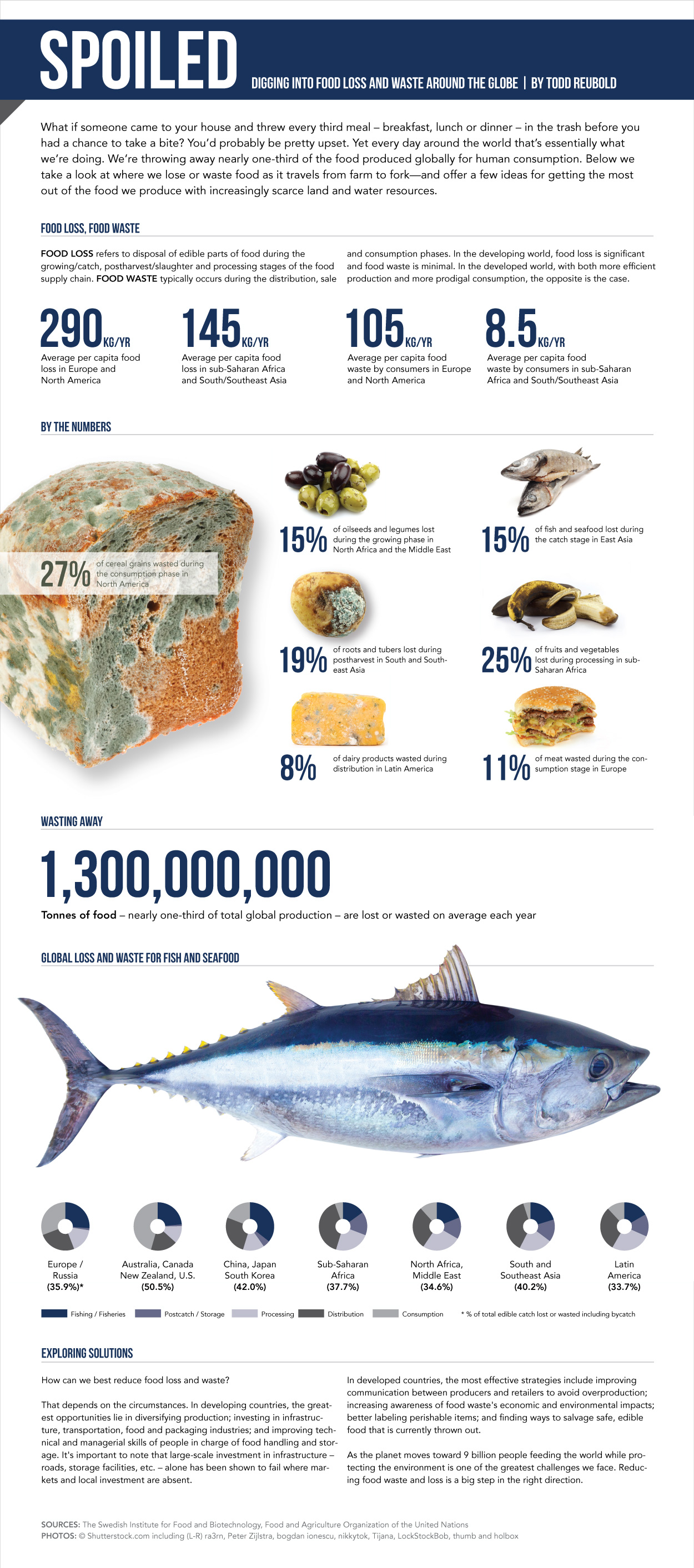
http://ensia.com/infographics/food-wasteThe end of the year is often characterised by celebration - by eating, drinking, giving gifts, and traveling to see friends and family. While I'd never want to diminish the importance of spending time with family, this time of year is also notorious for excess and waste. I've already dug a bit into consumerism and waste this year, but as we approach the period of gingerbread houses and eggnog, food is front and centre. Not so surprisingly, in the United Kingdom for example, an estimated 4.2 million Christmas dinners went to waste in 2014.

In industrialized nations, this waste occurs at roughly three points: 1) at the farmgate, where retailers determine if produce meet their aesthetic standards; 2) at the shops, where retailers ensure shelves are always amply stocked; and 3) in the home, where we either cook too much or fail to prepare foods in time. And while some of these things seem out of our control, it is important to recognize that we don't just waste food during holiday times; we can actually be proactive about this waste year-round. 
 
We're in a bit of a predicament about waste reduction ambitions for points 1 and 2. Australia has a highly concentrated food retail market - Coles and Woolworths make up an astounding ~70% of the market, though only 45-50% for fresh produce (which, alongside bakery, are the biggest retail wasters). A Conversation piece from earlier in the year essentially argued that curbing waste on this end of the food chain comes down to policy and regulation, drawing on the example of retail food waste bans in France. The vast market power these businesses enjoy allows them almost free reign in dictating the quantity and quality standards that farmers must meet. Organizations like OzHarvest help on the other end, by collecting and redistributing food surplus to charitable organizations. But there is a big sea, and there are both legal and logistical issues to overcome to fully address the approximately 44 million tonnes of waste. Australian retailers are still lagging in discounting products close to their sell-by dates to move them from the shelves to people's plates (and not the bins), and there are other low-hanging fruit.

But there are also the choices we as consumers make that affect food waste, and ultimately would have trickle-down effects in terms of the Big Guys' sourcing practices and policies. A Rabobank study found that Australian households toss 14% of their weekly groceries. The Foodprint Melbourne Project found that the amount of food thrown away in the city in one year could feed two million additional people over that same amount of time. For my environmentally-inclined readers, this also amounts to 3.6 million hectares of land, 2.5 million tonnes of greenhouse gases, and 180 million litres of water. Decreasing these numbers and making more conscientious decisions about what we buy, can provide a signal to retailers from the demand side for how they should act.

http://www.foodwise.com.au/foodwaste/food-waste-fast-facts/Furthermore, the good news is that food waste at the household level itself is easier for us as individuals to control, and particularly important during these times of festivity. Here are some holiday jingles as a reminder:*
  1. You're makin' a list, and checkin' it twice, buying too much is not very nice!
  2. How to tell, does it smell, the date says it should go. But oftentimes, the food is fine, use your senses and you'll know.
  3. I'm dreaming of a leftovers sandwich, one from the meal the eve before.
  4. The platefuls of food are frightful, but spring will be so delightful; dump scraps in the compost so, things can grow, things can grow, things can grow.
Well, that's all I've got. Stay tuned for some quick Chanukah musings on oil and a recap of the action-packed year. Here's to a foodwaste-free holiday!

Further Wasteful Reading:
America the Wasteful (2013)
Smashing Pumpkins (2014)
What's my Age Again? (2015)


*1. You're eyes are bigger than your stomach, so buy less - Santa Claus is Coming to Town  2. Check if food is spoiled and not just past the "pull-by" date - Jingle Bells  3. Use leftovers to make a simple sandwich or freeze 'em for a rainy day - White Christmas  4. Compost non-meat leftovers - Let it Snow

Monday, October 31, 2016

A Bitter-Sweet Reflection on Reefs

http://theconversation.com/great-barrier-reef-bleaching-stats-are-bad-enough-without-media-misreporting-58283It was only a few days ago, the panicked cry that made brief headlines in the news. On the eastern coast of Australia, in the portion of the Great Barrier Reef north of Port Douglas, researchers have proclaimed that most corals are dead. It's the worst bleaching event recorded in the Barrier Reef. The decimation can be ascribed to a number of complaints - rising sea temperatures, strong El Nino conditions, crown of thorns attacks - yet there has been a longer history of impacts from degradation on the land and direct exploitation of the reef itself.

For the far north, temperature may be the biggest threat to corals. Moving further south in the Great Barrier Reef Catchment, there are other forces at work that derive closer to home. The sugarcane industry in Queensland dates back to 1861, fueled by south sea indentured (and forced) labour, not unlike its turbulent counterparts in Latin America and the Caribbean. But the troubled history of human rights infractions in most of the Western world is a topic for another time and place. Sugarcane, along with pasture and banana, replaced over half of the primary tropical forest in Northern Queensland. Even today, the management of grazing land and cane results in pollution that makes its way into coastal waters.

http://www.reefplan.qld.gov.au/about/regions/great-barrier-reef/gbr-first-report-card/Now those of you who are familiar with the challenges in the Gulf of Mexico, realize this is a similar (albeit, tropical in flavour) phenomenon. A large amount of cash crop (corn in the US, sugarcane in Queensland) is grown, using an associated amount of fertiliser and other chemicals. When there is a heavier rainfall, particularly during those summer storm months, soil is washed away along with the nitrogen, phosphorous, and pesticides, and eventually makes it to the Gulf or the Reef. This influx of nutrients stimulate the growth a algae (and the voracious crown of thorns starfish in the GBR), which ultimately use up oxygen when they die and decompose. The silt and other particulates block sunlight from penetrating the water column, making it difficult for marine plant life to survive. Basically, these conditions can become drastic enough that the coastal areas are uninhabitable for fish and other wildlife.

Now, the obituary to the Great Barrier Reef that has coral scientists up in arms may be a bit melodramatic, and could very well be counterproductive to actually doing something to increase the reef's resilience. Yet research shows that existing policies and management plans have so far proved inadequate to addressing the scale and severity of the problem. As an avid baker, it is quite concerning that by buying the Australian-grown cane sugar available in the grocery store, I inadvertently contribute to the reef's degradation. It's hard to find a meaningful indicator of sustainability when always worrying about greenwashing with labels, particularly when they involve partnerships between WWF and Coca Cola. But we do what we can, and try to stay informed as possible (particularly when feeding a bunch of conservationists...). For now, the Bonsucro certification (applicable to several sugar brands in Oz) does lay out thorough ecological and social standards that sugar production must meet - touching on labour, climate change, biodiversity, and downstream impacts. Maybe coral-inspired cookies will be my next [bitter]sweet baking adventure... 

Tuesday, October 11, 2016

Fasting for the Anthropocene

Around this time every year, millions of Jewish people shun food, from sundown to sundown. We don't eat or drink for those 24 hours in order to bring attention away from our physical beings and focus instead on repenting for the year's transgressions and seeking forgiveness from those we've wronged. Religious or not, I think we can all agree that a time for introspection and self-reflection is important. But while we fast from food on this day, there are other fasts we could undertake that are arguably more impactful, larger scale, and longer-lived.

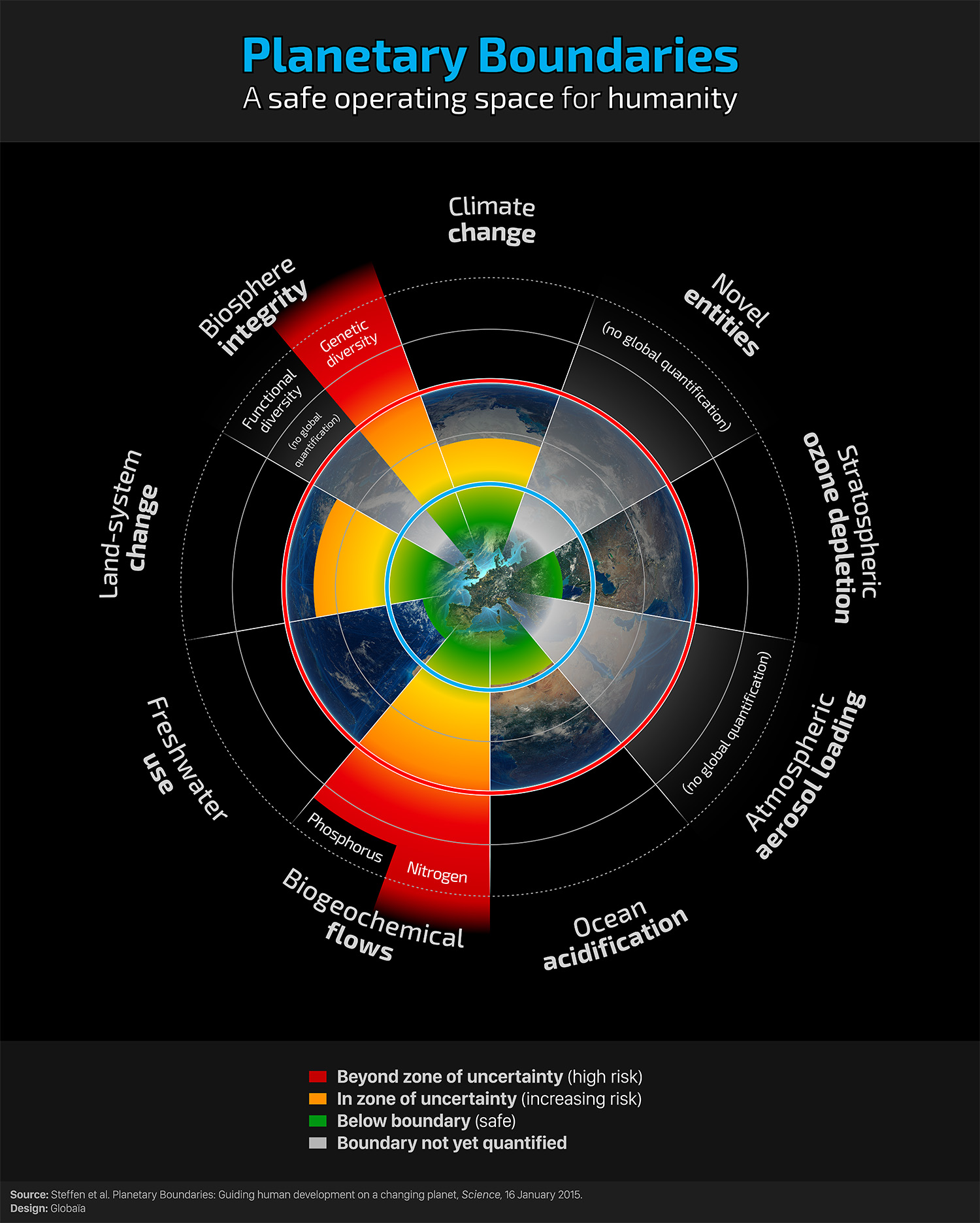
http://www.stockholmresilience.org/research/planetary-boundaries.htmlIn 2009, some scientists got together and said, you know, Earth probably has some limits in terms of safe operating space for humans (...we are a bit anthropoocentric). These 'Planetary Boundaries' consisted of biological and physical aspects of the Earth, such as freshwater, biological diversity, and  atmospheric composition, which underpin its ability to support most life. Within the past couple of years, scientists have broadly agreed that several of these boundaries have been surpassed. We can largely thank widespread agriculture for two of the big ones - loss of genetic diversity and changes in nitrogen and phosphorous cycling -  however, we have a much less complete understanding of things like invasive species and ocean acidification.

Right, so what does that have to do with Yom Kippur? Well, let's just say we have created a problem that could benefit from a bit of fasting. One of the major drivers of reaching and exceeding the planetary limits is the human population's level of consumption. We like 'stuff' and go through heaps of it: Americans trash 11 million tons of clothing annually (and buy 5 times as much as in 1980); Aussies exchange or upgrade their mobiles every 18 months; Brits put 3 billion disposable cups in the rubbish every year. Such consumption patterns can affect land and water systems both directly - through extraction of resources like timber, metals, and oil, to feed demand for this 'stuff' - and indirectly - by throwing away the used and unwanted (...even when there is no away) and polluting with this waste. They also have embedded impacts related to production, ranging from water and energy use to human rights infractions and labour conditions.

IMG_2800
Now is maybe a good time to note that the need to reduce humanity's level of consumption is not a new idea. Meadows & co addressed this issue back in their 1972 Limits to Growth, though the sheer quantity and ephemerality of consumables today would probably have been difficult to fathom back then. So recognizing the problem is not the tricky part - perhaps a 'fast' is a bit extreme, but humanity definitely needs to go on a bit of a diet. Yet coming up with feasible, effective, and equitable solutions is by no means easy, and is rife with challenges of feasibility and ethicality.  

One school of thought finds fault in the very nature of our growth driven economy, arguing the impossibility of a 'Green Growth' model that sees only an upward trajectory, contingent on consumption as a primary measure of success. Ultimately, we may just we have to choose: we either keep buying in to the system in order to grow our economy or live more simply to ensure our future existence. Sounds bleak. While this may seem austere, the principles are very practical and social. Proponents of the degrowth model support reaching for 'sufficiency' not simply 'efficiency'. This means repurposing existing infrastructure, buying second-hand, growing a "sharing economy", cultivating edible yards, and re-considering what makes us happy (I'm also partial to the tiny house phenomenon...). Nothing short of a revolution, that will ultimately involve changing the way our communities are designed and the laws and regulations in place. But many of these principles are already in practice at a small scale, and as individuals we can continue to take baby steps, and make more mindful choices as consumers. 

For those observing, have a safe, meaningful, and perhaps thought-provoking fast. For all of us, year-round, let's collectively move toward fasting from the unnecessary, the disposable, and the wasteful.

Tuesday, October 4, 2016

A Sweet New Year

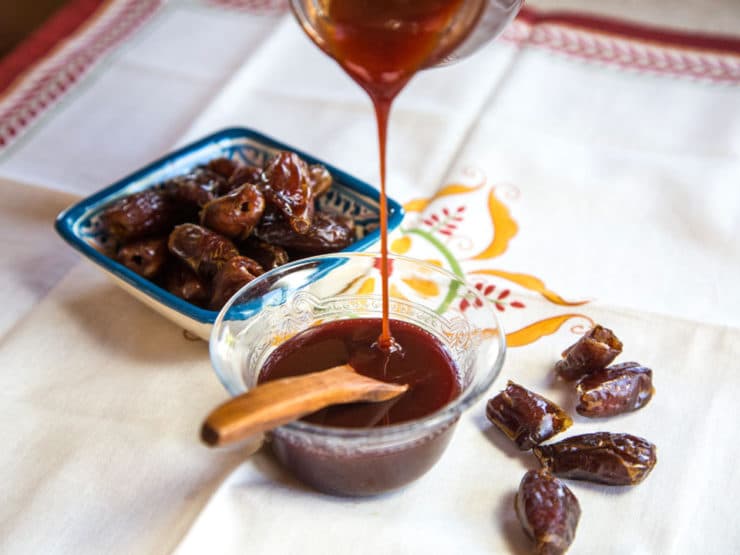
http://toriavey.com/toris-kitchen/2014/08/date-honey-syrup-silan/
Shanah tovah u'metuka - these words express wishes for a good and sweet new year. We actuate these sentiments by dipping apples in honey, eating rich raisin-dotted bread, and reflecting on a year gone past. While the round loaf of challah bread represents the continuity and cyclical nature of a year, the honey is a reference to a 'land flowing with milk and honey' - Israel. Many other Jewish holidays also embrace sweetness, prescribing more ritual consumption of honey, dairy, and fruits.

We often, however, overlook the fact that the honey alluded to in biblical texts is not the bee-derived syrup so commonly used today, but rather a sweet liquid made from the fruit of a date palm. The date palm is suggested as the oldest cultivated tree, potentially originating in presentday Iraq, and feeding the populace of the Middle East for upwards of 8,000 years. But an equally extended history with humans exists for honey produced by bees, as well. Pre-dating the advent of agriculture by a hair (it is a forageable food), honey was probably first stolen from the hives of wild bees a bit more than 10,000 years ago. Apiarists may have started cultivating colonies in ancient Egypt, or perhaps back even further as documented in cave paintings. It was fit for gods, used as currency, and replete with medicinal properties. 

This is a sticky topic for a vegan. Yet while the staunch abstainers point to the poor oppressed worker bees, the fruits of whose labour are then cruelly seized, I'd argue that conscientious honey consumption is a more environmentally responsible. Local and in moderation, a recipe for healthier pollinator populations and more resilient ecosystems. While not quite at the level of concern as the recently declared endangered bee species in Hawai'i, bees do face huge pressures from habitat loss, pollution, pesticides, and more, while also playing pivotal ecological roles. We can do far more by supporting local cultivators who try to build a better environment for people and apids, than by boycotting the industrial segment. Let's leave it at that!

And because a Jewish holiday blog post is incomplete without a sweet recipe, here's one for the road...

Rosh Hashanah Honey Cake
2/3 cup sunflower oil
1 cup hot black coffee
1/2 cup non-dairy milk (or orange juice)
1 1/2 cup raw cane sugar
1 tbs treacle or molasses
1/2 cup honey (if you swing that way), agave, or golden syrup
10 large dates, soaked for 3-4 hours or overnight in ~1/4 cup water, pureed (or double and replace honey entirely)

3 1/2 cups plain or light wholemeal flour
2 tsp baking soda
1/2 tsp sea salt
3 tsp cinnamon
1 tsp allspice

2 tsp apple cider vinegar (if no orange juice)
1/2 green apple, chopped (optional)
1/2 cup walnuts, chopped (optional)

1. Mix oil, coffee, milk, and sugary substances together.
2. Sift in the dry ingredients and then combine just until everything is incorporated. Fold in sliced apple or walnuts, if desired.
3. Transfer to a large cake round or two loaf pans. Bake for 35-45 minutes at 180°C, until a knife comes out clean. Don't overbake! Allow to cool completely.

Inspiration: The Jewish Fruitcake - NPR The Salt

Monday, June 6, 2016

When it Rains, It Pours

On Saturday it rained. Not some pizzly drizzle, but a proper downpour. And as I revelled in the excuse to remain at home - luxuriating in the slothfulness of a damp day, listening to the melodic drum of the raindrops on the roof - it struck me how much the relationship with rain has shifted for over half the world's population (see urbanization post...). In the concrete jungles we have built to house a rapidly growing global population, water finds few permeable surfaces to infiltrate the soil below, and heavy rainfall often means the floodgates open, infrastructure is damaged, and lives are lost. We've seen this recently: people paddling through the streets of Paris, much of Texas submerged, and residents of Sydney (among many other areas of eastern Australia) fleeing for high ground. This simple molecule of hydrogens and oxygen wreking havoc on society.

Perhaps it is this urban existence that leaves us unaware of the vital role precipitation events and flooding played and continues to play in the existence and continuation of society. Yes, water quenches a thirst, but it also feeds the soil. Human habitation and subsequent civilization crept up around bodies of water that flooded regularly. For instance, the Nile supported the empire of Ancient Egypt, whose fertile growing regions depended on the influx of nutrient-rich silt from the highlands of Ethiopia, transported during the flood season. The floodplains back home in Puget Sound serve the same end, yielding highly productive agricultural zones and salmon habitat, supporting people back probably thousands of years when Native Americans first settled the region. 

In South Asia, people similarly depend on the arrival of the rains, here in the form of the monsoon. The summer monsoons in India recharge aquifers, drive hydropower, and enable the production of rice, tea, and dairy where rainfed agriculture still dominates. Because of the importance of the arrival of monsoon rains, festivals and traditions arose over time. In the past twenty or so years, with decreasing dependability of rainfall in the region, countries like India have seen an increase in the number of farmer suicides as the industry's prospects look more and more bleak.

Now these deluges are not always causes for celebration even if they are an essential life force; they still bring devastation when in excess. I suppose humans have dealt with these ups and down throughout our history; but with more of the landscape heavily modified and the climatic trends moving towards less predictable and more extreme, the challenges are likely to overshadow the benefits. Food for thought on the next rainy day.

Sunday, May 29, 2016

City Mouse, Country Mouse

Odds are, you are reading this from an urban area. Maybe not from one of the mega-cities ballooning in parts of South America and Asia, but at the moment over half of the world's population resides in urban areas. Although definitions of 'urban' vary geographically, we all agree it relates to population size and density, the public provision of infrastructure and services, and a reliance on non-agricultural income sources. Concentrated areas of human population have been touted as the model toward which we need to move in order to achieve more efficient lving and reduce humanity's ecological footprint. And in theory there is validity in this - compact living arrangements should decrease per capita energy consumption and physical space occupied, streamline waste disposal, and reduce emissions from private transportation (which is often unnecessary or impractical). However, as a nifty Science Magazine infographic has recently illustrated, cities retain more heat than rural areas with air temperatures 1-3°C higher, exhibit worse air quality (Beijing, anyone?), house more impermeable surface so groundwater can't recharge, and have this nasty tendency toward light and noise pollution (that honestly is bad for both people and the rest of the fauna we share the world with). 

Now those are all difficult challenges. An article on the urbanization and food system connection pointed out that there are other implications of cities beyond their immediate footprint. The authors voice concern over the potential loss of fertile agricultural land due to development - particularly because many cities were originally embedded in these productive zones (like in delta regions). They also note that urbanites tend to eat more animal protein. And as you guys know, the environmental impact of meat is pretty high. Some of the less well-established links between urbanization and food systems relate to changes in social norms and attitudes - for instance, people may be less particular about their food's environmental impact when not in close proximity to where and how it's grown; days tend to be jam-packed in metropolises and so convenience and packaged foods are popular; or even on the retail end, the need to err on the side of overstocking shelves to suit all consumer preferences and needs may result in greater food spoilage and waste (and few places to compost it).

The article also notes that the impacts on the farmers themselves, especially smallholders in these newly and rapidly urbanizing countries, is very little studied. Yesterday also happened to be World Hunger Day, as we continue to strive toward the Millennium (and now Sustainable) Development Goal of ending world hunger. This connects us to food security concerns, which are often concentrated in rural areas - as being poorer and with access to more limited supply and variation in food. But it's also important to recognize that hunger is not just a rural versus urban divide, and that cities often have great income disparities leading to inequality in access to and quality of food among the urban poor. The industrial revolution's rise in malnutrition as former farmers flocked to cities for factory jobs was just the beginning, and this continues to be an active area of study in both developing and industrialized nations.

Wednesday, May 4, 2016

Bad Accounting: Who Pays for Our Food?

Do you ever wander into the produce section of the grocery store, take one look at that pretty ordinary looking head of organic lettuce, and wonder why on earth it is so much more expensive than the one two shelves over? To me, it's both fascinating and horrifying that buying food grown without the use of pesticides and synthetic fertilizers has become a luxury (when it was merely the norm 60 or 70 years ago). The fact of the matter is the industrially produced lettuce costs just as much, if not more; the details are in who ends up paying.

Before we get too deep in an environmental economics discussion, I just would like to reiterate a few points about organic agriculture. In the spirit of organic agriculture, the health of the soil biome is paramount; in practice, the ag-industry has largely found organic substitutes for conventional chemical inputs, making soil management seemingly less important. Further, the jury is still out, and no evidence has conclusively shown organic produce to be nutritionally superior to conventional produce. Finally, merely lowering the price of organics may appear to improve access for lower income individuals, but at the same time is likely negatively impact those growing the crops. OK, caveats aside, so why the hefty bill on my organic shopping?

While not always the case, organic fruits and vegetables are usually more expensive (sometimes as much as 2-3 times the price) than conventional. The difference in price between organic and conventional foods is not a new topic in the media, and therefore multiple explanations have surfaced as to why the latter is cheaper. According to the UN Food and Agriculture Organization, it is largely an issue of supply and demand and economies of scale. There are relatively small volumes, so less product to distribute the costs over. This makes sense when you consider that growth in demand for organic products continues to outpace supply in the US, in Australia, and I'm sure elsewhere.

But another explanation points to the unseen costs embedded in our food, but not reflected in the price. These are usually things that the public benefits from - like clean water, breathable air, and a stable climate - but that no one person is responsible for maintaining. A classic example in the US is the seasonal dead zone in the Gulf of Mexico when nutrients applied to fields run-off and filter down through the Mississippi River. This is also a problem here in Australia, where land management practices are held partially responsible for the dire state of the Great Barrier Reef. And while organic production still often adds fertility amendments, soils with high levels of organic matter retain more water and reduce the amount of soil erosion. Multiple studies have also shown that organic agriculture results in lower greenhouse gas emissions, largely from the use of nitrogen fertilizers.

One of the problems is that incentives for farming don't take into account these costs borne by society, and counter-intuitively, detrimental practices are often encouraged through government subsidies (and companies driven by profit). Certain crops, and some of the biggest culprits for environmental damages, get the largest portion of billions of dollars in subsidies. Though there are insurance programs now for organic and diversified farms, the biggest rewards still come from using and abusing the land. Unfortunatey, accounting for these public goods usually takes governments and international bodies to put a value on environmentally damaging practices, and this is often politically unpalatable. So, when it comes down to it, paying that extra bit for organics helps support these resources we all appreciate (but nobody wants to pay for). And the blueberries taste better ;)

Tomorrow is my last day of the week of eating below the poverty line...you still have time to donate!

Relevant Reads:
Hunger for Organic Food Stretches Supply Chain (Wall Street Journal 2015) 

Valuation for Poverty Alleviation (My Munchable Musings 2015)
Eenee, Meenee, Minee, Moe (My  Munchable Musings 2012)

Tuesday, February 9, 2016

Feeding Iceland

On a tour the other day*, our guide made an offhand comment about Iceland being food self sufficient. If you know anything about Iceland - a small volcanic island nation in the north Atlantic - you might be a little skeptical of this claim. Actually, very few countries around the world are self-suffiencient in this respect (only Australia, USA, and France produce more calories than are domestically consumed). So how could Iceland possibly be?

Self-sufficiency is determined on whether a country could produce enough to feed its population, but not necessarily in practice. But let's take a look at some stats. According to the UN Food and Agriculture Organization, imports far outweigh exports except for animal products (esp. fish, milk, eggs, and lamb) - about 1,000 to 1 for the former vs. 35 to 1 for the latter. Iceland is a rather extreme place in many ways, and available food fit for human consumption is just one example. Around 19% of the total area of iceland is used for agriculture, though only 1.2% is arable (meaning it can support crops) and the other 17.5% is permanent meadow and pastureland for all those sheep and cows. The biggest arable crops are potatoes and tomatoes (grown in geothermally heated greenhouses dotting the country). So the modern diet in Iceland may not be quite domestically possible. 

But the country (as many around the world) used to, and had to, be self-sufficient, with a diet that reflected the particularly extreme circumstances of the island nation. With a landscape of ice and fire, early settlers subsisted primarily off of fish and seafood, lamb, and skyr (a yogurt-like cheese). Having depleted what little forest existed early after settlement, Icelanders relied heavily on wind-dried haddock (it's a fish...) and meat fermented in whey (a byproduct of the ubiquitous skyr). Some grains were cultivated prior to the little ice age of the 14th century, but not of quality and quantity to produce more than meagre flatbreads (plus, what's an oven with no wood?). Dulse (a red algae harvested from the sea) and fjallagros (a lichen foraged on land) supplemented this stark diet.

Humans living in an environment as harsh and unforgiving as Iceland offers managed to eke out a living for hundreds of years, innovating with the materials they had on-hand. In a time where we have so much technology and knowledge, it is interesting that we have these discussions of self-sufficiency of food supply. Sure, humankind has traded for millenia (including those ancestral Icelanders), but never on this scale or complete global level. The rapid movement of food stuffs often allows for the most efficient production, but it also means that many countries have undermined their ability to produce food domestically to a point not easily reversible. It may never be a problem; but the resilience of societies depends on flexibility and continuation of local knowledge and experimentation. I don't know. It seems like we could take a page out of the Icelandic history book and cultivate home-grown potential.

*you may know I tend to shy away from organized tourist activities, as often being inauthentic and pricey. But this was one of those rare exceptions, where the economy relies heavily (ok ~5% GDP and 30% export revenues...) on tourism, not to mention getting around by public transport is well nigh impossible (or at least nearly as expensive as organized tours).