Pages

Showing posts with label Ethics. Show all posts

Friday, May 11, 2018

Lessons from an Empty Stomach

https://society6.com/product/maslows-hierarchy-of-needs-ii_print
This morning I woke up with a nice a cup of tea and some avocado on kalamata olive toast. It seemed extravagant after five days of sliced banana on basic wholemeal. And while I can't say my calorie count was dangerously low over this past week of Living Below the Line, I still seemed to be perpetually hungry (and there was the whole lack of coffee...). Not only that, but thoughts of my next meal filled most waking hours. 

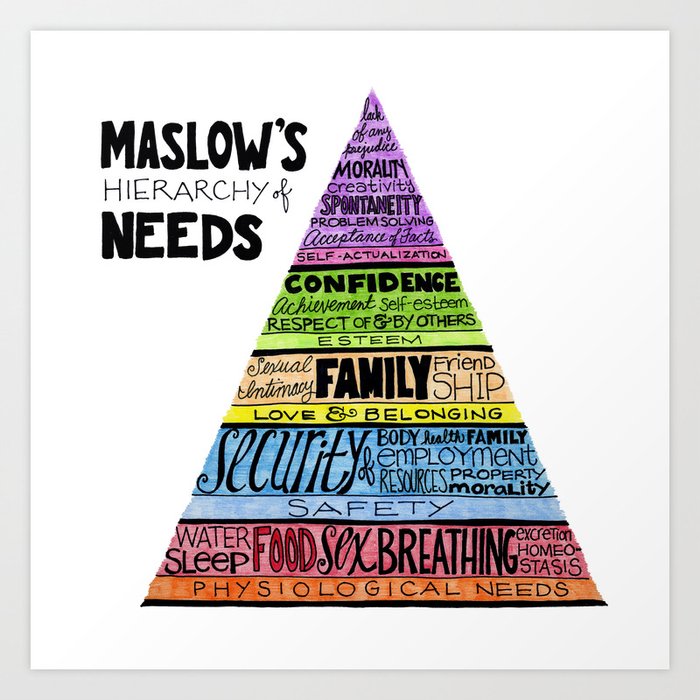
This isn't surprising. If your basic needs - food, water, shelter - aren't met, it's difficult to think of other more frivolous things. Abraham Maslow got at this idea in his 1943 paper, "A Theory of Human Motivation". Also referred to as "Maslow's Hierarchy of Needs", his theory outlines five levels of needs: physiological, safety, love & belonging, esteem, and self-actualization. Deficiency in a lower level of needs causes anxiety, and means an individual will prioritise fulfilling those needs first and foremost. "Where will I get my next meal" would supercede "how well am I doing at work" or "should I hang out with friends tonight". Chronic deficiency of these basic needs can ultimately hinder people from reaching their potential, and society as a whole from being more enlightened and just (see the "growth" tier: self-actualisation). And, as one can imagine, things like poverty and conflict can lead to perpetual loops in the bottom rungs of the hierarchy.

https://doi.org/10.1016/j.ocecoaman.2004.09.002
Cinner & Polnac (2004) on coral reef conservation
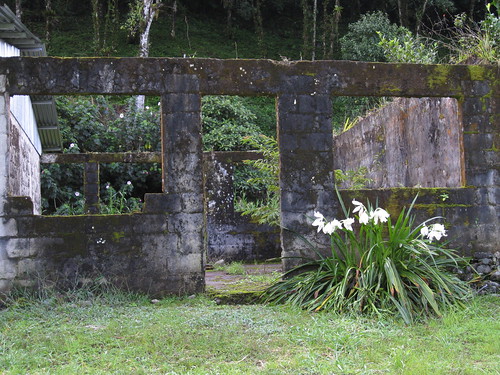
This hierarchy also offers some insight if we care about the environment and conservation. Particularly in the early years, "fortress conservation" dominated the agenda. This largely entailed putting tracks of land - say, tropical rainforest - under protection, kicking out any people that lived in the area, and barring entry and use. Besides this being morally questionable, it also often fails to protect the area of interest. This isn't to say that we should get rid of all protected areas - save Yosemite! -  but rather that the needs of people living around and reliant on protected areas must be considered. Studies have shown that socio-economic factors influence people's perceptions of conservation, and thus need to be accounted for to develop appropriate strategies. You can imagine that someone with an income too low to purchase food, but who lives near a forest with deer and other tasty critters, might prioritise his need to eat and feed a family over the value of an intact protected forest. Some of the strategies to address this tension have included buffer zones around protected areas, where local people can harvest non-timber products like honey or bamboo; and community-managed marine and forest areas, which allows people to use certain resources to meet their needs while fostering the motivation and capacity to sustainably manage them. These, too, don't always work out as planned, but they are steps toward more just and equitable conservation that address humanity's hierarchy of needs.

Thanks to all the support from friends and family during the week, and for contributing to the Oaktree Foundation's mission! It made all the difference (and contributed to the 'esteem' level of my needs).

Read More:
How just and just how? A systematic review of social equity in conservation research - Me, Liz Law, Nathan Bennett, Chris Ives, Jess Thorn, and Kerrie Wilson, 2018 (open access)

Tuesday, October 11, 2016

Fasting for the Anthropocene

Around this time every year, millions of Jewish people shun food, from sundown to sundown. We don't eat or drink for those 24 hours in order to bring attention away from our physical beings and focus instead on repenting for the year's transgressions and seeking forgiveness from those we've wronged. Religious or not, I think we can all agree that a time for introspection and self-reflection is important. But while we fast from food on this day, there are other fasts we could undertake that are arguably more impactful, larger scale, and longer-lived.

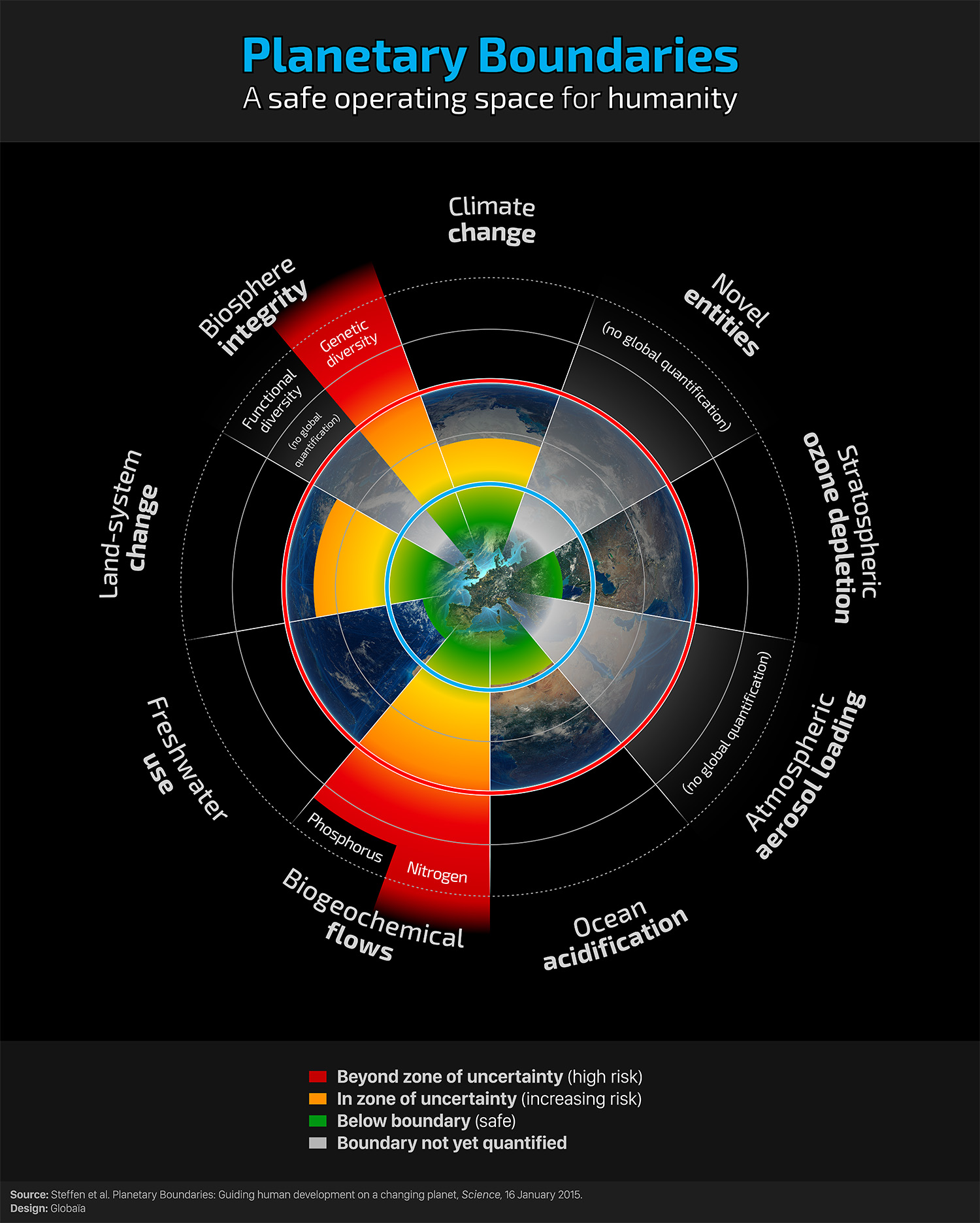
http://www.stockholmresilience.org/research/planetary-boundaries.htmlIn 2009, some scientists got together and said, you know, Earth probably has some limits in terms of safe operating space for humans (...we are a bit anthropoocentric). These 'Planetary Boundaries' consisted of biological and physical aspects of the Earth, such as freshwater, biological diversity, and  atmospheric composition, which underpin its ability to support most life. Within the past couple of years, scientists have broadly agreed that several of these boundaries have been surpassed. We can largely thank widespread agriculture for two of the big ones - loss of genetic diversity and changes in nitrogen and phosphorous cycling -  however, we have a much less complete understanding of things like invasive species and ocean acidification.

Right, so what does that have to do with Yom Kippur? Well, let's just say we have created a problem that could benefit from a bit of fasting. One of the major drivers of reaching and exceeding the planetary limits is the human population's level of consumption. We like 'stuff' and go through heaps of it: Americans trash 11 million tons of clothing annually (and buy 5 times as much as in 1980); Aussies exchange or upgrade their mobiles every 18 months; Brits put 3 billion disposable cups in the rubbish every year. Such consumption patterns can affect land and water systems both directly - through extraction of resources like timber, metals, and oil, to feed demand for this 'stuff' - and indirectly - by throwing away the used and unwanted (...even when there is no away) and polluting with this waste. They also have embedded impacts related to production, ranging from water and energy use to human rights infractions and labour conditions.

IMG_2800
Now is maybe a good time to note that the need to reduce humanity's level of consumption is not a new idea. Meadows & co addressed this issue back in their 1972 Limits to Growth, though the sheer quantity and ephemerality of consumables today would probably have been difficult to fathom back then. So recognizing the problem is not the tricky part - perhaps a 'fast' is a bit extreme, but humanity definitely needs to go on a bit of a diet. Yet coming up with feasible, effective, and equitable solutions is by no means easy, and is rife with challenges of feasibility and ethicality.  

One school of thought finds fault in the very nature of our growth driven economy, arguing the impossibility of a 'Green Growth' model that sees only an upward trajectory, contingent on consumption as a primary measure of success. Ultimately, we may just we have to choose: we either keep buying in to the system in order to grow our economy or live more simply to ensure our future existence. Sounds bleak. While this may seem austere, the principles are very practical and social. Proponents of the degrowth model support reaching for 'sufficiency' not simply 'efficiency'. This means repurposing existing infrastructure, buying second-hand, growing a "sharing economy", cultivating edible yards, and re-considering what makes us happy (I'm also partial to the tiny house phenomenon...). Nothing short of a revolution, that will ultimately involve changing the way our communities are designed and the laws and regulations in place. But many of these principles are already in practice at a small scale, and as individuals we can continue to take baby steps, and make more mindful choices as consumers. 

For those observing, have a safe, meaningful, and perhaps thought-provoking fast. For all of us, year-round, let's collectively move toward fasting from the unnecessary, the disposable, and the wasteful.

Sunday, April 24, 2016

Challenges of the Food Kind

So you may not know, but I recently moved (again). Not down the street to a new house; not even back to the US because my student visa expired. No, I decided it made sense to pick up and fly south, to the country where everything can supposedly kill you and I knew next to no one: Australia. You might imagine that a couple of things may have slipped my mind in the process. Well, both have made their way back onto my radar, and will now be on yours. 

The first, Friday at sunset the Jewish holiday of Passover began, marking the eight ensuing days of no grains and leavened products. It is an interesting holiday in that it actually touches on many salient issues in our contemporary world (e.g. slavery and freedom, injustice and inequality, agriculture and nature), and yet grasps firmly a set of archaic and at times illogical rules and restrictions. That said, an article I read this morning got me thinking about why we continue to follow these seemingly pointless traditions. The author noted, "I worry about making Passover too easy". And that's it; when something is easy, you don't need to think about it, take time to contemplate 'why am I doing this?', dwell on its relevance.

But this is not just a case for Passover (or the fasting holiday of Yom Kippur, either), but rather relates to many of the challenges that present themselves in our lives. So to me it is interesting that the annual Live Below the Line challenge* seems to coincide approximately with the completion of the holiday (and on occasion even overlaps). I almost missed the boat on having two food-related challenges over the course of two weeks, but luckily caught the oversight in time to begin living on AU$2 per day from May 2-6. Having taken part the last four years ($1.50 in the US and £1 in the UK), I can genuinely say it is a challenge, particularly considering I've always been in places with high costs of living (Washington, DC and Oxford are not known for their bargains...). But the challenge of it had made me think a bit more, empathize a bit more, pester all of you a bit more (donate!!). Tackling year five of the challenge in another new place has now made me research a bit more.

http://www.mba-mondays-illustrated.com/2014/04/purchasing-power-parity/
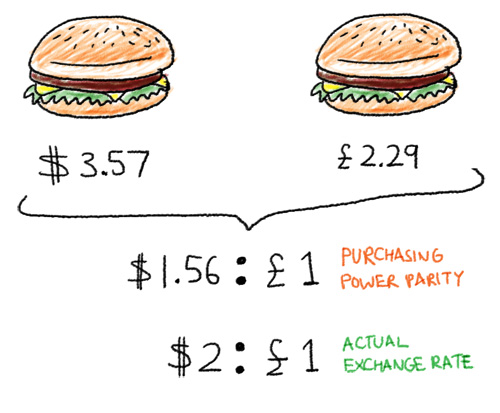
This brings me to the final topic of today's blog post: 'purchasing power parity'. Now, I am definitely no economist, so bear with me, but the concept of significance to understanding cost of living and affordability. It basically adjusts the price of good or bundle of goods to a common currency to compare against a baseline - for example, how many Big Macs could you buy in country X for US$1? The result is an idea of how expensive a place is to live (according to the Big Mac Index, we should consider moving to Venezuela for the greatest bang for our buck). And while it might explain why I now find the price of food in Australia to be a bit daunting (the dollar goes lessfar than in both the UK and the US), it also provides a rationale for those struggling in their home countries to migrate for work. My friend in Hong Kong pointed out the large number of Filipino and Indonesian women who come to the country for domestic work - not forever, just to send money home for a while. Price of goods is far greater in Hong Kong than either of the other two countries, but so are wages, much of which are sent back home where they can be stretched further.

Phew. Weighty stuff for a Monday morning (or Sunday evening). All of this is to emphasize the power of a little challenge to make us dwell a bit more on issues like hunger, poverty, and inequality. Stay tuned for more from my week Living Below, and don't forget to support the effort!

Further Reading:

*for some reason, it is not happening this year in the US or UK, so I have registered in Australia. This means that neither the Hunger Project nor the Rainforest Foundation, to which I have given in the past, will be on the receiving. But please do consider supporting the Oaktree Foundation working towards improving education!

Thursday, March 17, 2016

Mined Fields - Agriculture and Conflict

Since entering Vietnam, two topics - the war and food - have scarcely left my thoughts (granted, it's only been a few days). Hanoi's National History Museum depicted both the rebuilding of the nation's agricultural production under Ho Chi Minh after fighting French colonials as well as the atrocities of the war against the US. On the train the following day, I watched entranced as rice field upon rice field (interspersed with some other crop fields) flew by the window. And then the War Remnants Museum in Saigon displayes powerful images of the impacts of the war on rural life. For an industry so vital to a nation's well being, it is all the more tragic to consider its relation to war and conflict.

Agricultural destruction and warfare have been part and parcel even if we go back thousands of years (probably to the advent of agriculture itself). Biblical and historical texts describe 'salting the earth' to hamper enemies in feeding their populations. While this has been shown to be more symbolic, as it would be infeasible to actually salt fields to infertility, it demonstrates the tactical element of undermining agriculture in conquest and war.

Now here in Southeast Asia, we have a story of wartime misdemeanors - covert dropping of cluster bombs And usage of illegal chemicals - continuing to hinder the region's ability to grow food and develop economically. Bombs sent to Vietnam and Laos both decimated fields, leaving vast craters, and failed to explode, inflicting casualties to this very day. During the Vietnam war, the US dropped 2.4 million tonnes of bombs on Laos in an effort to cut off the north-south route to supply Vietnamese resistance. Tens of millions of those explosives never detonated and less than 1% have since been destroyed or removed. Nearly half of Laos is contaminated, resulting 300 injured or killed annually from a misplaced hoe or inopportune plow. While In the Lao hill villages I visited residents reforged empty bomb shells into tools and used large missile casings for fishing boats, the toll on human life and the hindrance to farming is a steep price.

Agent Orange, a dioxin containing defoliant, was also used during the war to reduce the vegetative cover hiding north Vietnamese soldiers. Besides direct exposure of civilians and soldiers alike, the carcinogenic and genotoxic chemical continues to contaminate soil and water (and this vegetables and fish) contributing to disease and birth defects among the rural population.
Graves strewn throughout rice fields

I think about this today while traveling through a region still recovering from a war over forty years finished. But the wars in Iraq and Afghanistan and escalating conflict in Syria will undoubtedly have similarly long lasting consequences for innocent civilians caught in a fight they never asked to be a part of. Tanks, bombs, artillery, and other debris pollute and destroy fertile land. Especially in the arid Middle East, where water is a limiting factor (and likely to become more so with climate change), damage to irrigation infrastructure is a major problem for agricultural production.  Moreover, the debt and poverty inflicted by these wars cripple a country's capacity to rebuild and rehabilitate land. I remember hearing a speech at the Equator Prize ceremony this past year, in which an Afghani woman spoke passionately about her community's effort to restore their productive landscape in the face of conflict (link to come soon). But this is the exception and unfortunately not the rule.

Many of us see the stories and footage of civilian casualties, the photos of drowned child refugees or infrastructure crumbling after an attack. Yet, I at least have rarely thought of the 'after' bit; the resounding effects decades to come, which people will face if and when they return and try to resurrect their livelihoods.    

Further Reading:
http://blogs.ubc.ca/blogsquad/2008/06/12/remnants-of-war/
http://www.theguardian.com/commentisfree/cifamerica/2010/sep/02/laos-usa
http://legaciesofwar.org/about-laos/secret-war-laos/
http://www.ipsnews.net/2008/10/laos-unexploded-cluster-bombs-hold-up-farming/

Saturday, November 28, 2015

The Power of the Kitchen

This is the third Thanksgiving in a row (and the fifth in total) I've spent outside the US (and won't be the last). It's by far and away my favourite American holiday, but not because of what it historically represents (as John Oliver reminded us) or the endless Black Friday sales fueling our consumer habits. But rather because it is a perfect opportunity for reflection and taking stock of the good fortunes in one's life. But it's also a really conducive time for social critiques - like on income disparities in That Slice of Pie last year or the refugee and terrorism hysteria plaguing the media now. This year, I've been spending some time in communities experiencing food poverty, and have only fully begun to realize the power of having a kitchen.

Oxford is a strange place, though not unique in this respect. Amidst the elevated intellect and apparent wealth, there is considerable poverty and even homelessness. Where Oxford University colleges host lavish formal dinners, there are people on the fringes of the city who struggle to access food at all. In fact, it's estimated that nearly one quarter of children in Oxford live below the poverty line! But, what surprised me in chatting with people at food surplus distribution points (e.g. food banks) is that obtaining basic ingredients is not always the problem, rather a place to store and cook it is. Fuel costs - electric, gas, or even coal/wood on boats - or lack of facilities are major issues.

So now we come to appreciation of kitchens. Thanksgiving was just two days ago, and on that holiday food happens to be a cental fixture, a force that draws families together. And while a solid 10% of Americans will go for something other than a home-cooked Thanksgiving dinner, gathering in the kitchen is still an important piece of the pie for many of us. In my observations, the kitchen is where the best socializing happens, where people flock to during parties and get-togethers despite more open space elsewhere. It just goes to show the power of a kitchen, and how it can also be an agent not just for eating fresh and healthy foods but also building community and social cohesion.

One of the men I spoke with during this project couldn't afford fuel to cook or a friedge to store perishables, or even food at times. And yet, his eyes lit up at the prospect of using a communal kitchen to prepare meals for anyone who needed. Generosity in the kitchen, from someone who has so little, is very telling. Sharing food fulfills a hunger that eating along won't ever satiate. I probably take a home-cooked meal for granted, and perhaps don't fully grasp the great fortune of having shared meals among friends on a regular basis. It is especially important to remember on days like Thanksgiving that this is not the case for everyone, and the absence of a kitchen has more resounding consequences than merely the loss of hot food.

There's some food for thought. Now go appreciate your kitchen and make some pumpkin pie!

Saturday, October 17, 2015

Vocal Consumers and SIlent Producers

It's amazing how quickly Blog Action Day rolls around every year; it increasingly catches me off-guard (which is also why this post is a bit tardy)! Perhaps fortuitously, it also happens to fall on the same day as World Food Day, allowing me to write for multiple purposes. This year's theme for the former is "Raise Your Voice", and for the latter it is "Social Protection and Agriculture: Breaking a Cycle of Rural Poverty". While social support programmes include things like supplemental nutrition programmes and accessible loans, other types of safeguards or systems also serve to protect marginal or underserved populations and can be critical in overcoming poverty. Fair trade certification has been touted as a means of boosting incomes for rural producer populations, and is supported by a rather passionate and vocal consumer base. However, as I've written about before, this fair label does not necessarily yield the anticipated benefits on the ground. This potential disconnect between the two themes of the day - the level of vocality on one hand and the actual "breaking a cycle of rural poverty" - makes for a relevant topic on this day.

Consumer activism is often approached as the primary, and sometimes only, way of individuals influencing the ethics and sustainability of large-scale and distant supply chains. People ran with the Green Peace campaign against McDonald's "rainforest beef" nearly a decade ago, and catalyzed action on the fast food giant's sourcing policies. Around that same time, millions of people followed Michael Pollan's advice to "vote with your fork" three times a day. As for Fair Trade, the 2000 activist campaign prompted a massive incorporation of certified coffee into Starbucks' retail outlets. So obviously people demanding that their products meet some social and environmental standards does have some impact on the practices of these corporations. But I wonder how much this reflects the reality and, perhaps, what producers even want.

Last year, I did a bit of research on the impact of Fair Trade certification in the coffee value chain, and it was interesting to find the few studies that had actually looked at impacts found a wide range of outcomes. The most tangible finding was that the ideal expectations of consumers, the values displayed proudly on campaign materials and in marketing, did not often match to the realities of coffee farmes. Largely focused on a fair and equitable distribution of funds, Fair Trade fails most soundly in this area, with little of the added end-cost reaching producers.

But it's rather complicated, and probably necessary to find a balance between outspoken consumers and letting things arise from the producer end. As usual, I've answered no questions and added a few. I especially wonder what happens to those not involved in Fair Trade. Are those that would most benefit from social protections excluded from participation due to the other factors necessary to ensure the certification functions?

Interested in reading about an additional Paradox of Fair Trade? Check out the Stanford Social Innovation Review article...

Read Previous B.A.D. Posts
BAD 2011: At What Cost?
BAD 2010: Water

Friday, May 22, 2015

Can Biodiversity and Development Ever Get Along?

It’s the 14th celebration of the International Day of Biological Diversity, with the theme of sustainable development. I feel like these ‘days’ often focus on the developing world, the hotspots of biodiversity in the tropics, how we can ensure that ‘nature’ remains intact as incomes grows and standards of living improve. But the past week has caused me to think much more about biodiversity and America’s not-so-sustainable development.
Wheat fields of central Montana
As you know from my last post, I spent the better part of Saturday through Tuesday on cross-country trains. For miles on Monday afternoon we passed immense monoculture of wheat. The park service docents who hopped onboard at the border of Montana pointed out the occasional pronghorn or fox that dotted the landscape (though I was hard-pressed to see where they might make their permanent residence). Yet this vast swath of grain at one point was prairie grassland, an often underappreciated and misunderstood biome. It was home to bighorn sheep, wolves, grizzly bears, and elk up until the early 20th century. According to The Nature Conservancy, over the last 25 years 25 million acres of grassland has been lost and conversion to cropland stands as its greatest threat. As one docent informed, even up until the drought (AKA Dust Bowl) in the 1920/30’s, homesteaders maintained a relatively diverse holding of different wheat varieties, hay and fodder fields (for their draft animals, of course), and home gardens. After water scarcity downsized the pool of farmers, the State’s wheat market consolidated to a ‘family-owned’ corporate system that now dominates most agricultural production in the US.
http://www.iinet.com/~shs/logging.html
Early 20th c. logging around Lake Sammamish
So there’s your agricultural example of unsustainable and anti-biodiversity development. But the harder hitting case for me rests much closer to home, and involves Washington ecosystems, including its forests, which house a sizable array of plants and animals. Just a little background – I grew up in a suburban plateau outside Seattle, on the cusp of rural Puget Sound and surrounded by floodplain farmland. The road running from Redmond to Issaquah (through the not yet founded city of Sammamish) looked like a page out of national park brochure when we first moved to the area 27 years ago (though the irony is the area was heavily logged in the late 19th century…). It has changed at a frightening pace in my lifetime; however that didn’t make the vision of rapid development from my bus window yesterday any less heart-rending. What were hillsides of evergreen ecosystems not more than five or ten years ago, have been reduced to an assortment of townhouses, big box franchises, and roads. This mode and rapidity of development embodies a lifestyle reliant on fossil fuels and focused on consumption, while insensitive to the long-standing culture and character of the area.
So while I applaud the United Nations’ attempts to tie together awareness on biodiversity and sustainable development, I mourn a lost opportunity to look more broadly at the challenges inherent in development. We need to really think long and hard about the tradeoffs between our current consumption patterns (particularly in the ‘developed’ world) and diversity - whether that's in ecosystems, flora and fauna and crop varieties, or even the types of transnational enterprises that seem to coincide with the process of development. 
Photo credits: (top) me! (bottom) Sammamish Heritage Society.

Wednesday, April 29, 2015

Hold the Sugar, Please

It didn't occur to me, when I purposefully bought bananas and flour, that I would be missing a key ingredient. While most items on my usual shopping list are conspicuously absent, I thought that a sweet baked treat would be a nice mid-way pick-me-up during the Live Below the Line week. So you can imagine last night, when I went to throw together some banana bread ingredients, how shocked I was to find that sugar had not made the £1 a day cut. Oh, woe is me!

Now let's be frank. For most of human's evolutionary history, there has never - let me repeat - never before been such easy access to simple, refined sucrose. With the availability of edibles anything but reliable, our ancestors capitalized on those rare periods when high sugar fruits and simple carbohydrates were in abundance. That's not to say sugar is only a recent phenomenon. People in the tropics have been munching on domesticated cane for 10,000 years, but primarily for medicinal purposes until around the 7th century (and then only for elites on special occasions). Nowadays, when sweet, salty, fat abounds, with minimal effort on the part of the eater - perhaps just a click of a button - our hardwired insticts are backfiring. The plight of our sugar-laden society is en vogue right now, and our media is buzzing about how much sugar is too much and whether we need a big, fat label to tell us we've gone too far. Our habitat has changed, but we're still catching up.

But obesity and diabetes are not the only sinister sides of this baking must-have. The history of sugar is rife with social injustice and environmental degradation. Enter 15th century Europe and a storm is abrewing. Perhaps the 'Age of Exploration' would be better  named the 'Age of Finding New Places to Grow Tasty Things', as Northerners had developed a sweet tooth with their conquests into the Middle East. The obvious solution to the sugar deficit was to travel across the ocean blue, to the New World, enslave the local populations in the Carribean and South America, and clearcut the rainforest for plantation. Jamaica is the textbook, and earliest, example of exploitation in pursuit of sugar. After the Spanish wiped out the Taino people with their guns, germs, and steel, the British shipped in tens of thousands of African slaves to work the fields, mills, and refineries. While the modern sugar industry may have tamed a bit (though is now pesticide-ridden, to boot), there are still cases of infractions against humanity.

So perhaps it's not a bad thing that sugar missed the shopping cart. You can go for fair trade sugar, or alternate less-refined sweeteners (like local honey or pureed dates). I still attempted the banana bread sans added sugar, with what I thought were pretty darn good (if not terribly sweet) results:

1/2 cup sourdough starter
1 1/2 cups whole wheat flour
1 large or 2 medium ripe bananas (...next up: Banana Republic)
1/2 cup pureed butternut squash
1/2 cup water (I used the leftover liquid boiling squash)
pinch of salt

Night before: mash banana, combine with squash, and then stir in starter and flour. Maybe add a bit more flour as you start to work the ingredients together with your hands. It's not a full-fledged knead, and it will be sticky, but try to incorporate everything nice and evenly. Form some semblance of a dough ball and place in an oiled (a luxury I could not afford) baking dish or pan. Cover with a towel or wrap and place in fridge.

Morning of: remove from refrigerator at least 1 hour before you plan to bake. Preheat oven to 200°C and then bake for 35-45 minutes. I then left it in the oven while it cooled, but you can do so on the counter, as well. It will still be relatively moist.

You can still donate to my Live Below the Line fundraising!

 Image credit: Jenny Mealing, near Mossman, Daintree, Australia

Monday, March 23, 2015

Traveling Outside the Comfort Zone

The yellow glow of dimmed lights gives the illusion of a film or photo shot in a bygone era. The mysterious automatic door to my right suggests a ghost roams during these hours when most humans have abandonned the station. And the infrequent passersby just accentuate my own aloneness, with only you dear reader and the security camera for company. I write this on a Saturday night from a quiet train station in northern France. It has been a rather unexceptional few days, until I consider what it is the I have done during those days. This lengthy séjour while waiting for le Megabus has also provide an extraordinary time to reflect and process, so I'll make a valiant effort to download some of that here.

First off, what exactly have I been doing? Well, I signed up to present at a small conference in Paris on gender, agriculture, and climate change. It seemed like a shame to forgo an extra couple of days in France - to translate in 'Rachel speak' this means I walked nearly uninterupted for 8 hours a day, just enjoying the ability to move, enjoy the outdoors, and perhaps peek into a museum or church. So this trip was unexceptional in that the plan was status-quo, including the stupidly uncomfortable travel plans (8-hour bus including border control & ferry + 3 hour 'layover' in London + 2 hour bus). Some magic day I'll grow up and take the slightly pricier train!

But what I wanted to talk about here is travel food, priviledge, and sustainability. While this excursion may have been unexceptional for me, it is attainable or one-in-a-lifetime for many others. After spending a day listening to and talking about all the elements that contribute to inequity and marginalization (our favourite topics in gender discussions...), I felt the luxury of just wandering for two days straight accutely. The minimal work I did after my presentation just augmented this (ok, in my defense I did spend a few hours at la bibliothèque commune d'Amiens). Sore feet and a dreaded coach trip ahead, and yet I still feel immensely fortunate and grateful.

One of several Saturday markets in Amiens, France.
This leads into the second topic: food (and a bit on sustainability). Travel, no matter how short of a trip, for some reason elevates my perception of food footprints. As a destitute graduate student, the sustainability of my budget is a key factor in food-related decisions, and so meals tend to be fresh bread and hummus, and maybe some fruit or veg if there are open markets (definitely the highlight of Amiens...). But traveling also means breaking many of my budgetary and environmental rules - not buying in bulk or unpackaged; using 'take-away' containers; not cooking; and buying coffee at the train station out of a machine! Alas for plastic cups, but the dangerous possibility of falling asleep and missing my 12:35am bus was too terrifying.

While travel eating almost innevitably costs more than home cooking, for me it is one more piece of evidence in the priviledge pool. While wandering around Amiens, I had at least half a dozen people ask me for change in order to buy food. Despite the self-imposed stringent food budget, these interactions made me feel the luxury inherent in my ability to buy food if need be. Perhaps this is because traveling takes one out of the library, office, etc. People always say that traveling provides important perspectives by confronting new cultures, but I wonder if this distracts from the more important service travelling provides. It doesn't need to be voluntourism building schools or anywhere exotique, but rather merely needs to push our comfort boundaries just a bit, taking us out of a daily routine so it's possible to actually notice something. 

Three hours in London = overpriced soy capuccino + work
From wandering aimlessly in a new city to sitting idly in a train station when there is nowhere else to go, breaking out of the bubble suddenly changes the interactions likely to occur under 'normal' circumstances. I like to think of travelling as weathering (oh dear ...) - a pebble suddenly exposed to the elements of rain, wind, waves, etc. changes, often drammatically. So maybe this analogy breaks down a bit when we think about what happens when the pebble is put back into the sheltered environment from whence it came; for many of us it is easy to fall back into an old routine and forget that we ever even left. 

If anything has come from this post, it is that you now have been subjected to a stream-of-consciousness post rather than my usual better organized and researched entries. The result of late-hour, cold train station circumstances. Hopefully, I have not been a frightful bore and instead given you something to mull over. One month until Live Below the Line!

Sunday, February 22, 2015

What is Natural?

http://www.intimeandplace.org/HetchHetchy/index.html
Lush, verdant forests. Majestic and imposing snow-capped mountains. Those valleys and creekbeds that seem as though they are worlds away from human civilization. These are the images that usually come to mind when I think of nature. But the funny thing is that few places (if any) on Earth have escaped direct human influence (and not one is safe from anthropogenic climate change). And yet we try to preserve the things that evoke these images of untouched wilderness. A few days ago, I sat in on a presentation (followed by a quite stimulating discussion) on cultural landscapes and the practice of nature conservation in the United Kingdom. The conservation paradigm here contrasts drastically with that of the US, where small scattered reserves amongst towns and farms are the default in the former, and large swaths of seemingly untouched terrain dominate the latter. 

http://agro.biodiver.se/2010/09/europe-maps-its-soil-biodiversity/
Protected areas (Tier 1 = highest protection) in England.
Before we go any further down this road, however, I did not set out to write a blog post comparing the UK and US national park system. Rather, I wanted to mull over the significance of our conceptions of nature on our cultivated landscapes. Close to the entirety of Great Britain was in fact cleared of forests during Roman occupation around 3,000 years ago. Crop cultivation and livestock grazing has dominated the island's landscape ever since. Despite the increase in forest cover in the past century, the UK holds the office of second least forested country in the European Union. According to a report on the UK, 70% of land is used for agricultural purposes (including farm woodland). Furthermore, while nearly 30% of the terrestrial land surface is now protected in some way, many of these are small and dispersed throughout the countryside to include towns and villages. If you look at the EU generally (though, the UK is quite distinct...), the majority of protected areas are under 100 hectares in size.

http://www.protectedlands.net/images/PADUS_FinalJuly2009LowRes.pdf
Protected areas in the contiguous US
Now take the United States, with its vast swaths of untapped potential out west at the dawn of the 19th century. Some protected areas (at 27% of the terrestrial surface), particularly the ones in the Northeast, resemble those in the UK, but many are comprised of large tracts of connected land. The really big ones are out West, stemming from a frontier mentality, reminiscent of the sense of adventure and wanderlust stirred by such stories as the Lewis and Clark expedition. From my perspective (and I don't profess to be an expert, mind you), one of the biggest differences between the approaches to protected areas and national parks in the two countries, is their degrees of 'otherness'. Sure, it's going to be quite a haul to get out to Lake District National Park in NW UK, but it's accessible by train and there are plenty of towns skirting the area. Did I mention that there are ponies in a national park in the southwest of England? Going to a National Park in the US often requires moving one's self from habitation and civilization to something out there, apart from people, an escape.

Getting a wee bit too philosophical? The inhabitants of the British Isles have had millenia of interaction with their environment, to modify it, to cultivate it, to recultivate it, to 'tame' and then mimic what was considered nature. Naturalists abound here - birdwatchers control the small reserves and woodlands that pepper the countryside. Pastoral characteristics of the countryside are accepted as natural, as being part of a common resource to ramble. It seems to me that the definitions of nature and agriculture have gotten intertwined, not from either a more enlightened or perverse perspective of natural, but rather out of necessity due to land scarcity and a long history of land cultivation and pasture.* Despite knowing that North American human habitation dates back at least 14,000 years, large animal extinctions were attributed primarily to humans at that time, and considerable associated landscape change has occurred, we still hold this conception of nature as distant and separate from us.

So getting back to my initial interest in this topic, I wonder how the relative proximities to what is considered nature influences our relationship to what the land produces. Though the proportion of large farm holdings is pretty comparable (around 20% of farms are over 250 acres/100hectares) in both the US and UK, size may not always be the best indicator of character, nor of how people connect their food to the environment. In the US, are we doing ourselves any favours by sequestering so-called nature in large reserves, removing people from a daily (or at least somewhat more frequent) interaction with a non-concrete environment? But in the UK, is there a misconstrual of the concept of 'nature', a conflation of a heavily managed pastoral landscape (which produces our food and other services) with something 'natural'? It's a hard nut to crack - determining where the manmade ends and the nature begins. But even more difficult is deciding if it even matters.

Decidedly more muddled than when I began, I humbly welcome any comments, thoughts, and ideas.

* Since my UK wanderings are still limited, I should note that I don't know the extent of ruralness in the country. However, considering I do live within an hour of London, and it is only a hop, skip, and a jump (or a ten minute run) to "countryside", the lines seem pretty blurred between nature and human inhabited landscapes.

Wednesday, December 31, 2014

One Hodge-Podge of a Year

Well boys and girls, it's that time again. The count-down has begun; the hours are ticking away. 2015 is only just around the corner. Looking back at last year's recap of 2013 just reinforced how every minute, every hour we spend living our lives, is integral to the people we are and will become. Not to sound too trite on the eve of a new year, but if not now, when? This time last year I was just beginning to question whether it was the right decision to come out here and rejoin the ranks of indebted young people in higher education. While I can't say those doubts have disappeared, I've come to terms with the uncertainty embedded in any decision. And it's not the choices themselves that dictate our futures; but rather we dictate our choices that illuminate paths we might be able to travel down. Could this current path be easier? Sure. I don't believe I have ever worked so hard, and in so many ways, before in my life. Yet that is part of the journey. To be fair, I would not not trade any of my hodgepodge of experiences this past year. So enough introspection, let's reminisce!

This year started out pretty wet, with record floods in the UK. Unfortunately, drought was concurrently wreaking havoc in California, a dry spell that continues to this day, leading to concerns that this may be a new normal rather than a severe extreme weather event. I seemed to have a thing for equality in 2014, and not just for inequitable water distribution. The 5th assessment report of the IPCC came out and we started talking about the differential impacts of climate change across the globe. 2014 marked the third year of living below the line for a week in May, this time on the UK equivalent of the poverty line at £1 a day (which, believe me, in Oxford is no small feat). Blog Action Day in October followed a theme of 'Inequality' and spurred a post on how women in Ghana are combating inequality in farming. And apparently Thanksgiving is now a time to think about wealth distribution and income gaps.

While no farm will ever replace Country Pleasures in my heart, I did settle into a routine working most Saturdays at a local farmers market. That meant blog posts waxing on about the 'dirt under my finger nails' and finally a day out on the farm playing with lambs and remembering why I love hanging out with farmers. My infatuation with winter squash came across strongly this year, and hasn't waned in the slightest (should I start a support group?). There was talk of seed saving and pumpkin pie. We were selling this funny-looking Black Futsu at market one week. And this Halloween surfaced some discussion about pumpkins and food waste (during the most exciting of Pumpkin Festival weeks!). I may also be harbouring a couple of buttercup squashes in my room.

On the (more) personal side of things, I did a bit of extracurricular wanderings to Malta (where I saw really old buildings), a Canary Island (where we saw old landscapes), the Pyrennees (where we saw our own dwindling food supplies), and Croatia (where I saw my baby sister after 2.5 years apart). Spring came, along with examinations (I passed!). I got older (28, yikes...) and My Munchable Musings did too (celebrated its 5th)! Not to mention, this was my 15th meat-free year (well worth a read).

But as I wrote last year, for all my good intentions I just can't seem to keep a consistent routine on the blog since coming back to school. This current academic stint comes to a close in September 2015, so look out for next year's recap to hear about adventures to come!

Past Recaps:

Friday, December 19, 2014

Confessions of a Fair Trade Skeptic: Some Holiday Cheer

PB; Mocha; Atzec Chocolate; Spiced Pumpkin; Straweberry
Every year around this festive winter period I throw some tasty things together, enrobe it in chocolate, and call it a truffle. It has become sort of a tradition for me, with my sister's 21st birthday being the inaugural affair. This year was particularly exciting because the Cooperative (it's a member-owned grocery chain like the name implies...for those of you not in the UK) started making their Fair Trade dark chocolate without dairy! So, I loaded up on the ethical confection, ready to melt, mix, and mold into a suite of bonbons.

Wait, hold your horses! You might be thinking - What about that post she wrote on 'How Fair is Fair Trade?' And what about that disparaging piece on Fair Trade and Chocolate? Well, that's exactly the point. Unfortunately, in most cases we don't have evidence that ethical certifications, including Fair Trade, deliver on their mission statements. In some cases, we actually know they may be counter-productive or have untinended impacts on people excluded from participating. Furthermore, it is difficult if not impossible, to demonstrate any sort of causality, to tease apart what is the on-the-ground outcome of a certification versus government policy versus a development project.**

Sitting on the consumer end of the supply chain, we have even less information at our fingertips, and must essentially trust in a company with advertised good intentions. I might even go so far as to suggest we have insignificantly, if any, more information about a labeled product's realities than any other product off a grocery shelf. Yet, when I see that little blue and green ying-yang (especially if the price is not markedly more than uncertified...), it's as though the choice has already been made. Of course I will buy the product boasting a shiny label, the beacon of social responsibility.

Why, when after over 3 decades there is still so much uncertainty about impact, do I put my precious pennies into something I don't entirely trust? In part, I think it is a resigned reaction of the "it's better than nothing" variety. We have so little information about the backstory of anything purchased in a grocery store, that it is easy to latch onto something even marginally more tangible, such as an ethical label. On the other hand, the number of different certifications and associated labels has ballooned in the past decade, and can be rather overwhelming and difficult to wade through. For most people, diving into what's behind the sticker is an additional, more difficult, time-instensive, and therefore undesirable step. Berkeley's Journalism School held a contest a few years back for a rethink, a redesign of food labels. A similar concept could apply to the ethical labeling genre.

But this brings us back to issue at hand. While the US is worse than its European counterparts, overall sound regulation on what is required by food labels (and others) is sorely lacking. However, even with stronger requirements, there is still a lack of impact assessment mentioned earlier. Networks like ISEAL Alliance and the Ethical Trade Initiative are trying to drive better accountability within supply chains. As consumers, we actually have a lot of power. Ask questions in stores; write letters or emails to companies; find certifiers on social media and join their discussions!

Further Reading:

** If you want references, I've got 'em! I'm writing a paper at the moment on impact assessment and consumer perceptions around Fair Trade, which I will hopefully be able to share in the first quarter of 2015.

Thursday, December 4, 2014

Fifteen Years and 'It's Complicated'

The questions come up a lot. It is a main topic of conversation after meeting someone for the first time. 'How long have you been a vegetarian?' in a tone of mild interest. This is generally followed shortly thereafter by some variant of 'why'.

I don't mind the questions. In fact, they make me constantly revisit and reflect on my dietary decisions. Thanksgiving - the holiday for which 45 million turkeys are destined to sate one country's appetite - achieves the same end. My earliest vegetarian memory dates back fifteen years to my middle-school self celebrating the first meat-free Thanksgiving - a day I now mark as 'the beginning'. Yet it dawned on me last week, as I gathered with friends over a meatless meal, that in the intervening years the rationale for abstaining from meat and subsequently other animal products has become increasingly nuanced and complex. It makes the explanations in conversation trickier, while also making everyday choices more difficult.

So why am I a vegetarian (or rather, vegan at this point), and what makes it so complicated?

http://www.ornot2b.com/index.php?comic=Vegetarian+Whales1. If you care about climate change, then you should care about what you eat. Generally speaking, eating no animal products has a lower carbon footprint. Livestock release 15% of the global greenhouse gas emissions, with beef and dairy cows contributing the most (hence vegan, and not just vegetarian). There is strong evidence that reducing meat consumption, especially in developed countries and the big emerging economies, will be necessary in order to have any meaningful impact on our warming planet. If you think about it, it makes sense. In an herbivorous diet, you are simply eating the product of photosynthesis - the conversion of photons (sunlight) into sugars - whereas animal products require intermediaries (the animals...) to convert plant material to calories with associated lost energy along the way.

But, like I said, it's complicated. There are all types of vegans and vegetarians, and if your plant-based diet happens to consists primarily of processed soy (read: tofu), oils (like canola, etc.), and hothouse tomatoes in the winter, not to mention lots of frozen vegetables, you are still running up a pretty hefty carbon bill. This calculator will give you a sense of what's big.

2. Not all places or contexts are the same. It's incredibly important to be respectful of other cultures and ways of living, especially as a stranger in a strange land. When I say that I've followed a vegan diet on-and-off for six years, it is for the very reason that some places my rationale for herbivory just doesn't hold up and insisting upon it could be just downright rude. Particularly in developing countries, in many cases consuming animal products and not just staple grains signifies a special occasion or is a gesture of respect, gratitude, or hospitality. Over the summer, many of the households I visited in Ghana prepared stew for us (usually a groundnut or green), and to refuse would be the pinacle of offensive behaviour. One woman in particular would offer up two perfectly oblong chicken's eggs whenever we came through the community - despite being ill and barely able to provide for her three children.

Sure, it is one thing to dictate my own grocery purchases, and align my diet with a certain notion of what I perceive as sustainable and ethical. But coming from a place of priviledge, having the luxury to choose not to eat certain things, I think it wholly unfair to transpose that value system on others when I am a guest in their home (be it house or country). I'm not saying throw in the towel and go carnivore if you happen to find yourself in a remote corner of South America, but be conscious of local customs and propriety and the potential implications of saying 'no' in certain contexts.If the thought of sometimes just not knowing is terrifying, perhaps sticking to these 'safer' countries is a better bet.

3. Ok, ok, enough with the soapbox. But really, at the end of the day, it's about what you care about, your values, your objectives. Figuring out how to make that worldview of eating align with the complex realities of our modern world and food system is difficult at best. Though I would like to consume foods that are healthy for me and the planet, and that come out positive for both 'the environment' and for people in the supply chain, a black-and-white binary decision is often just not possible. I think we all live with those little (and some perhaps not so...) incongruities in our every day choices and underlying values.

While I don't eat meat, nearly every other week I sell it. One of the farms I work for raises pastured sheep and pigs, which they subsequently bring disassembled to the farmers market. The vast majority of people are not going to turn veg overnight or at all, but those same people can choose to eat meat fewer times per week and buy it from producers that treat animals well and as part of a larger system. Which brings me to the second point here, that domesticated animals and crops co-evolved and the interactions play an important role in closed-loop systems. Sadly, I'm not naive enough to think we will revert to these idyllic (and idealized) systems with chickens running around eating pesty insects and fertilizing vegetable row crops. But it is a direction we should probably veer toward, away from the energy and input intensive, and frankly vulnerable, agricultural production systems that dominate today.

Finally, if ethics are your thing, simply cutting meat from your diet still leaves a wealth of issues to confront. Most recently, there has been quite a stir about demand for quinoa, a favourite veggie 'grain', from western nations and the implications for traditional Bolivian farmers. But think about the child labour scandals, the exploitation and lack of fair wages in many commodity crops systems, the deforestation in the Amazon spurred not just by cattle ranching but also soy and sugarcane, and similar destruction in Indonesia for oil palm plantations. We can each try to live as closely to our principles as possible, but it is vital not to get too caught up in striving for an impossible goal and miss all the joys in food.

So, it is important to note that not all vegans and vegetarians are so for the same reason (though many would consider my "flexivegan" ways as misrepresentation). On this 'vegiversary', if we go back a decade and a half, the reasons would be vastly different (and something along the lines of "I like animals..."). That's the trouble with labels; they restrict us to a 2D plane when we in fact need a 3D, textured landscape.

Read More:
Livestock - Climate Change's Forgotten Sector - Chaltham House
Importance of food-demand management for climate mitigation - Nature Climate Change
The Carbon Footprint of 5 Diets Compared
What's Wrong with What We Eat - Mark Bittman Ted Talk
The Future of Food - National Geographic