Pages

Showing posts with label banana. Show all posts

Thursday, August 8, 2013

Thirsty Thursday: A Ruby in the Rough

Is it coincidence that the longer my day job relates to the high-level, big questions related to agriculture and environment, the more this blog tends to harbour my musings on the most local-centric, quotidien of topics? I promise that this is not based on what prompts the most page views, although the spike when a recipe gets posted is quite encouraging. But I think this is a natural counterbalance to thinking in less concrete and tangible terms throughout the day, just as teaching yoga or going for a swim is a counter to sitting at a desk (even if that sitting happens on an exercise ball...). To be perfectly honest, while My Munchable Musings began largely as a way of putting pen to paper about environmental topics related to food and agriculture, it has become a rather selfish endeavor, a means by which to maintain my sanity, a venue to share a love of produce, markets, and baking.

But in all seriousness, there is much to be said about and learned from the local. For me, discussing those beautifully ugly heirloom tomatoes, or the fantastic new variety of green, is a way to internalize the direct experiences with our massive and complex food 'system'. Yesterday I mentioned that this week is a celebration of farmers markets, and all that that carries with it - the feeling of community; support of local economies; an understanding of the life of food prior to entering one's house; and of course appreciation of the farmer his/herself. And then there is the produce itself.

Summer in DC may be humid and hot, with mosquitoes galore a vestige of what was once a swamp. But summer, particular the month of August, brings with it such bounty longed for during the other 300 or so days of the year. Young root veggies, where the vibrantly rouged beets are still exceptionally tender and sweet. Ears of corn easily eaten fresh, void of grill or pot. And then there are the peaches; the juicy yet fragile stone fruit that seems to be the epitome of summer. Understandably, I trek home every Sunday with more peaches than one petite person could feasibly consume in one week, but I do make a decent dent. Here is one way I manage...

Ruby Peach Refresher (how corny sounding...)
1 peach
1/2 banana (or add an extra peach, instead...)
1 small red beet, thinly sliced
1/2 cup hibiscus tea
5 drops (or 1/8 tsp powdered) stevia

1. Puree using your handy dandy immersion blender (or one of those fancy stand blenders, if you happen to have one...). Enjoy!

On top of it this week, Wellness Weekend here I come (and a new one, Raw Foods Thursdays)!

Monday, August 5, 2013

What's Cooking? Beating the Banana Blues

Wow, talk about neglecting the blog as of late! However, just because I have not posted, does not mean that cooking has not occurred. In fact, with the summer fruit windfall, pies and smoothies abound. While I enjoy reveling in this bounty, summer is quickly turning into a lesson of moderation and making use of what one has. And having recently taken inventory of my kitchen shelves, what's already in stock is not insignificant. In particular, the gluten-free flours are begging to be used.

In other news, the weather in DC apparently did not receive the memo on moderation. It has actually clocked in as the fourth wettest June on record! Those of us who grew up with rain and gloom feel right at home, but others are struggling with the daily dreariness of overcast skies. Not to dampen things further, but this unusually wet weather (and oddly chilly spring) have resulted in a late start to the summer fruit season and slightly lower yields than the norm in the Mid-Atlantic. At the same time, excessive rain interspersed with heat and sun within the district itself, has resulted in some uncontrollable community garden plots! 

Now there is no way to use one year of weather as proof of climate change or a new normal. However, what this spring and summer has emphasized for me, at least, is the need to factor in flexibility and the need to adapt into both grower and consumer mentality (don't want to be too set on a long blueberry season...). In the meantime, go ahead and drown your summer blues in these tasty, vegan and gluten-free, muffins!

Buckwheat Banana Blues
1 banana, very ripe, smashed (no, not drunk, just mashed into a pulp...)
1/2 cup buckwheat flour
1/3 cup chickpea flour
2 tbs tapioca starch or arrowroot
2 tbs agave nectar
1/2 tsp vanilla extract
1 tbs grapeseed oil
1/2 tsp salt
1 tsp baking powder
1/2 cup blueberries, fresh or frozen

Optional Topping:
1/4 cup oats
1/4 cup chopped pecans
1 tsp cinnamon
1 tbs flaxseed, ground
1/4 cup nustevia fiber baking blend (could also use sugar or agave...) 
2 tbs grapeseed oil (+ a little almond milk if needed)

1. Mash banana, agave, oil, and vanilla together until well blended. Add in flour, salt, and baking powder and mix with fork just until together. 
2. Fold in blueberries. Pour into mini muffin cups, and top with oats if desired.
3. Bake at 350F for 10-15 minutes. Allow to cool and store in an air-tight container for 3-5 days...if they last. You can also freeze :)

And I'm back up on Wellness Weekend!

Thursday, February 14, 2013

Thirsty Thursday: Be My Valentine?

Today is Valentine's Day, the holiday of love. But it is also one of the many holidays in which we have moved away from the underlying values that motivated it. At present, celebration of Saint Valentine's Day feeds our consumer society, revolving around the purchase of increasingly showy gifts of flowers, chocolates, cards, and jewelry. While that tradition actually dates back to the 15th century, the way we approach it has adjusted to fit the times, tending towards more mass-produced and expensive offerings. With shelves stocked with candy and endless commercials promoting excessive displays of consumer spending, it seems like we have veered away from the thought and care that the spirit of the holiday calls for.

Saint Valentine was also a bit of a radical, going against the Roman Empire to perform weddings for soldiers and Christians. It is interesting to think that even to this day, millennia later, human society is still dealing with issues of marriage rights. Perhaps we should celebrate today by trying to be a bit more mindful of others, open to their perspectives and values, and grateful for those in your life you care for and who care for you. Do a good deed and approach the day with more awareness and intention. One first step is to love yourself and stay healthy, so today we have an antioxidant-rich treat to start off right!

 
That Valentine's Smoothie
2/3 cup strawberries, fresh or frozen
1/2 red beet, chopped or grated
1/2 banana
1/4 cup chocolate almond milk
1 heaping tbs cocoa powder
5 drops liquid stevia
1/4 cup chopped red kale

A blender would be helpful, but you can also manage with an immersion blender (it will just be a little more coarse). Enjoy!

You guessed it! Also up on Wellness Weekends and Slightly Indulgent Tuesdays

Friday, January 25, 2013

Fifty Second Friday: Sunrise Sipper

It may be cold in Washington, DC (global warming, what?), but that doesn't mean we can't celebrate a little on Friday. Generally I'm opposed to relying heavily on tropical fruits, subsisting off of apples and oranges (which are seasonal and just south in Florida...) during the winter months. However, I happen to be a tad bit obsessed with frozen mango. And though it may seem a bit counter-intuitive during this time of year, my day just doesn't seem right without a morning smoothie.

Feeling inspired by Indian cuisine after a delightful meal at Rasika, the logical direction for the morning beverage was a mango lassi. Lassi dates back to ancient times, in theory aids digestion, and was used in Hindu rituals. While the traditional Punjabi 'lassi' is actually a savory beverage of yogurt, water, salt, and spices, the sweet almost milkshake-like drinks have become popular and proliferated. Enter the mango lassi. I veered away from the basic recipe (and veganized it) by adding in some greens and frozen fresh ginger (and some raw vegan protein powder...). Completely optional, but thoroughly enjoyable.

Mango Lassi
1/2 banana
1/2 cup frozen mango chunks
1/4 cup almond milk
1/4 cup coconut milk (or sub almond milk)
1 tsp agave
Handful baby kale (optional)
1 tsp grated fresh ginger (optional)

Pretty self-explanatory: dump everything in a blender (or go the immersion blender route) and mix until creamy smooth.

This recipe joins other tasty delights on Slightly Indulgent Tuesdays and Wellness Weekends. TGIF and happy weekend!

Monday, January 7, 2013

What's Cooking? A Dose of Ginger


Daylight hours are still scarce; temperatures continue to drop; and trees are bare of any remnant foliage. When the world didn't end on the Winter Solstice a week and a half ago, I resigned myself to yet another winter, and yet another season of nagging colds taking advantage of a weakened immune system.

Ginger, a root in the same family of plants as turmeric and cardamom, has been used across the ages for use in medicine and spice. As would be expected considering its relatives, cultivation of the root originated in South Asia, spreading to East Africa and the Caribbean. Ginger grows in tropical, subtropical, and humid climates, which could be why it fares well in the Mid-Atlantic during the muggy summer months. I stashed away a bit of our harvest of fresh ginger in the freezer for later use, to brighten up a winter day.

Ginger Sunshine Shake
4-6 slices frozen peaches
1/2 orange, peeled
1/2 medium banana
1/2 cup plain almond milk
1 tsp grated fresh ginger
2 tsp agave (optional)

Well, this is super-easy. Just blend! Add water as needed for consistency. 

Also, if you have a good amount of the fresh stuff, you make David Lebovitz's Fresh Ginger Cake, which is phenomenal! Add an extra teaspoon of baking powder and a teaspoon of apple cider vinegar instead of the egg, and you should be golden!

Slightly Indulgent Tuesdays, anyone?Also check out Raw Foods Thursdays! (there's something every day now :)

Thursday, January 3, 2013

Thirsty Thursday: A Dose of Vitamin C

A most amazing raw pecan pie with coconut whipped cream.


Following standard protocol for one of my trips up to the Big Apple, I have developed this nagging cough. Now I can never understand the impetus for this ailment, as my trips are pretty tame - consuming large amounts of yummy vegan food, practicing yoga, and walking nearly everywhere. One hypothesis is that I have a mild allergy to the city itself; another is merely that the bus ride to and from the city is a breeding ground for all sorts of unpleasant microbes (sure, like that one is plausible...).

So after eating my fill of the exquisite raw pecan pie at Quintessence (I will figure out how to replicate it) and a satisfying brunch at Caravan of Dreams, among other tasty exploits, I now must suffer the consequences. In an attempt to combat my apparently compromised immune system, I have begun dosing myself each morning with a healthy serving of vitamin C. This imbibable cocktail of fruits and vegetables will hopefully help me overcome my current state of malaise.

Sunny Side Up Smoothie
3 small carrots, chopped
4-6 slices frozen peaches
1/2 banana
1/3 cup orange juice or water
1/3 cup almond milk
1 tsp grated fresh ginger (or 1/4 tsp dry)
1/4 tsp cinnamon

Simply add everything to a blend or use an immersion blender, and let 'er rip until carrot has been minimized. Enjoy as a cheery start to the day!

This puppy is going up on Wellness Weekend, too!

Monday, November 12, 2012

What's Cooking? Are We There Yet?

Despite the sunshine and warmth of today trying to convince us otherwise, the late fall/winter holidays are rapidly approaching. I feel it acutely with every Sunday market that passes. Where there once were figs and berries, apples and pears spread out. Where tomatoes and zucchinis once lounged, now sit the butternut, acorn, and delicata squashes. Rather than fight this inevitability, the natural coming and going of seasons, I am embracing the flavors of now and preparing for festivities on the horizon.

This brings me to pears. For the most part we sell Asian pear varieties. Many of these have been cultivated for thousands of years, have fun yet hard-to-pronounce names, and not so great for cooking. The pears with which we are familiar in the States in fact find their roots in the soils of Asia and Europe, despite our pride in what has become an American fall staple. At market, we sell a limited quantity of an heirloom Belgian variety of pear - la Doyenne de Juillet - a traditionally July-bearing tree from the late 18th century that seems to come late in this area. It is a very small, sweet fruit, that is delicate and bruises easily. As such, after a bumpy bike ride home, this petite poire was not looking so happy.

What says the holidays better than the warm scent of cinnamon, and the rich, caramel taste of pear? Well, maybe pumpkin pie or mulled cider, but this little pielette makes a pretty strong impression. Involving very little work, no hot ovens or burnt fingers, and perhaps just a tad bit of planning, this pie is super easy and actually quite filling and fulfilling!

Raw-liday Pear Pie
3/4 cup raw almonds, soaked overnight and skinned
8 dates
3/4 cup ripe pear, cubed
1/2 medium banana
Cinnamon to taste
Ginger (powdered or grated fresh, to taste, optional) 

Variation: add a tablespoon of raw cocoa powder to the almond-date mixture for an extra dose of antioxidants!

1. In a food processor, combine almonds and dates until the mix starts to clump. Press into a small tart pan.
2. Puree pear, banana, and any cinnamon or ginger until smooth. Fill the tart pan. Freeze or serve as is. Maybe add a dollop of raw cashew cream...

Check out this recipe and more on Wellness Weekend and Slightly Indulgent Tuesday.

Thursday, October 25, 2012

Fifty Second Friday: Cocktail Kiwi Pie

Happy belated Food Day! Yes, the U.S. National Food Day is officially on October 24th. I won't go into the detail, and if you really want to know about the event here in DC, check out my blog post for work. Essentially, though, this celebration is attempting to providing a coalescing point for all of the disjointed "food movement" activities so that it can more water in terms of shifting a food system. Different aspects of a new food system are important to various people - emphasis on health, or no pesticides, or less meat - but one of the rapidly growing subsets of foodies (not in a negative sense, but just those concerned with food and agriculture) is the local and seasonal cohort.

As I am a big proponent of locality and seasonality, you can imagine how ecstatic I was to find kiwis growing within easy distance of my home-base farmers market! Now these are not your typical grocery store kiwi, the Actinidia deliciosa, but rather the hardy kiwi (A. arugata). Also know as the baby kiwi, kiwi berry, or cocktail kiwi (oooh, now that's an idea!), the arugata is capable of surviving temperatures well below freezing. While the grape-sized fruits rival its better know cousin for flavor, this rapid-growing vine has become an invasive weed in parts of the northeastern United States.

Still, I was super excited them at the market on Sunday. However, after eating a good handful of them, I had plenty more and not an idea of what to do with them. After toying with a few ideas, in typical Rachel fashion I turned to the pie. And of course, being only one person, I opted for a mini tart pan. So this recipe is optimal for 2 people.

Cocktail Kiwi Pie (vg, gf)
crust
1/3-1/2 cup buckwheat flour
1/3 cup almond meal
2 tbs arrowroot or tapioca starch
1 tbs agave nectar
1 tbs tahini
1 tbs coconut oil
1-2 tbs almond milk

1. Combine all crust ingredients. Adjust proportions of flour and milk to obtain a not-so-sticky dough ball. Press into small tart pan.
2. Place into a preheating 350F oven while you mix the filling.

filling
1/2 medium ripe banana
10 baby cocktail kiwis, very ripe
1 tbs arrowroot

1. Skin kiwis (they should be ripe enough to just squirt out the insides). Mash with a form or hand blender along with banana and arrowroot.
2. Fill partially baked shell. Place in oven for about 20 minutes until crust starts to brown. Remove and let cool. Then refrigerate at least an hour, but preferably overnight. Serve cold!

Check out more fun recipes on Wellness Weekends!

Friday, June 1, 2012

Fifty Second Friday: Shake It!

Bananas. From past posts, you may have gleaned that not only do I like them on the less-ripe side, but generally feel bad about consuming this tropical plantation crop. Yet the banana is pretty much the cheapest and most ubiquitous fruit available in this country (funny, isn't it?). And particularly during my week living below the line, I came to appreciate the versatility and satisfaction a banana can instill in one's diet. However, that comes at a cost; and even more so because they are so cheap, it is important to seek out more ethically-produced bananas.

Bananas are a huge market: according to Rainforest Alliance: nearly $5 billion annually and the largest after the three major cereal crops. A perennial crop, bananas do not need to be replanted each year, and they are not restricted to any particular "season." They like the humid tropical band right around the equator, and need well-drained soils to grow. Depending on topography and the socio-ecological conditions, either plantation or smallholder production could be the primary modus operandus. 

While I knew that the fruit held a sordid humanitarian record and a pretty poor environmental report card, the details were still a little hazy. It turns out that providing the world with a large quantity of cheap, uniform bananas has its environmental and social costs. Culprits of extraordinarily heavy pesticide and agrichemical use, and subsequent exposure of workers to the toxics, banana cultivation also results in serious deforestation and the pollution of waterways and habitats. Moreover, workers tend to earn less than the minimum subsistence pay, despite 400 million people relying on bananas for income, employment, food security, and nutrition.
But another crazy thing is that we essentially only utilize one variety of banana - the Cavendish (out of more than 1,000). Bioversity International, one organization working to conserve agro-biodiversity, is attempting to utilize diversity of both seeds and cropping systems to reduce threats from pests and disease, and the degradation of soil health. Maintaining standing diversity, and developing new varieties, is essential. As I always like to think of biodiversity - it's our insurance policy. We've already lost one variety (Gros Michel) of banana to a fungus, others could  be less adapted to climate changes or new pests. As such, preserving diversity helps hedge our bets and spread risk.

So there you have it. Bananas in a nut-shell (or a peel?). For more information visit BananaLink. For something on which to apply your new found knowledge, see recipe below!

Choconana Shake
1 medium, ripe banana (try organic, fair trade, and/or Rainforest Alliance/Earth University)
1 heaping tbs cocoa podwer
1/4 tsp vanilla extract
5 drops stevia or 2 dates
1/4 cup non-dairy yogurt
1/2 cup almond milk (unsweetened)

1. Easy as always. Dump everything in a blender and let 'er rip. Enjoy!

As we have now crossed the threshold into full-on berry season here, this will likely be the last banana recipe you see for a while. If you need your fix, there are usually at least a couple on Wellness Weekends or Slightly Indulgent Tuesdays.

Tuesday, May 22, 2012

What's Cooking? Summer Set-Up


It may only be May 22nd, but the sticky weather and threats of afternoon thunderstorms are reminiscent of the imminent summer months. I step onto the back patio and, instead of the scrawny seedlings of two weeks ago, there are luscious leafy tomato plants (with no help from my gardening skills, I might add). Strawberries have arrived at the farmers market. And temperatures are now consistently above 70F, remaining so even into the dark of night.

But I am getting ahead of myself. We are still a month away from the summer solstice, and days continue to get longer and warmer. Not to mention that the best of summer produce is still to come: sugar snap peas, cherries (!), blueberries (!!), peaches (!!!), eggplant, okra, zucchini... While summer is definitely a time of year when all I could ever want to eat is fresh and local, we are still in transition. That is why today's breakfast is a mix of local and global - strawberries and swiss chard, mixed with coconut, cocoa, dates, and banana. We all have to strike a balance, and for a little while longer mine includes a few tropical products (which I try to source as fairly and sustainably as possible). Where is your line for local and seasonal vs. imported?

Strawberry Coco-Colada Smoothie
1/2 cup strawberries (fresh if you have them!)
1/2 banana
2 dates
1/4 cup non-dairy yogurt
1/4 cup coconut milk
1/4 cup almond milk, coconut water, or just plain H2O
1-2 tbs cocoa powder
Handful of swiss chard leaves (optional)
5 drops liquid stevia (optional)

Not too tricky here. Just dump everything in a blender, or in your immersion blender cup. Then blend until smooth and uniformly colored. Pop in an umbrella, maybe garnish with some sliced strawberry and/or chocolate shavings. What a way to start the day!

Check out my delicious and healthy treats on Slightly Indulgent Tuesdays, and check back on Friday for Wellness Weekends.

Monday, May 7, 2012

What's Cooking? The Plan


That day has arrived, the first in a week of eating below the poverty line. Some of my friends have voiced concern over nutrition, and others are convinced I'll just starve. I will let you judge; here is what's on the menu (dry quantities):

Breakfast:
1/4 cup millet
1 banana

Lunch:
1/2 cup pearl barley
1/2 cup green lentils
1 carrot

Dinner:
1/4 cup millet
1/2 cup soybeans
1 carrot

So because it is a bit monotonous, and lacking in leafy greenery, a day's repertoire provides a pretty skewed nutritional profile. It is low in calories, fat, calcium, vitamin B12, and fresh produce. It is high in protein and fiber. Calories: 1500; Fat: 23g; Protein: 76g; Fiber: 60g. Recommended Daily Allowance (RDA): Calories: 2200; Fat: 70g (30%); Protein: 70g (active female); Fiber 20-35g. And so while this is not ideal, people can subsist off of these grains and legumes (see tomorrow's post on what the world eats!).

So, cost. Amazingly, I purchased almost everything from Whole Foods! I did my homework, checked different grocery stores, and ultimately found the bulk beans for certain staples to be the most economic. And guess what? I even had seven whole cents to spend on sea salt! Here's the breakdown:

16 oz bag carrots (organic), Trader Joe's - $0.89
6 bananas, Trader Joe's - $1.14
16 oz green lentils (bulk dry), Whole Foods - $1.49
15 oz yellow soybeans (bulk dry), Whole Foods - $1.28
16 oz pearled barley (bulk dry), Whole Foods - $1.39
14 oz millet (bulk dry) Whole Foods - $1.24
35 g salt (scaled price), Trader Joe's - $0.07

Total: $7.50

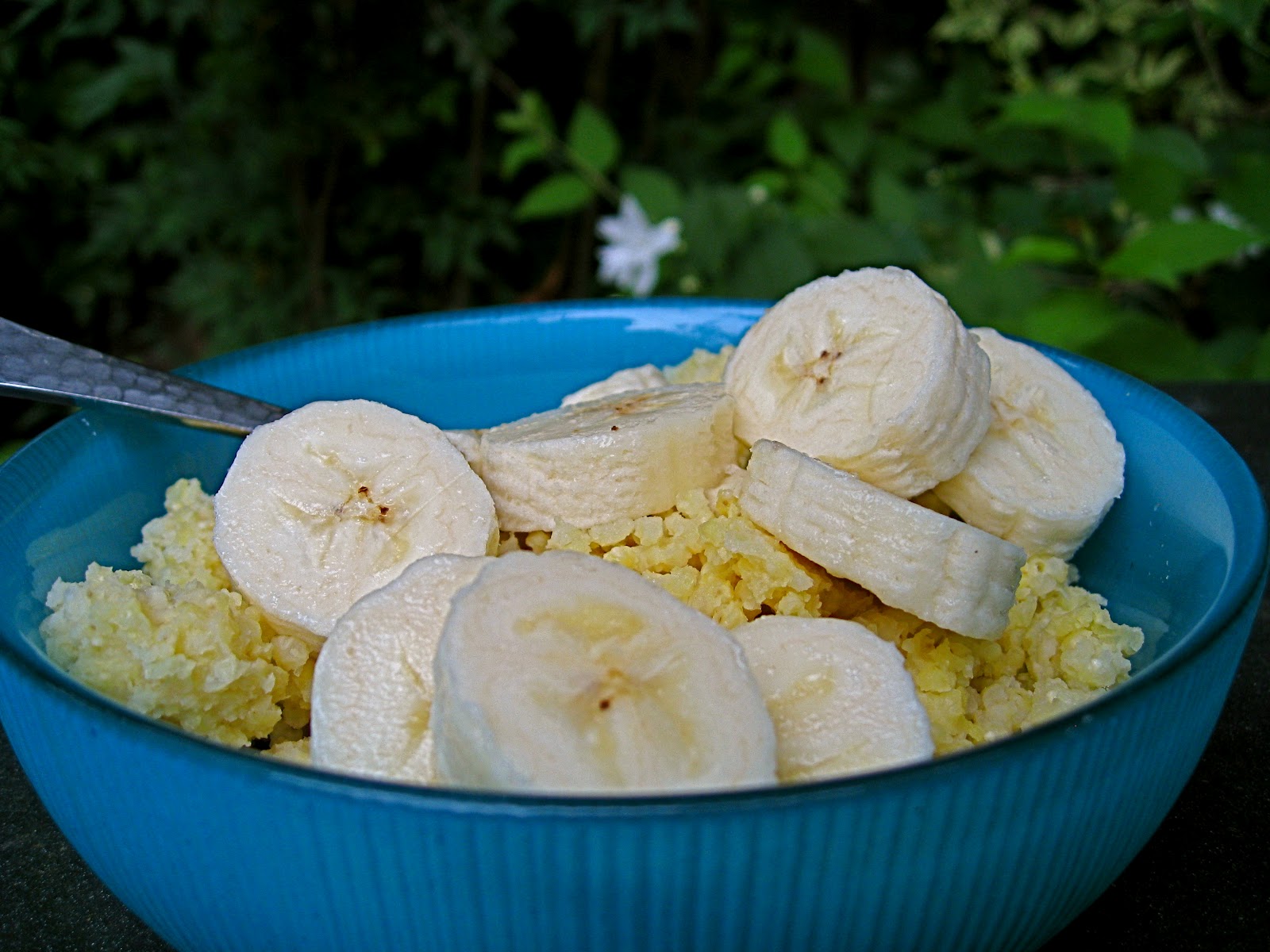
Finally, even though it is really not much of a recipe, I do want to mention my week's breakfast option - Banana Millet Morning Mush! Take 1/4 cup millet and boiling 1/2-2/3 cup water, cook until millet has absorbed all water and is soft. More water means more mush. Either slice (my preferred, not very ripe banana) or smash the banana and add along with a pinch of salt. Voila. Cheap, filling, relatively nutritious (oh, walnuts would make this!), and vegan, gluten and sugar free!

Despite its simplicity, I'm still posting it on Wellness Weekends.
Also, check out A recent NPR article on rice and beans as a major staple dish in the world.

Friday, April 13, 2012

Fifty Second Friday: Ruby Red

This post will hopefully literally take fifty seconds to write. My camera is packed ready to go for camping this weekend, so we will have to make due without. Last weekend I managed to acquire a jar of beets. Now, never of my own volition have I purchased such a product, but when freely given, I feel like they must be put to use. What would you do with some water-packed ruby red roots? Well, I decided they would set well with most of the other fruits and veggies I currently have on hand...in a smoothie!

Ok, don't cringe. It is really rather tasty! This bright red beverage has a slight hint of beet, but is mostly an amorphous earthy sweetness.

Ruby Red Smoothie
1/2 large, ripe banana
1/2 cup or 5 large strawberries
1 orange, peeled
1/2 cup spinach leaves
1/4 cup sliced beets, steamed until tender
1/4 beet "water"
Water or orange juice as needed for consistency

I just placed everything in the cup that came with my immersion blender. Pulsed until smooth, without large bits of spinach. And that was that!

Check out this and other recipes on Wellness Weekends!

Friday, March 30, 2012

Fifty Second Friday: Healthy Vegan

As you know, I bake a lot. And, generally, the products taste pretty good. While my co-workers and friends will readily consume almost anything I make, there is still the commonly-held misconception that vegan desserts are inherently healthy. I am not sure how chocolate truffle pie, mocha chocolate chip cookies, or chocolate truffles could ever be mistaken for a health food, but when you say no butter or cream, that's what happens. Let me assure you, those peanut butter cookies still have plenty of fat and calories; that cupcake you scarfed down? Yeah, the frosting was made with margarine, or coconut oil, or perhaps even just straight-up melted chocolate! To get the same richness and decadence of some of the non-vegan desserts, I use some calorie-dense ingredients like coconut, nuts, and avocado. Not to mention, most everything still has sugar (and probably lots of chocolate).

We get it, Rachel, "vegan dessert" does not necessarily imply crunchy granola, flax-infused, superfood. Yet, alternative baking in general does get the critical thinking juices flowing, and often induces a little more creativity in some of the less healthy ingredients. Dessert can be good for you, too.

Banana Carob Pudding
1 banana (not too ripe)
1/4 cup carob powder
10 drops cocoa stevia or 1-2 tbs agave
2 tsp peanut butter

1. Food process until smooth. Yes. That's it. Enjoy!

Want to know more ways dessert (and other things) can be healthy? Try Wellness Weekends and Slightly Indulgent Tuesdays.

Wednesday, August 3, 2011

Across the Mediterranean

Have I mentioned how much I love summer? Not today? Well, I do. Besides the fact that I was born in July (oh, did we skip my 25th, this year...oops) and the weather is warm and sunny, there is so much good eatin' to be had. Summer is the season of tomatoes and zucchini, of peaches and berries, of eggplant and peppers, and of course - FIGS! Those teardrops of with which I fell in love during my farming excursion in Italia, how I have dreamed about their return to season. Well, the first of the fruit have arrived, just in time for this month's Raw Recipe Challenge! Considering the heat, a raw recipe is quite welcome.

Lisa of Vegan Culinary Crusade and Nicole of A Dash of Compassion have challenged readers to a month of mini pie making, in the raw. Unfortunately for my free time (what little there is), pies are probably my favorite baking pursuit, and I happened to learn of this challenge at the beginning of the month. Let's just say that this month may see a disproportionate number of raw pies...
Taste of Tuscany Tart (yields 1 mini tart; vg, gf)
Crust
1/2 cup raw almonds (optional - soak for an hour prior)
4 dates

1. Food process all ingredients until they begin to come together. Add a tsp of water, if necessary. Use fingers to press firmly into a small tart pan.

Banana Cream
1 medium banana (I like mine pretty unripe...)
1 tsp agave
1 tsp lemon juice

2. Place all ingredients in the food processor until smooth. Spread evenly over crust.

Figs
2 medium, sliced

3. Arrange fig slices daintily on top of banana puree. Perhaps drizzle a little agave or garnish with some sliced almonds.

Wasn't that simple? Just you, fresh ingredients, and something with a sharp rotating blade (watch out for that). Can't wait until my next raw pie? Check out my baby apple pies!

Tuesday, July 12, 2011

Chocolate Fail and Slight Indulgence

Yes, there should have been another chocolate company interview. No, this is not it. Hopefully, I will deliver next week. Instead, I decided only to indulge slightly with Amy's weekly lineup at Simple Sugar and Gluten Free.

What did I make? Breakfast. I took two farm-fresh peaches, one half banana (Whole Trade), a quarter cup vanilla almond milk, and a handful of wine berries from my farm stand! This resulted in an interest variation of a peach melba smoothie. YUM :)

Sunday, May 15, 2011

It's Fair (Trade) World After All

At least we all wish it were. Many of the products we consume come from questionable origins, in which the environment and local people that are most directly impacted by our purchases get the short end of the deal. Bananas, those tropical fruits that form the basis for many school lunchboxes, smoothie bars, and cartoon pranks, have a history of social and environmental mistreatment.

Banana plantation near Ranomafana, Madagascar

Banana cultivation goes back at least 7,000 years in Southeast Asia. Over time, the fruit spread out into Africa, hitting Madagascar first. However, bananas were not widely known or consumed in Europe and North America until the 19th century! Plantations were thus largely a New World phenomenon, as a market in the north became available with refrigeration and more efficient rail transportation. The concept of a "Banana Republic" was born around this time, stemming from the large agribusinesses begun by railroad tycoons (the precursors of Dole and Chiquita). Remembered for the unequal distribution of wealth, a form of imperial domination, and political corruption, the period of the Banana Republic incited rebellion and a massacre that spurred rebellion and violence. While the situation for workers improved, trade policy fostered a supportive environment for large agribusiness rather than smallholder farmers. And thus we come to the need for measures such as Fair Trade designations.

Chiquita, the large agribusiness that holds a quarter of the global banana market (2007; UNCTAD), was recently certified by Rainforest Alliance. And in the past few years, Dole, which also comprises about a quarter of the banana market, began selling Fair Trade bananas certified by Transfair. While this movement towards corporate social responsibility (CSR) appears to be a step in the right direction, years of justified distrust on the part of many environmental groups and conscious consumers has led to skepticism over whether these certifications are anything more than "greenwashing."
See the banana plants in this mixed agro-ecosystem landscape? A mix of forest, rice paddies, banana, and homesteads lends itself to higher biodiversity, maintained productivity, and sustained ecosystem health.

Whether it's greenwashing or not, the awareness around the production of products like bananas has grown substantially in recent years. So, while I don't care for cooked bananas (or fostered), I will continue to make my tasty banana, strawberry, kale smoothies. At least in moderation...