Pages

Showing posts with label climate change. Show all posts

Friday, January 3, 2020

Another Decade Bites the Dust

We’ve finally reached that fabled year of 2020. This has seemed a far distant marker for so long, often serving as a benchmark for reaching ambitious targets or achieving technological advances. Yet, it simply marks another one of Earth’s orbits around the sun. As such, expecting earth-shattering changes to suddenly manifest seems a bit unreasonable. That said, the issues we’ve explored in this blog have indeed evolved over that time. I wanted to take a quick look at a few big topics of interest in 2019, and reflect a bit on what is still a challenge and where we’ve made progress since 2010.

A smoky sunset in Southeast Queensland
Deforestation, biodiversity loss, and fires, oh my!
My Munchable Musings was largely founded on the concerns over connections between deforestation, biodiversity loss, and food production systems. And while I’ve written a fair bit about drivers of forest loss (e.g. oil palm) and conservation of biological diversity, fire has not featured prominently on the blog in the past. But this year, forest fires across the world have made headlines, repeatedly. The Huffington Post even called 2019 the Year the World Burned, citing massive fires in Australia, California, Brazil, Indonesia, Russia, and Lebanon. Global Forest Fire Watch estimated that in 2018, around 3.6 million hectares of tropical forest was lost to fire, an area the size of Belgium (though, note, that this year over 4 million hectares of forest have also burned in Australia alone). 

The implication of these losses are not just the immediate effects on habitat, species, property, and air quality: burning vegetation releases carbon dioxide (and other greenhouse gases) into the atmosphere, contributing to climate change and elevating fire weather conditions; humid forest fragmentation and loss influences local precipitation and can possibly cause a shift to more arid ecosystems like savanna; and forest habitats often take decades to recover, leaving wildlife without a home for the intervening years. If you want a rundown on the year for tropical forests, Mongabay has put together a pretty comprehensive retrospective post on the topic. Although fire has been a common part of many of these landscapes, a combination of poor policy decisions, destructive land use practices, and climate-change-induced higher temperatures and drier conditions have pushed fire from a concern to a catastrophe in the last decade.

Climate marchers start young!
Climate strikes and climate emergency
On a related yet separate note, climate change has also steam-rolled its way into the public consciousness this year. Changes in climate - including increased global average temperatures, more intense extreme weather events, and shifts in rainfall timing and intensity - have been projected, refined, and communicated with increasing urgency over the last few decades. Ten years ago, the Cancun Agreements were established at the 16th UN Framework Convention on Climate Change conference, which set the groundwork for financing of climate projects in developing nations and highlighted adaptation. And while the world may have briefly rejoiced at the end of 2015, when the most ambitious agreement was made in Paris, international climate policy has merely limped along (not to mention a slightly disappointing UNFCCC this year). In the past year, however, we’ve seen a massive rise in public outcry over climate inaction, catalysed by none other than a Swedish high-school girl.

While I still worry that, on the whole, we are doing too little too late, I feel inspired and more optimistic by the fact that climate strikes spear-headed by youth have grown rapidly in the last year. The last two Fridays of September marked massive climate marches across the globe, trying to elevate the issue to the emergency it deserves. It was also such a contrast to the levels of energy and urgency at the first climate change rally I went to back in 2013. There were 35,000 people marching through the streets in Washington, DC. On 27 September, in Montreal, half a million people took to the streets. So despite some critical political incompetence, I think there is hope that the tables are turning and change can happen quickly. 

How to feed the world
The first two topics in this post mostly focus on problems, but this last one could be considered solutions-oriented: plant-based diets. Now, understandably, this blog has sat in the vegan camp for the last decade, but I have discussed meat and the impacts of livestock on the planet at length before. The crux of the issue is that raising livestock (especially those bovine belchers…) contributes substantially to greenhouse gas emissions through land clearing for pasture and feed production, and natural ruminant gut processes. Mid-decade, we started to see a growing number of researchers calling for a reduction in meat in people’s diets or even complete global transitions to vegetarianism in response to environmental and health concerns. But I think the biggest development in the last year or so, is the rise of mainstream fake meat products and the stir they’ve caused on the global stage.

We are well passed the age of Garden Burgers and Tofurkey deli slices that characterised my teen and university years as a vegetarian. With the development of more passable meat substitutes, like the Impossible Burger and Beyond Meat, fast-food chains and even meat giants like Tyson have embraced the trend and rolled out plant-based options. The Economist chalked up some of this proliferation to a shift in lifestyle and the associated high demand for vegan products among Millennials; however, the total vegetarian and vegan population remains woefully low (less than 5%). Despite strict meat-free diets remaining firmly in the minority, there has been conspicuous speculation about the consequences of the world going vegan (not all of which are positive - e.g. negative impacts on developing countries). But that’s what is a bit confusing to me; this is not an all-or-nothing affair nor does it seem likely that the entire world is trending toward plant-based. But better meat-free options mean that people have choices, which make it easier to reduce consumption if not necessarily eliminate it. And for high-meat-consuming developed countries, like the USA and those in Europe, this is what really matters.

Hopefully, that brought this post back to a positive note. Since I’ve been completely remiss about blogging this past year, I don't have much to rehash from a year of posting. But, since I just submitted my PhD thesis, keep an eye out for more musings in 2020!

Catch up on the last ten years… 


Wednesday, January 2, 2019

Another Year in the Books

DSC_3244
That's a wrap. So long 2018. One of my favourite traditions on New Years is to read over the past year's blog posts. Now, in the last few years, there has been a lot less to read than during My Munchable's early years (say, 2009-2013). But despite the confusing speed with which 2018 flew by, there was a lot of substance to cover.

It wasn't the most uplifting of years, between all the political, social, and natural disasters. An early post from last year discussed the significance of rain under climate change. Then mid-way through 2018, the best scientific minds gave the world a demoralising climate change update (so I wrote down some food for thought). Even followed adhoc, the climate-related news from the last year was pretty overwhelming. Cobbling together these developments in tweet form, we see hurricanes and fires (again), political inaction and youth protesters, and some pretty dire projections. Unfortunately, all that bearing of bad news hasn't resulted in the kick-in-the-pants we seem to need.

If climate change hasn't gotten you down enough, some of the violence and social injustices might. Border walls and mass shootings made headlines with regularity. My first post of 2018 discussed indigenous rights and conservation in Australia, and I published the first chapter of my PhD looking at social justice in conservation. This was the seventh year I've Lived Below the Line, and so did some reflecting as usual, including on how we define what is poor. There is obviously a long way still to go for a socially equitable world...

... but, at least there is baking to set things right in the meantime..

DSC_3691
For my part, there was lots of (too much ... 4.5 months away) travel. Two trips to Indonesia for my PhD project sparked some musings on the benefits of travel, trials and tribulations of interviews in research , and unsurprisingly chocolate! More recently, the annual visit home involved "slow travel" with a Grand Tour of the USA by rail.

Now, 2018 was by no stretch of the imagination one of the more notable years. Like any year, there were ups and downs (though there seemed to be more downs). I'm hoping that 2019 will sit a little higher up on the roller coaster!

Read Years Passed

Friday, November 16, 2018

Food for Thought on Climate Change

It feels as though every time I read the news these days, it seems like the world is falling apart. Whether that's because of the political climate or the actual climate, well, it's hard to tease apart sometimes. It's hard to stomach the actions and inflammatory language of intolerance and prejudice, openly condoned by supposed 'leaders'. But it's also increasingly terrifying to imagine the future world we seemed to have built for ourselves. Only about a month ago, the Intergovernmental Panel on Climate Change (IPCC) released one of its semi-regular reports on the state of our understanding of climate change - the anticipated impacts based on potential scenarios of greenhouse gas emissions. While the past few reports have stressed the importance of a low-carbon pathway forward, the conclusions of this report reached a new level of concern and urgency. To avoid catastrophic warming - 1.5 degrees Celsius - we have about a decade to get our act together as a planet (though a few countries really need to pull their weight).

Now, it's not like we're completely devoid of ideas how to do this. Most of the world has made the important step of recognising climate change is an important issue and pledging to do something (albeit, too little) to halt it. Alternative energy technologies have made amazing progress in terms of efficiency and affordability. Private companies and local government alike have taken steps to curb their emissions and adopt environmentally-friendly practices. While these disparate actions are important contributions and make a statement, we need something bigger and more concerted. And we will have to sacrifice now so as not to suffer too greatly in the future. 

So a couple of weeks ago now, I went to a seminar on climate change beliefs and behaviours. The speaker Neil Lewis Jr of Cornell University raised a key point of debate - should those interested in climate-related behaviours focus on individuals or policy? The scale of the problem - and the fact our atmospheric pollution is a massive tragedy of the commons - necessitates broad sweeping changes likely instigated by policy. But without public pressure to elect officials that will push for those policies, and some willingness to make the sacrifices (I like to think of them more as opportunities...) those policies would require, we're not going to get anywhere (...smile for the new congress!). 

Now Dr. Lewis noted that people often agree that something needs to be done, but not that it must be done by them. So in theory policy change is acceptable, but when it might raise costs (e.g. the carbon fee on Washington State's ballot), then it's a no-go. But people can and do change their behaviour, and perhaps the thinking around meat consumption is a good current example. According to a recent report by by the UN, dropping meat and dairy from our diets would contribute substantially to curbing greenhouse gas emissions. This isn't really news - I mean it made the news - even right after arriving in Australia, I reflected on some recent studies on the topic of meat consumption and environmental problems. While I definitely don't expect everyone to jump ship and turn vegan overnight, people are generally eating less meat and younger generations are more likely to go vegetarian. 

And over the years, we've learned a thing or two about what influences people to change ingrained behaviours. Psychologists have demonstrated there are a number of structural and psychological barriers to changing behaviours - not the least of which is that facts don't seem to matter much when they fly in the face of strongly held views (#fakenews). A crucial point here is that motivations vary between people and backgrounds - so for food choices climate, the environment, or even animal rights (which is sometimes but not always related to the environment) aren't always forefront. But health and costs also may be deciding factors. To me, this suggests we need to do a better job of framing, and in the case of climate change actions doing so in terms of so-call 'co-beneits'!

As a final point, I just want to highlight that climate change mitigation presents challenges from behavioural psychology that don't apply as much to shifting diets, namely timing and proximity. Regarding the first, even William Nordhaus, who pioneered early work on discount rates for climate change action and one of this year's Nobel prizes in economics, has warned that it's too late to wait. However, discounting is very much in-line with how people approach planning and problem-solving. The future is distant, and very much future-self's problem. The immediate costs seem far greater than the avoided ones months, years, decades down the line - let's just say we prefer instant gratification and hate the feeling of loss. For the second, researchers have noted that there is a disparity between countries that emit the most greenhouse gases and those that will suffer most from the impacts of climate change. The U.S., for instance, has started to experience some of the effects with increased wildfire risks and greater intensity storms; but for the most part, the impacts are still this geographically distant phenomenon that don't directly affect many people's lives. Again, psychological studies have shown that people are much more likely to believe in and act on things related to personal experiences. 

Ok, so at the end of the day, where does that leave us? Lots of super smart people are grappling with this question. But as with many problems related to common-pool resources (the atmosphere is everywhere!), it often requires some sort of rules in place to govern how people use it. Although it seems like there are so many causes we can be vocal and active about these days, climate change is not one that can wait, as it threatens the very existence of life on this planet.

Monday, February 26, 2018

Weathering Change: Women Farm Cocoa, Too

You have probably read an article or two (or more) about how climate change is going to be the end of chocolate. Compounded by potential losses of our other favourite indulgences - coffee and wine - this is nothing short of tragic. But what these articles don't really discuss is what happens to the farmers who grow these valuable export crops. Studies documenting how climate change affects rural people generally point out that they're likely to lose income, and that women are particularly at risk of experiencing negative effects. But not everything is about money, and not all women are in the same boat. The coarse resolution at which poverty and gender are often treated means we may get a skewed picture of who is actually vulnerable to climate change and for what reasons.

Back in 2014, I was working on surviving my MPhil degree, and reveling in the joys of fieldwork. From June to September, I was in the Central Region of Ghana, chatting with women in cocoa farming communities about their lives, their work, and the stresses they face. The idea was to get a sense from past experiences of "weather events" - the usual droughts and floods, mostly - in order to get an idea of how climate change could alter the lives of these farmers in the future. While the dissertation may have long since been done and dusted, one piece has lingered in the shadows. After 2.5 years since its first draft, some of the insights from this project finally made it through the peer-review process to see the light of day!

Yes, Kakum looks like a seahorse. Credit: Alex Morel
It's a bit off-point from the usual ecology fare (or maybe that's not so usual these days...). The idea of our little study was to get a better sense of who among cocoa farmers is vulnerable to climate change and how. While by no means the definitive works, the paper describes how women involved in producing cacao are vulnerable in different ways. Because I've been told it's acceptable to celebrate your first first-authored paper, I'm unabashedly taking this time to share the highlights.

First off, why cacao? Besides the logical reason of its being the precursor to chocolate, cacao is an interesting case in a changing climate. A bit of a "Goldilocks" crop - it is best suit to a limited area around the globe - it needs certain amounts of rain, a tight temperature range, and both these things at the right times. So shifts in climate may have severe consequences for cacao crops. One finding from the study was that women who own cacao farms may become more exposed to adverse weather conditions - merely because the crop is particularly finicky - in comparison to those women who don't and grow a range of vegetables and starchy staples that have different optimal growing conditions.
But that's where the relative benefits of not owning cacao seem to end. Farmers are very much like investors - they diversify their portfolios of activities to reduce their sensitivities to any single unfortunate event. Cacao can be a highly profitable cash crop, and the women I spoke with who managed their own cacao had more disposable income and independence to take up a variety of income streams. They could spread their nest eggs across many baskets. Independence was not just about finances, though. The confidence and sense of empowerment that came along with owning cacao differed considerably from the pessimism and hopelessness expressed by many of the women who did not. Someone must have said that "success is a state of mind", and while tangible resources do help, having a proactive attitude can make all the difference in responding and adapting to challenges, not the least of which is climate change.

Couldn't have managed without Auntie Fausti,
who looked out for us while Homaho!
Last of all, while not explicitly part of the analysis, I did notice a strong tendency for women with cacao to point out the importance of ecological stewardship. Perhaps because it is harder for women generally to obtain fertilisers and pesticides used in cacao production; perhaps because many also cultivate the veg that they then feed to their families (and who wouldn't want to feed their kids safe and nutritious food?); or perhaps it's because many have inherited land after farming all their lives and building up knowledge of ecology over time, rather than receiving agricultural extension training focused on technology and inputs (also largely unavailable for women). Perhaps that is a question for another research project!

Unfortunately, none of this solves our chocolate predicament. But hopefully it's a step toward more nuanced ideas for helping farmers face the current and pending climate changes.

Read the full paper, if you're feeling ambitious...
Vulnerability of Ghanaian women cocoa farmers to climate change: A typology. Climate and Development. doi: 10.1080/17565529.2018.1442806

Related Posts:
So much thanks to my co-authors- Mark and Emily, Rebecca for constructive comments on the paper and support in the field, and all of the ECOLIMITS team for letting me tag onto the project. This would not have been at all possible without the amazing interpretation skills of Anne, the local know-how and tech support of Mike and Prosper, and of course all the women who gave their time (and often food and hospitality) in opening up about their lives and contributing to this project. I'm forever grateful, and hope one day this can help in some small way. Medaase!

Wednesday, February 7, 2018

Embrace the Cloudy Skies

We all have those days. You wake up to the light pitter-patter of raindrops on the roof. Peering tentatively out the window, and all you see is a blanket of gray. You pull the covers back over your head and hope no one notices you straggling in several hours late for work. 

DSC_0406
Last week, many of my Brisbane compatriots may have tried to pull off something along these lines, bemoaning the gray and rainy weather. Though I love the usually brilliant blue skies and sunny days of Brisneyland, I have to admit that my Seattle upbringing makes me crave dreariness and gloom (weather-wise) every now-and-again. But the lack of rain piques my interest (and concern) for another reason. It's indicative of a worrisome trend across the globe - one that is not just about how much water falls to the ground in a specific place, but at what time of year and how intensely. So, let's talk a bit about rain!

Queensland is home to the Great Barrier Reef and a belt of tropical rainforest. But it also seems to have a recurrent precipitation problem. During December, arguably the start of the wet season, rainfall and soil moisture were below average for most of the state. Here in Brisbane, like the rest of Southeast Queensland, we rely on capturing rainwater in reservoirs throughout the year to feed demands for drinking water, etc. While this is efficient during the frequent summer deluges, it leaves us at a bit of a risk when the skies are clear for too long.

Moving to a more arid region, Cape Town has made headlines repeatedly in the last week or two. This is because the South African city with a population of 4 million people is likely to run out of this year's water by around May. Growing water demand (i.e. more people) and record-level drought (potentially augmented by climate change) are being implicated in the urban water shortage. Ultimately, the city is drawing on its underground aquifers and rivers faster than rain can replenish. Indonesia's capitol city, Jakarta, also made headlines for unsustainable use of groundwater (caused by illegal well-digging), though the big concern here is the risk of land sinking and falling below sea level.

Our last case study of rain troubles is Seattle, WA. This is another story altogether. Here it rains. In fact, in 2017, Seattle got a year's worth of rain in just 5.5 months. Cool, so water shouldn't be an issue, right? Climate change predictions show Pacific Northwest of North America as getting wetter and warmer. Unlike arid Cape Town or sub-tropical Brisbane, much of Seattle's drinking water comes from spring snowmelt. And this, my friends, is reliant on the temperatures dropping low enough for winter snows to fall and remain in the upper parts of the watersheds. Or, if precipitation becomes more concentrated at certain times of year, when it is less likely to fall as snow, we are also likely to see water shortages.

So Brisbane is back to sunny skies, but rain should never be far from our minds. We had three different water supply stories, but a common thread of precarious precipitation ran throughout. It matters where, when, and how much, but perhaps we could still embrace those cloudy days just a bit more!

Sunday, May 21, 2017

A Dietary Doomsday?

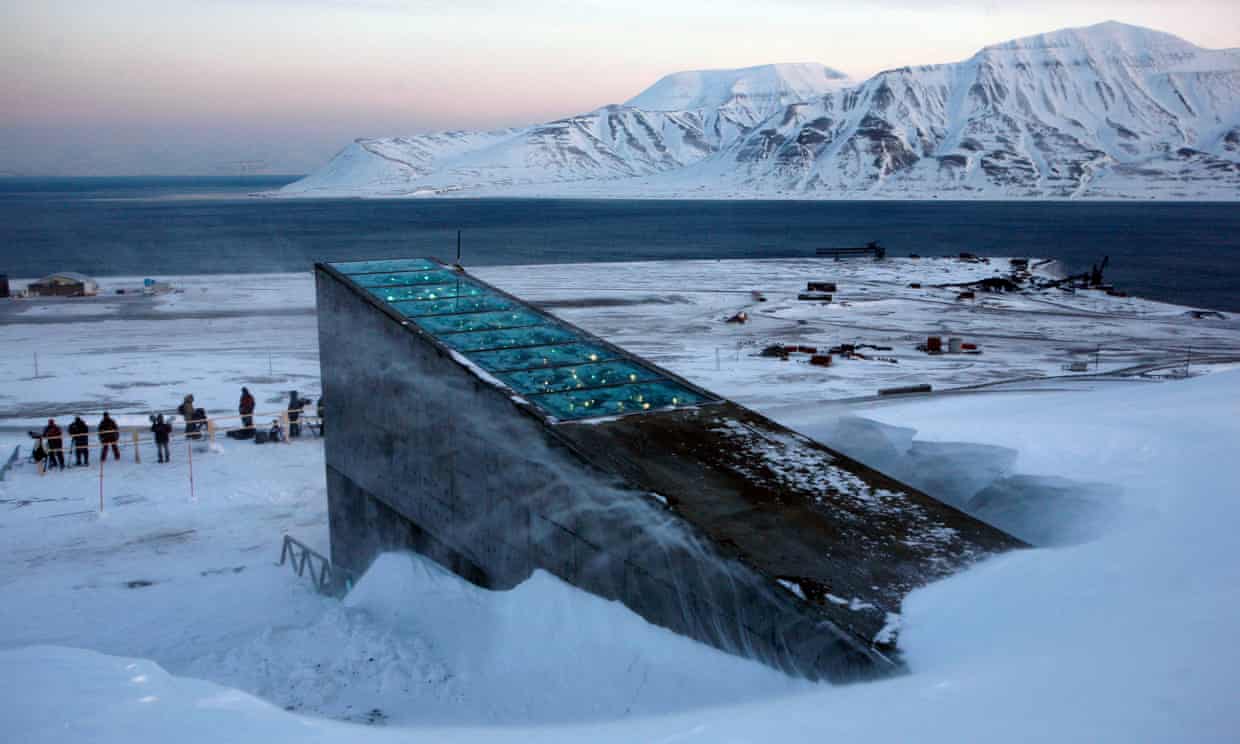
https://www.theguardian.com/environment/2017/may/19/arctic-stronghold-of-worlds-seeds-flooded-after-permafrost-meltsFrom afar it seems like something out of a post-apocalyptic fiction world - a massive vault, bored  into the Norwegian tundra, an icy tomb deep within the island of Svalbard, intended to preserve the raw materials of our agricultural system. In the face of massive global changes in terms of climate, land degradation, diet homogenization, and even conflict, this seed repository houses the world's diversity of crops in preparation from looming crises. Then, this last week, the world's insurance policy for food supply had an unwelcome infiltration of water from permafrost melt in the far north. While various news sources assure us that the vault will be just fine, the symbolism of seeds succumbing to climate change is all to real. A worrying percentage of the world's food comes from a select few crop varieties that do best under a narrow range of climate conditions with adequate fertilizer, pesticide, and water. Modern agriculture has done amazing things, but it also has made sweeping reductions in local understanding of things to grow and how to respond to variability and change. While we may have stocks of genetic variation (ironically housed in melting permafrost...) to help weather the storm, I remain skeptical of the utility when actually confronting needs on the ground. 

Short post, stay tuned for plastics this week. 

Tuesday, May 2, 2017

A Peasant Diet for the Planet

Ok, I admit it, I like charts...
This week I'm eating like a peasant. Now that (or more likely, this post's title) might have rubbed you the wrong way. For some, it conjures up unpleasant images of feudalism, toiling under rich landlords; for others it may have too many associations with colonialism and hearkening to an era where rural people in developing countries were somehow seen as inferior beings. But at its root, the word means country dweller.* And most people living in poverty live in rural areas.

"I'm eating like the average resident of a developing country" would have been a more accurate statement. If you look where my calories are coming from over the course of the Live Below the Line Challenge, it's quite similar - although missing the eggs, fish, and other animal products that do feature in most diets. Cereal grains (oats and rice) comprise nearly two-thirds of my daily 2000 calorie intake, and pulses are a major source of protein. Now take Asia for instance, which houses the majority of the world's poor (and population as a whole). Rice is the staple food, making up 50-66% of caloric intake in the region (with the higher values corresponding to the less economically developed countries). Pulses (e.g lentils) are also staple foods that, although usually contribute only a small fraction of calories, can actually make up close to half of protein intake. Roots and tubers (e.g. sweet potato and cassava) have historically made up nearly half of calories in many African countries, but this begun falling during the Green Revolution.

A familiar picture, my food for five days of Living Below
Now, the ubiquity of such a diet doesn't mean it's the way forward. For one, although grain-heavy diets provide enough calories, they often lack important micronutrients. Often referred to as the "hidden hunger", insufficient intake of vitamin A, iron, zinc, and folate is particularly concerning in children, who can suffer stunting and hindered brain development. While things like home gardens have been proposed as means of curbing such deficiencies, the poorest of the poor also often face difficulties getting their hands on land. Besides being a human health issue, a healthy and diverse diet is increasingly considered a human right. It is also disempowering not to have the resources to choose what to eat, when, and how much.

But there are also lessons to be learned from how the majority of the world's poor about how to eat for the planet. On average people in East Asia and the Pacific consume around 1/3 the amount of meat as North Americans and Europeans, and in Sub-Saharan Africa it's about 1/8th. Eating a primarily plant-based diet is generally acknowledged to have a lower carbon and water footprint than one heavy in meat (especially beef and lamb). According to the World Resources Institute, if the world's top 2 billion consumers reduced their meat and dairy intake by 40%, we could free up land double the size of India and avoid greenhouse gas emissions three times the global amount in 2009. Furthermore in many developing countries, what animals are consumed are eaten in low enough quantities to be sustainably harvested, or domesticated ones serve multiple purposes on the land - livestock can produce milk as well as manure for crops, or fish ponds can provide fertilizer for crops and feed for livestock. At the end of the day, I think a glimpse of a poverty-line diet is taking a taste of moderation that the big consumers in the world greatly need.

So while I miss green veggies (and chocolate), I'm pretty thankful and content with the bounty that even AU$2 per day can bring. Consider expressing your own gratitude, and sharing your good fortune by support this year's Live Below the Line campaign!

* Old French paisent ‘country dweller’, based on Latin pagus ‘country district’ (Wikipedia)

Saturday, April 8, 2017

Going Hungry in the 21st Century

Back in 2002, the United Nations decided that by 2015 the proportion of people who suffer from hunger should be cut in half from 1990 levels. We nearly met this target of a basic human right, alongside the other Millennium Development Goals, yet almost 800 million people (over 10% of the world's population) are still undernourished. In the next iteration, the UN set its sights higher with the Sustainable Development Goals, aiming to end world hunger by 2030. While this seems like a no-brainer in this day and age - how many people would argue that people shouldgo hungry?? - there are a number of reasons unrelated to how many calories farmers produce for why we continue to see chronic hunger and malnutrition, as well as bouts of acute famine. This post touches on two factors and specifically famine, as part of the lead-up to the Live Below the Line challenge in May (and I'm also raising funds for the awesome organization Oaktree, so check it out!).

So let's start with what should be a relatively straight-forward and objective topic - weather and a changing climate. Food shortages have been attributed to periods of drought, severe rainfall, and pests for millennia. Rainfall changes might spread diseases that wipe out crops, as prompted the Irish potato famine in 1845. The failure of the monsoon in India has taken blame for famines at the end of the 19th century. And while anticipated overdrawn aquifers and more intense storms may undermine crop and livestock production, our fisheries that feed the world's poorest are at risk from rising sea surface temperatures and ocean acidification. Even countries like Australia, with a particularly vulnerable agriculture sector, are not exempt from the impacts. Yet politically stable, wealthy nations have the capacity - that many other countries do not - to minimize acute events that often cause famines by importing food and sending aid to their affected populations.

This leads us to the topic of conflict, which can be both cause and result of food scarcity. This isn't news; back in the early 1990's, researchers argued that conflict and civil strife were the prime suspects instigating famines. A recent article in The Conversation captures the sentiment that famines don't "just happen", but are driven by particular social and political circumstances.
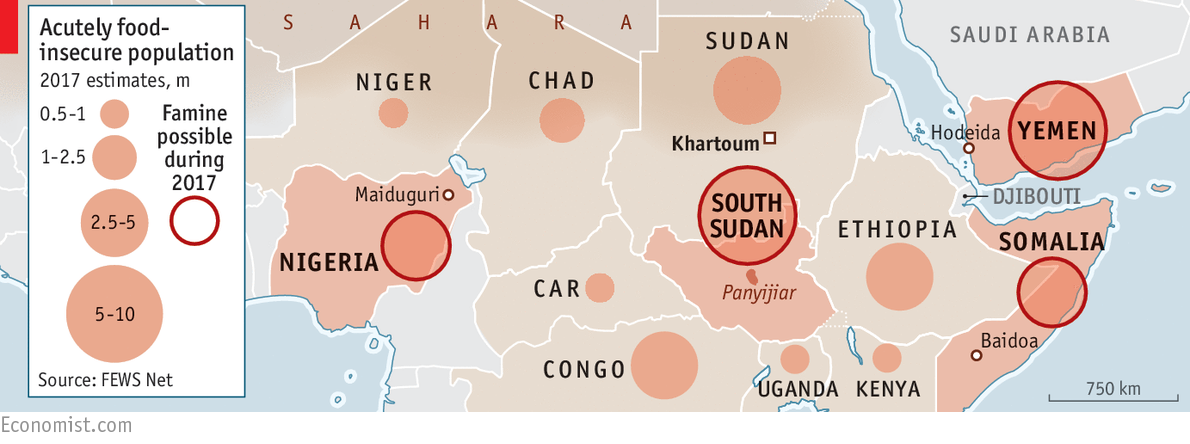
So enter 2017, where there is "high risk of famine in some areas of north-eastern Nigeria, Somalia, South Sudan and Yemen because of armed conflict, drought and macro-economic collapse," according to the Food Security Information Network (FSIN). In the coming year, widespread food insecurity is expected to also pose problems in Syria*, Iraq, Malawi, and Zimbabwe. The region experienced considerable political discontent in the early 2010's, some say spurred on by rising food prices. But here again we encounter the the question of whether food shortages (driven by adverse weather, etc.) provoke conflict or the other way around. An article in The Economist argues that war and violence simmering in these countries made it next to impossible for farmers to cultivate crops to feed themselves and their neighbors, as well as for food aid and supplies to cross border lines. Many of the possible 2017 famines fall into the "avoidable" bucket.

Hunger may seem worlds away for many of us, but it is truly naive to believe that the instability and unrest that is both a contributor and a result of food insecurity is isolated, without far-reaching implications in terms of political security, counter-terrorism, and global food production. In some ways, countries "worlds away" are culpable; for example, the US provided weapons to the Saudis then used to stoke the war in Yemen. It is withdrawing aid to vulnerable regions in Africa. And finally, several countries facing famine are also on the proposed travel ban in the US, a cruel and unfeeling move, but also one way of seeding desperation and resentment. 

It's clear that governments are not working in favour of the health and prosperity of their populations, so its more important than ever that we try to support efforts that are attempting to improve the human condition (and ultimately the environment on which we rely). 

*I should note that most of this post was written before the most recent attacks in Syria, and the situation there has most certainly escalated to nothing short of a travesty, tragedy, and serious human rights violation!

Monday, October 17, 2016

Seven Years: A Blogiversary Post and Squash

On October 15th 2009,  I wrote the first substantive post on this blog (although technically My Munchable made its debut on the 11th). Under that third Blog Action Day's (BAD) theme of climate change, the logical subject was growing food, having recently returned from working on a small organic farm. Since then, we have cycled through a variety of topics from water resources to human rights and equality. However, this year there is no official theme; the organizers have suggested writing on "whatever you are most passionate about". Oh, no problem, there are only like a million things I feel passionate about (ok, exaggeration...). But then two things happened: World Food Day announced its theme of climate change adaptation and this article ran in the New York Times. We've come full circle.

The article introduces Sarah Frey, a midwestern farmer who just happens to be the largest supplier of pumpkins in the U.S. But what made news is her effort to shift public perception of pumpkins from ornamental to edible, to bring variety back to winter squash. Every now and then I muse about starting a pumpkin farm. While mostly in jest (unless you know of any eligible young farmers...), this draw to growing things stems not only from the physical connectedness to the land, but also an appreciation for the beauty and necessity of diversity among what we grow.

http://ngm.nationalgeographic.com/2011/07/food-ark/food-variety-graphicSo I wanted to spend the rest of this post talking about just that - the vast potential of we can grow. According to the UN Food and Agriculture Organization, over 250,000 types of plants have been document to grown in agricultural systems, yet a mere 3% are actually in use today. To further restrict that, three quarters of our food comes from just 12 crops, and rice, wheat, and maize comprise the bulk of that.

Now say instead this represented the collective expanse of wild plants and animals on the planet, and you were an ecologist or a conservation scientist. This would be tragic; people would be outraged that so much biodiversity had been allowed to ebb away. On one hand, this means the loss of considerable genetic diversity, reducing the chance of traits and mutations that might better suit a shift in climate or ecology. On the other hand, a focus of breeding efforts and training on just a handful of crops has probably contributed to the erosion of local diets. In some cases this has improved nutrition and reduced the prevalence of undernourishment related ailments (e.g. vitamin A deficiency and blindness), but in many instances this is leading to homogenization of diets. Our ubiquitous staples also seem to have very particular requirements in terms of optimal growing conditions - water, nutrients, etc. - that make them not-so-very adaptable to inter-annual variation and change over time.a

Wayward cabbage among squashes at Borough Market
So if we're talking about agriculture and climate change, a lot of the arguments around maintaining biodiversity go back to resilience theory - building redundancy into agriculture as an insurance mechanism. But back to the pumpkins. These thick-skinned orbs are not exactly at the heart of food security; yet it's hard to imagine the beauty of diversity more evident than in this collection of colourful cucurbites. While relegated to three species, the hundreds of varietals of Cucurbita maxima, moschata, and pepo span all sorts of shapes, sizes and shades. In the grocery store you may see only the typical butternut, acorn, and occasional spaghetti (unless you're in Oz, and Kents and Blues seem particularly prevalent), as with so many food crops the industry has downsized and streamlined. But pumpkins may also be at risk due to climate change. Perhaps we shouldn't let diversity slide too far; a little nudge from consumer demand may go a long way.


Finally, with Halloween only a couple of weeks off, it's also important to make sure your pumpkin doesn't contribute to climate change! Make sure to compost the remains...or better yet, cook it up before it goes off.

Read Previous B.A.D. Posts
BAD 2011: At What Cost?
BAD 2010: Water


Monday, June 6, 2016

When it Rains, It Pours

On Saturday it rained. Not some pizzly drizzle, but a proper downpour. And as I revelled in the excuse to remain at home - luxuriating in the slothfulness of a damp day, listening to the melodic drum of the raindrops on the roof - it struck me how much the relationship with rain has shifted for over half the world's population (see urbanization post...). In the concrete jungles we have built to house a rapidly growing global population, water finds few permeable surfaces to infiltrate the soil below, and heavy rainfall often means the floodgates open, infrastructure is damaged, and lives are lost. We've seen this recently: people paddling through the streets of Paris, much of Texas submerged, and residents of Sydney (among many other areas of eastern Australia) fleeing for high ground. This simple molecule of hydrogens and oxygen wreking havoc on society.

Perhaps it is this urban existence that leaves us unaware of the vital role precipitation events and flooding played and continues to play in the existence and continuation of society. Yes, water quenches a thirst, but it also feeds the soil. Human habitation and subsequent civilization crept up around bodies of water that flooded regularly. For instance, the Nile supported the empire of Ancient Egypt, whose fertile growing regions depended on the influx of nutrient-rich silt from the highlands of Ethiopia, transported during the flood season. The floodplains back home in Puget Sound serve the same end, yielding highly productive agricultural zones and salmon habitat, supporting people back probably thousands of years when Native Americans first settled the region. 

In South Asia, people similarly depend on the arrival of the rains, here in the form of the monsoon. The summer monsoons in India recharge aquifers, drive hydropower, and enable the production of rice, tea, and dairy where rainfed agriculture still dominates. Because of the importance of the arrival of monsoon rains, festivals and traditions arose over time. In the past twenty or so years, with decreasing dependability of rainfall in the region, countries like India have seen an increase in the number of farmer suicides as the industry's prospects look more and more bleak.

Now these deluges are not always causes for celebration even if they are an essential life force; they still bring devastation when in excess. I suppose humans have dealt with these ups and down throughout our history; but with more of the landscape heavily modified and the climatic trends moving towards less predictable and more extreme, the challenges are likely to overshadow the benefits. Food for thought on the next rainy day.

Thursday, April 21, 2016

Eating for the Planet

“By eating meat we share the responsibility of climate change, the destruction of our forests, and the poisoning of our air and water. The simple act of becoming a vegetarian will make a difference in the health of our planet.”
Thich Nhat Hanh, The World We Have: A Buddhist Approach to Peace and Ecology

https://flic.kr/p/Gbc8FeAbstaining from eating animal products has long been the domain of animal rights activists, hippies, and tree-huggers (at least in Western cultures). In academic circles, ethicists and philosophers have mused for decades about the moral implications of consuming meat, but not so much the scientists. Yet, these days it seems like studies connecting diet, health, and climate change are all the rage, building up an evidence base of why a meat-free diet is a key strategy for the planet and us.

A few University of Oxford researchers published a paper this year in the Proceedings of the National Academy of Science (for those who don't know, is a well-regarded and widely-read publication), which shows on a global scale that the less meat consumed, the greater the greenhouse gas emissions reductions and the more health benefits. It was a win-win-win scenario: food-related emissions would decrease by more than 60%, fewer people would die 'prematurely', and the world would save up to $31 trillion otherwise lost to healthcare, environmental restoration, and missed work hours ... we just (all 7.4 billion of us) have to shift to an entirely vegetarian diet. No biggie.

A Nature Communications piece (a more main-stream 'pop-science' journal), which came out about a month ago, suggested that only plant-based diets are compatible with wide-spread re-forestation. This is both due to the sheer quantity of meat people consume (read: alot) and what we feed livestock (largely soy and maize). So vast swaths of forests are destroyed to grow grain to feed to animals. Let's just say it's not very efficient.

Finally, this month a group of researchers at the World Resources Institute (awesome think tank based in DC) pubished the 11th in a series of the "Creating a Sustainable Food Future" brief series. They provide some nifty graphics comparing the environmental impacts of different protein sources, and then go on to model some scenarios of different diets (both for the world and the US). The takeaway? Animal protein uses a lot of resources, and the average American eats more than his fair share. If you're curious about how feasible they thinking shifting the American diet away from meat is, there are even more colourful pie charts that detail how.
https://flic.kr/p/FfMKggYou're probably thinking, 'Ok ok, enough already, get off your vegan high-horse'. But, let me just say that I'm under no illusions that the world is going to give up meat tomorrow. Nor do I honestly believe everyone should (and if you want to know my thoughts, peruse this earlier post and this one). In fact, after traveling around Southeast Asia for a month, I feel even less convinced that people would willingly give up meat, fish, dairy, and eggs. It was actually a bit surprising, as I thought predominantly Buddhist countries would at least limit consumption (apparently that's not how it works...). Fish sauce was nearly impossible to avoid anywhere but explicitly vegetarian restaurants, and other animal proteins dominated the main courses.

At the same time, the proportion of meat to grain was usually pretty small. People are still living on very little, and meat is expensive. Following periods of food scarcity in the not-so-distant past, effort went into planting hectares of rice fields rather than prepare pasture. Sure, water buffalo graze on hillsides, and pigs and chickens roam rural villages, but it's not on the same scale as most industrialized nations (and increasingly China...yup, that's also a favourite of academics). So while I agree that diets around the world have been moving in an unsustainable and unhealthy direction for quite a while, it is important to remember in these broad global studies that the more local contexts matter a lot. The WRI report does mention poverty implications, and there are definitely people out there looking at regionally-specific 'sustainable diets'. But it is still a good thing to keep in mind when reading these broad-brush studies.

Well that's all for now. Happy Earth Day! With the theme of Trees for the Earth, it seems only right to focus on a driver of deforestation, no?

"My own view is that being a vegetarian or vegan is not an end in itself, but a means towards reducing both human and animal suffering and leaving a habitable planet to future generations."
Peter Singer
Some lovely plant-based pulses!
Most people in the region still eat a predominantly rice-based diet