Pages

Showing posts with label social justice. Show all posts

Friday, May 11, 2018

Lessons from an Empty Stomach

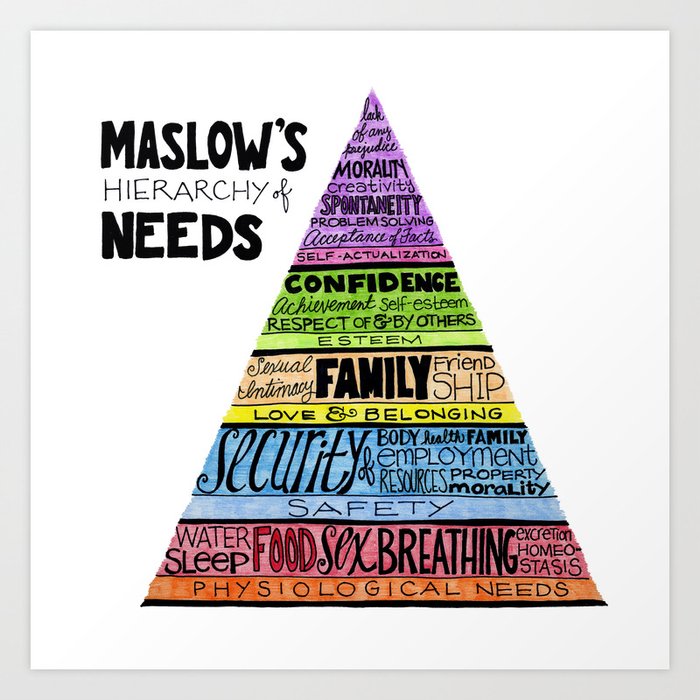
https://society6.com/product/maslows-hierarchy-of-needs-ii_print
This morning I woke up with a nice a cup of tea and some avocado on kalamata olive toast. It seemed extravagant after five days of sliced banana on basic wholemeal. And while I can't say my calorie count was dangerously low over this past week of Living Below the Line, I still seemed to be perpetually hungry (and there was the whole lack of coffee...). Not only that, but thoughts of my next meal filled most waking hours. 

This isn't surprising. If your basic needs - food, water, shelter - aren't met, it's difficult to think of other more frivolous things. Abraham Maslow got at this idea in his 1943 paper, "A Theory of Human Motivation". Also referred to as "Maslow's Hierarchy of Needs", his theory outlines five levels of needs: physiological, safety, love & belonging, esteem, and self-actualization. Deficiency in a lower level of needs causes anxiety, and means an individual will prioritise fulfilling those needs first and foremost. "Where will I get my next meal" would supercede "how well am I doing at work" or "should I hang out with friends tonight". Chronic deficiency of these basic needs can ultimately hinder people from reaching their potential, and society as a whole from being more enlightened and just (see the "growth" tier: self-actualisation). And, as one can imagine, things like poverty and conflict can lead to perpetual loops in the bottom rungs of the hierarchy.

https://doi.org/10.1016/j.ocecoaman.2004.09.002
Cinner & Polnac (2004) on coral reef conservation
This hierarchy also offers some insight if we care about the environment and conservation. Particularly in the early years, "fortress conservation" dominated the agenda. This largely entailed putting tracks of land - say, tropical rainforest - under protection, kicking out any people that lived in the area, and barring entry and use. Besides this being morally questionable, it also often fails to protect the area of interest. This isn't to say that we should get rid of all protected areas - save Yosemite! -  but rather that the needs of people living around and reliant on protected areas must be considered. Studies have shown that socio-economic factors influence people's perceptions of conservation, and thus need to be accounted for to develop appropriate strategies. You can imagine that someone with an income too low to purchase food, but who lives near a forest with deer and other tasty critters, might prioritise his need to eat and feed a family over the value of an intact protected forest. Some of the strategies to address this tension have included buffer zones around protected areas, where local people can harvest non-timber products like honey or bamboo; and community-managed marine and forest areas, which allows people to use certain resources to meet their needs while fostering the motivation and capacity to sustainably manage them. These, too, don't always work out as planned, but they are steps toward more just and equitable conservation that address humanity's hierarchy of needs.

Thanks to all the support from friends and family during the week, and for contributing to the Oaktree Foundation's mission! It made all the difference (and contributed to the 'esteem' level of my needs).

Read More:
How just and just how? A systematic review of social equity in conservation research - Me, Liz Law, Nathan Bennett, Chris Ives, Jess Thorn, and Kerrie Wilson, 2018 (open access)

Friday, April 27, 2018

How Just, and Just How?

 It’s a long-standing ambition, for society to reach some sort of just and equitable ideal. What that means in practice differs, depending on the time, place, and people involved. But it does seem that meeting basic human rights and needs and the notion of ‘fairness’ are prevalent across discussions of social justice and equity. Things like poverty and hunger connect pretty clearly to equity. For conservation, however, it’s a bit fuzzier. In theory, conservation is driven by values around making the world a better place. Yet we also have to ask ourselves - who gets to decide how conservation happens, where, and who benefits or suffers. 

A few other researchers and I recently thought we’d try to get a better sense of how research in conservation has so far approached equity - especially how it’s defined, measured, and evaluated in studies. We sifted through a mound of papers, synthesizing information from the 138 that considered how social equity and conservation fit together. Besides a general upward trends in the amount of research explicitly on this topic (and alphabet soup present as SDGs, REDD, and CBD have become prominent), there are also some trends in what and how.

Equity is 3D. According to people who spend a whole lot of time thinking about equity, we should consider not only the distribution of costs and benefits, but also the procedure of making things happen (e.g. who gets to make decisions) and the recognition for rights, types of knowledge, cultural factors, and the like. The conservation literature has often defaulted to analysing distributional equity, adopting a stance of equity as egalitarian or fair allocation of costs and benefits and capitalizing on concrete and easy-to-measure things … like money. And what is considered ‘equitable’ may be a bit fuzzy or obscured, but making it very clear is essential for keep tabs and evaluating progress.

While the limited view of equity adopted by conservation and insufficient definition are important things to recognise, there are other lessons we can take away from the state of our current equity and conservation research. If we backup and consider why researchers study conservation and equity in the first place, we often see a utilitarian perspective, this romantic notion that social equity and conservation success go hand-in-hand. However, there may in fact be trade-offs between social equity and conservation (or even between those different dimensions of equity). In both research and practice we need to be more critical of our underlying motivations and examine more closely the knock-on effects of any given action.

Like a lot of the research in conservation, there are also some discrepancies between who is carrying out the research and where conservation is taking place. For example, very little research is happening on conservation and equity in Europe or North America, but much of the research is coming from institutes in those regions. This makes it a bit hard to tell how much studies reflect the researchers’ own notions of equity or what is relevant to the local context.

I guess the burning question is still, is conservation equitable? Well, it’s complicated (and inconclusive). We found that studies reported negative or mixed outcomes - so conservation less frequently resulted in positive equity results. But all those elements above (and many more) will influence these endpoints.

If you found this all super-intriguing, you can get even more detail from our review paper in Environmental Research Letters! AND, while we’re on the topic of social equity … During Live Below the Line this May, I’m raising funds again for this awesome foundation that works to end poverty and empower youth. Definitely fighting injustice!

Friedman, R.S., Law, E.A., Bennett, N.J., Ives, C.D., Thorn, J.P.R., & Wilson, K.A. 2018. How just and just how? A systematic review of social equity in conservation research. Environmental Research Letters, 13(5). Doi: 10.1088/1748-9326/aabcde 

Tuesday, March 28, 2017

Below the Line in Trumplandia?

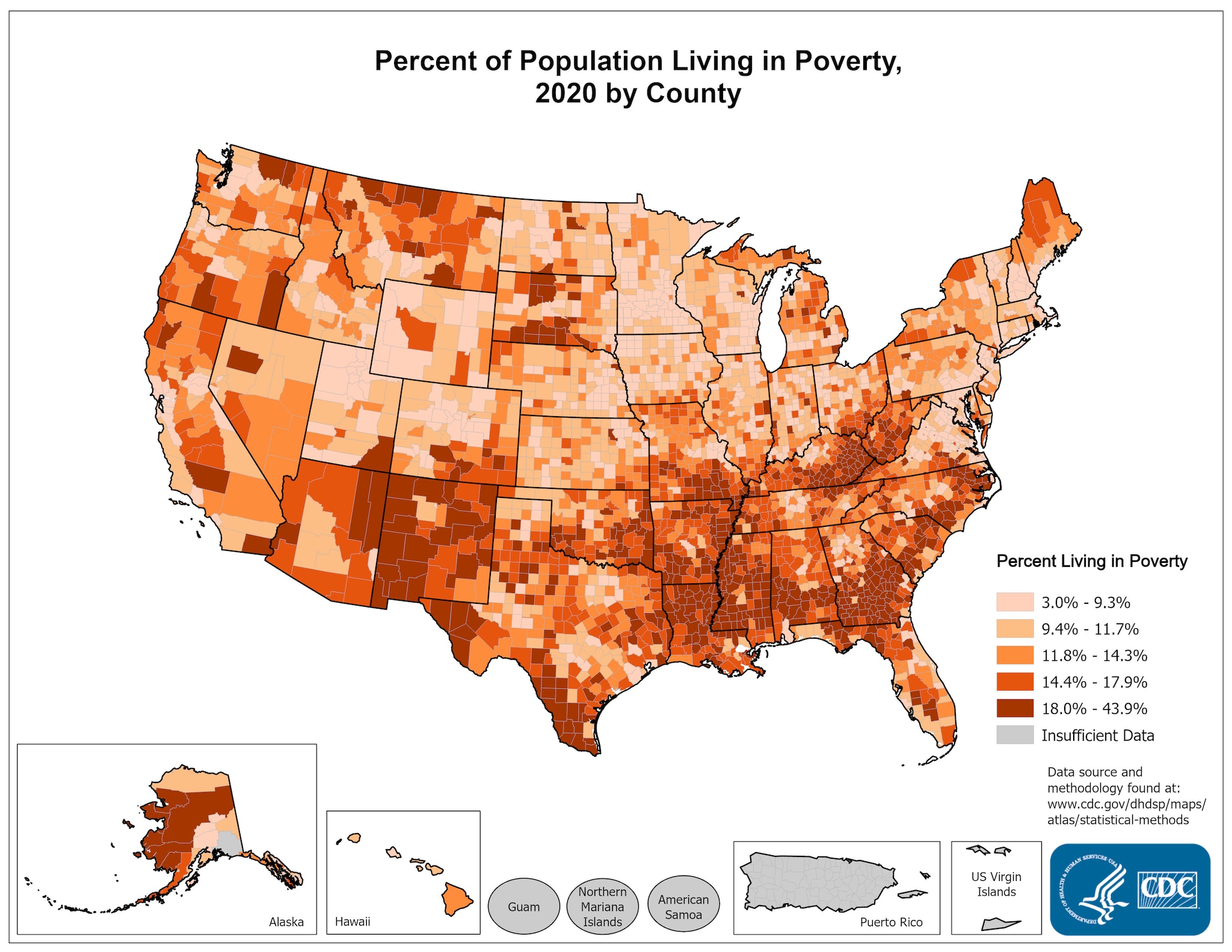
https://www.cdc.gov/dhdsp/maps/sd_poverty.htm
I'm not sure where to begin; it's been a while (and feels like longer...). This blog post is actually my first for 2017 - a testament to the craziness of the last three months. It's also creeping dangerously into annual Live Below the Line territory. For those of you just joining us, each year since 2012 I've participated in this challenge, where for one week you eat on a budget at the poverty line and raise money for a charity working on issues related topics. Strikingly, the topics on tap each year - poverty, income inequality, food security - have stayed relatively stable. While this suggests that we're just not getting it right when addressing these insidious problems, the injustice of it all makes me increasingly frustrated.

What do I mean? Well for one, the most poor and vulnerable have the least say over decisions that could make their lives better. What is happening in the US right now is an excellent example of how politics can rapidly turn the tide. As president, Obama passed healthcare reform, tax benefits for the lower income brackets, and ramped up anti-poverty spending (e.g. food stamps), arguably doing more to reduce inequality among Americans than any previous administrations. It's hard to imagine any of this being particularly unpalatable, and yet barely a breath after power shifts we see tax breaks for the wealthy and budget cuts to social support programmes. According to an Atlantic article, "it will be much hard being poor in America"...while the government doesn't directly control economic growth, its policies determine "how growth is shared."

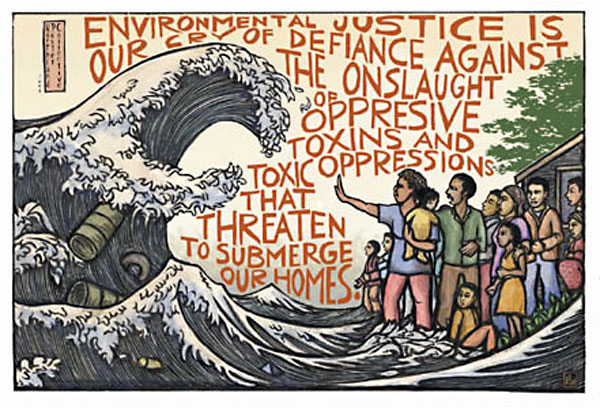
http://www.columbia.edu/cu/EJ/casestudies_domestic.htmlThat's just the short of it. There are quite a few worries about what the Trump presidency will mean for the poor further afield. At present, the US contributes 22% to the UN budget and 29% of global peacekeeping efforts. An 'America First' mentality and a budget proposal that slashes foreign aid expenditures may have serious consequences for some of the most impoverished in the world. It's still not really America first, though, is it? Is rolling back environmental regulations that hold companies accountable for water and air pollution, easing protections on endangered species, and flat-out denying combating climate change is worth a nickle really making America a better place for the majority of citizens. Because environmental degradation often disproportionately affects the marginalized and minorities, this weakening of the environmental protection is expected to have implications for social justice

While I suppose society simply weathers the ebb and flow of political inclinations, we must acknowledge the collateral damage. Live Below the Line runs from 1-5 May this year in Oz, supporting Oaktree, a youth-led organization that aims to alleviate poverty. Check out my fundraising page and keep tabs on this year's Live Below the Line challenge.

What happened during LBL in...