Pages

Saturday, October 30, 2010

Produce of the Week: Cauliflower


It has been quite an eventful weekend. Between the insane Rally to Restore Sanity, running club, and working the farmers market, there has been little time to veg (haha). However, between all the fun and games (and excessive chocolate eating/baking that we will discuss in upcoming blog entries), I managed to look into one of my favorite produce items.

Cauliflower, the brassica that stole my heart. Named for the latin terms cabbage and flower, cauliflower happens to be of the same species as broccoli, kale, and brussel sprouts. Cavofiore (same translation) is a Mediterranean veggie through and through, originating in Cyprus probably around the time of the Romans and settling very comfortably into Italian cuisine. Mid-16th century saw chouxfleur make its way in France, where it became quite a delicacy. By the early 19th century, the white heads of cabbage flowers had made it over to North America!

While a cold-weather crop (November 1st and chilly...), cauliflower is also extremely sensitive to weather conditions. It is hard to grow, which could be why it's not the cheapest veggie at the farm stand. That said, I am so much in love with this vegetable, I am willing to fork over the cash. So, what do I do with mon petit choux fleur?
As with most vegetables, I like to stick cauliflower - drizzled in a little olive oil and salt - in the oven on 375F for 30 minutes or so. But there are so many other wonderful uses for cauliflower:
101 Cookbooks presents a lovely sauteed simple cauliflower recipe.
Smitten Kitchen has a recipe for cauliflower, almonds, capers, and raisins.
Aloo gobi + peas from NY Times!
Cauliflower mashed is also fantastic.
Diet, Dessert, and Dogs has a really interesting Cauliflower Soup recipe.
And I have to say, I am exceedingly curious about these Cauliflower Cookies!

On a parting note, I wanted to let you all know that I am attempting to participate in Vegan MoFo 2010. This means that I will be attempting to post 5 times a week...eeps! I have some ideas, but beware that the posts may be slightly shorter and potentially less substantive than my usual posts (but collectively, they should be the same). Let me know if you have any requests or suggestions!
Thursday, October 28, 2010

It's the Great Pumpkin Holiday!


Oh, Good Grief! What a day...

While the other great pumpkin holiday is still close to a month away (yes, Thanksgiving, that's you), All-Hallows Eve is tomorrow. I did a bit of digging on this holiday, seeing as I only know it from a superficial, trick-or-treat standpoint. Generally considered to have evolved from the Celtic end-of-summer festival, Samhain. It was both a period during which the realm of spirits opened to the world of the living, and a day in which to take stock of food supplies for the winter. Very practical.

At present, lit-up goolish grins stare out from the orange globes that decorate household stoops. While traditional Irish jack-o-lanterns were made out of very large turnips, North Americans adapted a harvest tradition of carving pumpkins to suit this imported holiday. Upon closer scrutiny, Halloween is really a harvest festival just like Thanksgiving. We celebrate autumn crops of winter squash, corn, and apples. Even the custom of dressing up finds its roots in the harvest, with masks operating to ward off demons that brought droughts and destruction to crops.

Let me transition from that little bit of food-for-thought to something tasty to complement the weekend's festivities. While you can make pumpkin butter, pumpkin pie, pumpkin soup, and pumpkin curry, I find it hard to pass up a good old-fashioned pumpkin muffin. Here's my latest creation to sink your teeth into.
Pumpkin Hazelnut Muffins

1/2 cup almond milk
1/3 cup oil
1 tbs cider vinegar
1 cup sugar
1/2 cup fresh cooked pumpkin
1 tsp vanilla
1 1/2 cups flour
1/2 tsp salt
1 tbs baking powder
1 tsp cinnamon
1/2 tsp nutmeg
1/2 cup chopped hazelnuts (raw or toasted)

1. Whisk together milk, oil, and vinegar. Let sit for a few, and then whisk in your sugar and vanilla until the mixture starts to emuslify.
2. Mix in pumpkin. Follow this with the whole gamut of dry ingredients. Finish the batter off with the addition of hazelnuts.
3. Portion off into a dozen standard muffin cups, six giant ones, or a couple dozen mini ones.
4. Bake anywhere from 15-35 minutes (depending on size) in a 350F oven.
5. Best enjoyed warm...perhaps with a dollop of nice dairy-free vanilla ice cream...

Boo!

Friday, October 22, 2010

Produce of the Week: Taters

Mashed, baked, roasted, fried, this starchy tuber can find its place in just about any dish, and any cuisine. After a long hiatus from my weekly produce updates, photos, or regular entries, I thought I would reenter the blogging scene with a friendly face. If anything, potatoes are a comfort food to which many people turn when they need a quick and easy meal or snappy side dish. The role of potatoes as a staple go much deeper than our modern, everyday use, though.

Domestic potatoes date back 4,000-5,000 years in the southern region of Peru, but this tuber in the nightshade family has been consumed by people for at least 10,000 years! As with most plants hailing from the Americas, the potato was first introduced to European diners by the Spaniards, during the 16th century. So popular and easily cultivated was this crop, that it became a staple, with the classic example being Ireland, whose fate rested essentially on a single variety. Read more about this tragic failing and the Irish potato famine of the 1840's.
While we now rely on a very limited gene pool for 99% of our potato needs, there are endless varieties (well, approximately 5,000), with hundreds found in single valleys of the Peruvian Andes. Much of the genetic diversity of this ancient plant still exists, but our present cultivation tactics foster "efficient" downsizing of diversity. Potatoes rank fourth among the major crops grown in the world, after corn, wheat, and rice. A vast pool of information exists on the history and present cultivation of potatoes, so explore as you see fit.

As I have eluded to already, there is a wealth of uses for potatoes, as there is also an abundance of varieties...even available in our humble farmers markets.

Three Potatoes, Three Ways

1 small purple potato (I will admit to living in ignorance of the variety...)
1 small pink potato (I used early rose, but there are some varieties with pink flesh!)
1 small yellow potato (German butterball was my choice, but there are plenty of choices)
Olive oil to coat the pan
Salt to taste
Nutritional Yeast
Garlic Powder
Pesto (that you made during the summer and froze, right...?)
Rosemary

1. Preheat oven to 400F. Coast a baking pan generously with olive oil.
2. Purple potatoes - just slice thinly (but not potato chip thin) and stick on the pan with a little sprinkle of salt. Consume with pesto.
3. Pink potatoes - simply slice thinly, as with the purples, layer on pan, sprinkle with salt and rosemary.
4. Yellow potatoes - mix yeast, garlic powder, and salt on a plate. Coat each side of sliced potato in mixture. Lay out on baking sheet.
5. Bake 25-30 minutes until a nice crust forms, but the insides are soft and cooked through.

Wasn't that easy? Well, if my roasty potato array didn't quite meet your needs, here are some other recipes from around the blog-o-sphere that might:

Heidi from 101Cookbooks once again delivers with an Autumn Potato Salad and some Kale Mashed Potatoes.
Smitten Kitchen has a lovely recipe for Potato Rosemary Bread (brush in olive oil for a beautiful glow).
Sweet Beet and Green Bean serves up Potato Leek Soup (I opt to leave out the non-dairy milk).
Go Indian-style with a curried version.
And of course, no potato page would be complete without a gnocchi recipe (I like adding salt, and using AP flour).

So, enjoy the potatoes as they roll in. Store them in a cool, dark place. And compost them if they turn green-ish (well, it's actually only toxic if you eat an exorbitant quantity of potatoes...)

Friday, October 15, 2010

Blog Action Day 2010: Water


Water is one of those resources that we tend to use on a daily basis without a moment's thought, complain about when it comes raining down from above, and yet require to support the systems that keep us alive. One of the sectors that uses and impacts water in large quantities is agriculture, our food source.

Normally I would expound upon the exorbitant water uses of certain crop and livestock systems, like paddy rice and beef cattle. If you are interested how much water that chunk of cheese is costing you, check out the water footprints of major foot items. I am also not going to dwell on the potential wars to be fought over water as drier regions become drier and drinking and irrigation water becomes more scarce.

But I have become newly inspired by a topic I am exploring at work, payment for watershed services (PWS). Yes, I see some of your blank stares. Well, the concept is very simple in theory. First of all, according to the US Environmental Protection Agency, "a watershed is the area of land where all of the water that is under it or drains off of it goes into the same place." So, when we talk about PWS, we are interested in finding financial mechanisms to make people who impact that area of land inclined to keep it healthy and functional.

Farmers use all sorts of herbicides, pesticides, and fertilizers (not to mention the water itself) that runoff the land and into waterways. The 'cides then poison aquatic plants and animals. Fertilizers provide nutrients that are often limiting in the water, which in turn spur growth of algae and the like, using up all the oxygen and killing off the organisms that usually chill in the waterway (eg. the dead zone in the Gulf of Mexico). However, the impacts are often downstream and standard farm practices are established and appear to make economic sense.

This is where PWS comes in. Through incentive schemes, farmers are more inclined to adopt ecologically friendly land management practices. Approaches range from government payments to implement conservation measures such as buffer zones or more efficient input/chemical applications to eco-certifications. The classic example is how restoring the Catskills-Delaware Watershed saved New York from constructing a water filtration facility. Another interesting take is the Salmon-Safe Farm certification sweeping the Pacific Northwest. Because fish spawning is such an integral part of the economy and culture of the PNW, this label is really starting to grow, ensuring that farms are more efficient irrigators, restore streamside vegetation, and use less chemical inputs on the farm.

For more on this emerging market, check out this major publication at Ecosystem Marketplace. And don't forget to sign the petition to bring safe drinking water to the world's poor!

Sunday, October 10, 2010

Happy Belated Birthday Blog!

Wow, time flies. While I technically started this blog two years ago in mid-September, MMM's current manifestation really turned a year old yesterday! I wish I could say that cakes and streamers and general hoop-la was involved, but alas, yesterday I was otherwise engaged.

As you, my lovely reader know, I recently moved out to Washington, DC for a two-month contract, started a new job a week ago (sustainable ag, baby!), and then moved on Saturday! But that's not even my excuse for missing my dear blog's birthday. Yesterday, following the most enjoyable five hours of my week, working the farmers market, I proceeded to spend the rest of the day at IKEA, gazing ever-so-longingly at all the beautiful kitchen apparel, in search of bookcases. We definitely took the scenic route through the store, but when I go back this week to get the rest of the necessary shelfage, it will be purely business (haha).

So is that it? Excuses are going to form the backbone of your blog entry today? Well, kids, I am dreadfully behind - have not completed a Daring Bakers challenge in two months or Pies with That - but I will include a dessert that I helped concoct on Friday but can take no credit for the creative mind that dreamed it up (except for the vegan substitutions...)

Strawberry Shortcake Shake

1 pint vanilla non-dairy ice cream (I like So Delicious fruit-sweetened)
1 pint strawberries (if you are lucky, you can find some end-of-season berries at the market)
8 oz dark chocolate bars (70%+ for best health benefits)
1 sleeve of graham crackers (or half a recipe of home-made gluten-free vegan crackers)
1/2 cup non-dairy milk (I prefer plain almond)

1. I would do this in two batches, unless you have a massive blender. Pour in the milk. Add strawberries...perhaps sliced or smashed depending on how strong your blender is. Pulse a few times.
2. Add ice cream. Pulse until pink.
3. Add chocolate bar broken up. Pulse until you get speckles.
4. Add crumbled graham crackers. Pulse until desired consistency.
5. Pour and consume. I recommend a small spoon, but you can also drink it.

No photos, but this was a solid ending to the dinner party my friend and I put on last Friday!

And this Friday is special because it is the second blog action day in which I have taken part. Our theme this year is water, so stay tuned to learn more about water and agriculture! Also, more adventures to ensue as I settle into my new kitchen!!
Petitions by Change.org|Start a Petition »

Tuesday, October 5, 2010

Your Morning Cuppa

Photo via prince_tigereye
♪ The best part of waking up, is Folgers in your cup ♪

Many of us grew up hearing this little jingle on the TV, but few (if any) of us considered the extent of the impacts that a cup of Joe has on the environment and people. Coffee is an interesting case study of a plantation crop that has wreaked havoc on ecosystems and local human communities in the tropics for decades, but actually has the potential to be an integral part of diverse and vibrant agro-ecosystems.

Now you've heard me go on about chocolate and how the ethics of consumption depend largely on how your cacao is grown and processed. Coffee presents many of the same challenges and benefits. Acting as the foundation for the livelihoods of 25 million people's, coffee production now covers an area larger than the size of Portugal.

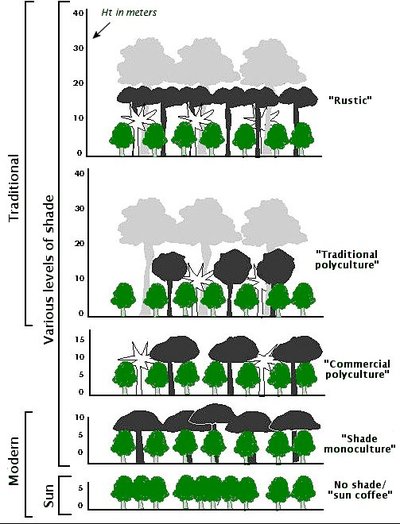
Modern coffee plantations capitalize on the rapid growth and high yields resulting from direct sunlight afforded crops in monocultures, with no canopy of trees. Besides the obvious downsides of habitat loss, these systems also quickly degrade as soil erodes and loses nutrients rapidly. However, traditional production methods capitalize on the nature of this understory shrub or small tree by leaving the forest intact.

A month back, NPR host Guy Raz interviewed UC Berkeley (beat Cal) researcher Shalene Jha about how coffee cultivation can actually promote biological diversity. By maintaining a forest canopy, habitat for migratory birds, protection for essential pollinators, deterrents for pests, and water/soil filtration process are preserved. This in turn, fostering high biodiversity, also supports healthy crops and increases the resilience of such food systems! So scour the shelves of your grocery store for shade-grown coffee or google it and proceed to be overwhelmed. More and more manufacturers are jumping on board...well, maybe not Folger's.

Food for thought: Caffeine is actually the toxic substance meant to ward off seed predators in the wild...similar to nicotine in tobacco plants.

Learn More:
Maps: Coffee-Producing Regions via National Geographic or Conservation International