Pages

Saturday, May 28, 2011

How NOT to Make Pesto


Tonight's post started in a very different place than it's ending. I was going to regale you with kitchen garden history today, which I am sure is fascinating. Then we were going to talk about what's growing on my back porch - basil, oregano, lemon thyme, mint - despite the lack of space and sunlight (photos are deceptively sunny).
I had some tasty herby evening cooking planned - caprese salad (minus the mozzarella), basil pesto, and a tofu lemon thyme souffle...I never made it to the souffle. And here we come to my cautionary kitchen tale, a warning to all users of hand blenders.
I won't go into the gruesome details, but suffice it to say my finger ended up in an intimate relationship with some sharp blades. After screaming my head off for two minutes, applying pressure to the mauled index finger, and calling 911, I spent the next three hours checking things off my list of first-time activities. First ride in an ambulance, first visit to the hospital (aside from being born) for my own medical needs, first stitches. The evening was not quite as relaxing and restful (nor productive) as expected, but it could have been much worse. Hospital traffic was surprisingly light, the doctor and nurse were very nice, and I watched a good portion of Anchor Man.
So the moral of my story is simple: don't put your finger in an immersion blender while plugged in. For those of us who spend a good amount of time in the kitchen and have come to feel overly comfortable and confident, some times we need a jarring wake-up call to bring back the realities of kitchen safety. Blades are sharp; ovens are hot; food can spoil; and when a kitchen junkie's judgement grows lax, she may count her lucky stars to escape with a few deep lacerations (and four stitches) rather than one finger short.

It's been a long evening, so I will live you with that thought to mull over (and comment on).

Friday, May 27, 2011

Disappointment turned Delicious

When life gives you lemons, make lemonade. When 90F weather and a bumpy bike ride give you melty, smashed, and mangled cupcakes ... make cake bonbons! My previous post discussed my dislike of waste, so these have become my fallback for failed baking missions.

The original idea was brilliant. Strawberry and rhubarb have recently entered the seasonal produce scene, mixing up the sea of green that dominated for the majority of April and May. Going with a slightly more portable version of a favorite pie, I opted to bring a strawberry rhubarb cupcake with a pretty pink strawberry frosting to one of my office's social gatherings. And though they both tasted lovely (particularly the batter...), I was too embarrassed by the disaster that arrived at my office on Tuesday morning (not pictured here).
Isn't it beautiful? Filled and topped with a sweet fruity creme. Alas, it was not to be...

So the cupcakes bounced back home in my bike basket, destined to be mashed together with the frosting, and rolled into scrumptious little rosy orbs. But with what to cover them? After eyeing Vegan Yum Yum's petit fours recipes for a year now, I thought I would go with the associated fondant recipe (linked below). My other option was Ricki's raw white chocolate coating on Diet, Dessert, n Dogs, but I didn't have all the ingredients. They turned out pretty well, besides the slight granular texture of the fondant. But then they had to travel to work in 90F heat...
They are even prettier than the cupcakes; and tastier too!

You've probably gathered that this did not turn out as anticipated. The melty soup that arrived at my office was nothing like the bonbons that left my apartment (fail #2). My coworkers still consumed a few, and said they enjoyed them thoroughly (they are so sweet!), but overall my cake adventures were utter disappointments. If I learned anything from this experience, it is to bring something indestructible to the office...biscotti, anyone?

Ruby Rhubarb Cake
1/3 cup oil
1/3 cup soy milk
1/3 cup water
1/3 cup sugar
1 1/2 cup AP flour
1 1/2 tsp baking soda
1/2 tsp salt
1/2 tbs apple cider vinegar

Strawberry Frosting
7oz silken tofu
1 tbs coconut oil
1/2 cup confectioners sugar
1/4 cup strawberries
water from boiling two beets condensed to about 1 tbs


1. You guys know the drill...mix and bake the cake/cupcakes. 350F oven, 25-30 minutes. Let cool. Food process all of frosting ingredients. Refrigerate frosting.
2. Frost, bike to work with cupcakes in basket, mourn the loss of a well-frosted dessert, bike home, and smush (is this not a real word?) cupcakesfrosting (yes, this is meant to be one word) until they form a nice, uniform-ish dough.
3. Roll into spheres of desired size. Freeze.
4. Mix up a batch of coating. Somehow get it to cover your frozen cake balls. This is an art I still must master. Good luck.
5. Place on wax paper. Ideally top with something reddish and edible. Back into the refrigerator they go. Serve cool...not after an hour in the heat!
Do you have a good recipe for a vegan, non-dark-chocolate coating for bonbons, truffles, and cake pops?

What is your technique for coating truffles, etc?

Also, help me fundraise for a yogathon during the month of June! And don't forget to check out Slightly Indulgent Tuesdays!!!

Sunday, May 22, 2011

Dressed to Impress


I don't generally care for food fads. The frozen yogurt craze of a few years ago didn't faze me; I had already ended my relationship with TCBY before the hype even began. Cupcakes, while beautiful, never really appealed to me (I was always more of a brownie person, myself). But I think I may have found one that suits my tastes. Waste is one of the most grievous sins in my book, whether that is in the form of energy (beyond one's bodily power), time, food, or whatever. Well, a person happens to have a half dozen cupcakes meant for a potluck that she didn't attend, and doesn't plan on consuming all the baked goodness, what else is there to do but compost the lot? Ok, you could make a trifle, but the newest baked good craze may offer an even more impressive-looking solution.

Cake pops. Yes, the mini cake-on-a-stick coated in something wonderfully sugary made it onto the food blog scene a little over three years ago now (thank you Bakerella). They provide the perfect outlet for extra or stale cake, really only require frosty or something else gooey and sugary, and keep fairly well as they are coated in a chocolate exterior. But kids, you haven't made it to the big league until some bigwig like Starbucks takes you under its wing. For cake pops, their time in the spotlight has finally come. (but I wouldn't recommend the commercial version with a laundry list of ingredients over a simple homemade batch).
How did my first attempt at this fun bit-sized treats go? My coworkers seemed thoroughly impressed and enjoyed them immensely. If ever I want a showy dessert that's not too difficult (and very transportable), these may be my new go-to.

Choco-PB Cake Pop
1 boring whole wheat cake, crumbled
1/2 cup peanut butter
1/2 cup soy milk
1/2 cup sugar

3/4 cup chocolate chips or 4 oz dark chocolate
crushed peanuts to garnish

1. Heat soymilk and sugar over medium-high heat until sugar starts to caramelize. It should start to boil, bubble, and rise in the pan. (you can also use 1 cup sweetened condensed milk if not vegan and in a pinch for time). Turn off heat and then add immediate to your peanut butter. Combine thoroughly.
2. Now you can mix that peanut buttery goodness with your cake crumbs until the goo has been evenly distributed. Let cool in fridge. Then for little balls about 1 inch in diameter. Stick on wax paper on a baking sheet and put back in the fridge.
3. Melt chocolate in a double broiler (will keep it melty the entire time you are dipping) or in the microwave. I had trouble coating already skewered cake balls, so you can always dip them first like you would truffles and then put the lollipop stick in. Sprinkle with nuts.
4. Place back in the refrigerator for about an hour until completely hardened, and then store in the fridge until consumed!

For more vegan cake poppage, check out Vegan Culinary Crusade, Veronica's Cornucopia, and Diet, Desserts, and Dogs. Also, while I'm not sure how slightly indulgent this recipe is, it's going up on the Slightly Indulgent Tuesday page at Simply Sugar & Gluten Free!

Are there any food fads that you fancy? Any that you refuse to take part in?

Celebrate Diversity!

Forest edge in southern Mexico

While we confront biological diversity (consciously or not) every day, today is the office International Day for Biological Diversity, and this year the theme is forests! Unfortunately, the United States is not a signatory to the Convention on Biological Diversity (CBD), and thus you may not have heard too much on the topic.

First, what is biological diversity? According to the International Union for the Conservation of Nature (IUCN), biodiversity is "the variability among living organisms from all sources including terrestrial, marine and other aquatic ecosystems, and the ecological complexes of which they are part; this includes diversity within species, between species, and of ecosystems." I like to think of biodiversity as out planetary insurance policy. Our understanding of the complex biophysical and chemical processes that underlie the natural support system (ie. food, clean water, breathable air, etc.) is so limited that it is essential to preserve as many options as possible for Mother Nature.

This can sound very fluffy, so let me provide an example from agriculture. We recently explored the wonderful world of bananas. Well, I failed to mention that up until the 1950's a single variety, the Gros Michel, comprised the majority of the commercial banana market. When Panama disease spread through plantations, the banana was essentially driven to extinction. The industry was only saved by replacing the susceptible banana with the less desirable Cavendish, a resistant variety. Now, the essentially genetically identical bananas are facing a new strain of the virus, with little research into diversifying the banana options. New York Times ran an article on the dilemma a few years back.

As food and nourishment is such an component to life, agrobiodiversity attracts particularly strong interest from the science and development communities (FAO). This subset of biodiversity is actively managed by farmers, constitutes products for human consumption as well as the systems on which these rely, and is entangled in culture and tradition. Diversity within our agroecological systems is critical for adaptation and long-term viability of agriculture. It provides a base for research into new varieties - drought-tolerant, pest and disease-resistant, higher yielding, etc. - and allows farmers not to put all their eggs in one basket, so to speak (IUCN).

Finally, let's talk forest agrobiodiversity. The Platform for Agrobiodiversity Research (PAR) emphasize how critical forest products, including food, to our day-to-day survival. Even beyond smallholder farmers who combine small scale cultivation with utilizing the diversity within a forest - from food (tree fruit, nuts, etc.), to fuel (wood), to medicines - forest ecosystem functioning (largely as a product of maintaining biodiversity...) provides services essential to food cultivation such as water filtration, pollination (see bees), and micro-climate regulation. So if you want something concrete to think about for forest diversity, dwell on your coffee, chocolate, mangos, cashews, bananas, etc. But you can also view the role of forest diversity on a deeper level as being integral to sustaining life on this planet.

Next post I propose to talk more about food and less about agriculture! Stay tuned for PB Cake Pops and Ruby Rhubarb Cake!

Sunday, May 15, 2011

It's Fair (Trade) World After All

At least we all wish it were. Many of the products we consume come from questionable origins, in which the environment and local people that are most directly impacted by our purchases get the short end of the deal. Bananas, those tropical fruits that form the basis for many school lunchboxes, smoothie bars, and cartoon pranks, have a history of social and environmental mistreatment.

Banana plantation near Ranomafana, Madagascar

Banana cultivation goes back at least 7,000 years in Southeast Asia. Over time, the fruit spread out into Africa, hitting Madagascar first. However, bananas were not widely known or consumed in Europe and North America until the 19th century! Plantations were thus largely a New World phenomenon, as a market in the north became available with refrigeration and more efficient rail transportation. The concept of a "Banana Republic" was born around this time, stemming from the large agribusinesses begun by railroad tycoons (the precursors of Dole and Chiquita). Remembered for the unequal distribution of wealth, a form of imperial domination, and political corruption, the period of the Banana Republic incited rebellion and a massacre that spurred rebellion and violence. While the situation for workers improved, trade policy fostered a supportive environment for large agribusiness rather than smallholder farmers. And thus we come to the need for measures such as Fair Trade designations.

Chiquita, the large agribusiness that holds a quarter of the global banana market (2007; UNCTAD), was recently certified by Rainforest Alliance. And in the past few years, Dole, which also comprises about a quarter of the banana market, began selling Fair Trade bananas certified by Transfair. While this movement towards corporate social responsibility (CSR) appears to be a step in the right direction, years of justified distrust on the part of many environmental groups and conscious consumers has led to skepticism over whether these certifications are anything more than "greenwashing."
See the banana plants in this mixed agro-ecosystem landscape? A mix of forest, rice paddies, banana, and homesteads lends itself to higher biodiversity, maintained productivity, and sustained ecosystem health.

Whether it's greenwashing or not, the awareness around the production of products like bananas has grown substantially in recent years. So, while I don't care for cooked bananas (or fostered), I will continue to make my tasty banana, strawberry, kale smoothies. At least in moderation...

Saturday, May 14, 2011

A Thursday Tea-Party

Would you like one lump or two? Or are you more of a honey person? We've looked at both of these sweets individually, but not what goes with the tasty goo. Tea. I don't know about you, but I go through a lot of these steeped leaves.

But tea, despite its touted health benefits, is not as benign as it seems. The documentary, The Bitter Taste of Tea, exposes some of the transgressions of the tea industry. As with many other commodity crops, workers are generally hired temporarily, paid very little, and often exposed to harmful pesticides. On the environmental end of the spectrum, monocrops of tea leaves do not make for very biodiverse ecosystems, and lead to many of the problems other monocultures experience (pests, disease, etc.). For a little more detailed lifecycle analysis, visit this page.

Fair trade primarily seeks to ameliorate some of the social inequities - fair price and working conditions, community development, etc. Sustainability is one component, particularly in how it pertains to the longterm viability of tea-producing agro-ecosystems. Rainforest Alliance, Fair Trade USA, and Equal Exchange, among others, are all striving toward a more equitable tea supply chain.
While there are more and more teas falling under the fair trade label, my cabinet currently houses just the Choice Tea Fair Trade Yerba Mate Mint (it's also a Seattle-based brand)! It is also one of their teas that supports the Jane Goodall Institute (my hero...), which works on chimpanzee conservation and educating and empowering local youth!

So, get some water boiling, pop a tea bag in a cup (or go for a less-wasteful loose-leaf), and enjoy a steam cup of tea! Keep your eyes peeled for future tea parties on My Munchable Musings.

Tuesday, May 10, 2011

Lay Some Shuga on Me...

...as long as it's fair trade! Yes, my faithful readers, sugar too can be fair trade. In fact, the vegan cane sugar I purchase at Whole Foods is! Sporting the vegan label indicates that bone char is not used to bleach the sugar. And the fair trade (or rather the 'Whole Trade') designation alerts consumers that producers on Malawi, where the sugar is grown, receive better wages and use more sustainable practices. While this may seem like a store-brand ploy at first glance, Whole Foods actually partners with third party certifiers - TransFair USA, Rainforest Alliance, and Fair for Life - ensuring a little more confidence in their marketing. Find out about other products that the stores carry under the fair trade label.

Ok, this is not an advertisement for a grocery store, so let's dig a little deeper into cane sugar production. About 70% of global sugar production comes from sugar cane, a tropical grass. It has typically been cultivated in large plantations, in which cane is the sole crop. Decreases in biodiversity, soil health, and water quality often result from the monoculture and degradation of the landscape. I remember the endless fields of sugar cane that used to be rainforest up in the Daintree region of Queensland, Australia...I wish I had taken a photo! Fertilizer and pesticide runoff into the waterways were huge concerns for aquatic wildlife and mangrove ecosystems downstream. World Wildlife Fund put out a report a few years ago on the environmental impacts and best management recommendations for sugar production. In terms of social impacts, fair trade labels and efforts such as the Better Sugar Cane Initiative set higher labor and workplace standards and seek to cut out middlemen that reduce income for producers.

Ok, so the stage has been set. And you know me; I am constantly baking something or other. But this time around, I was leaving in 12 hours and needed to make something small...

So, for a single person dessert, I tried my hand at a very scaled down recipe of these caramel shortbread bars. The caramel was quite fantastic and tasted like a burnt marshmallow (could be due to the fact that I did burn it...). Heat 2 tbs light coconut milk, 2 tbs sugar, 1 tsp vanilla, and a pinch of salt over medium-high-ish heat until it started to caramelize (and maybe burn). Add a 1/2 tsp earth balance or coconut oil. Yum.

While I fell short of the ambitious posting regime for this past week, I still plan to blog about tea and bananas in the coming week. In the meantime...Happy World Fair Trade Day!

Working Up to World Fair Trade Day

Saturday the 14th is World Fair Trade Day! As such, this week's posts will focus on topics relating to fair trade. A fair trade label places the power of choosing socially and environmentally responsible products in the hands of consumers. It promotes economic equity for producers, environmental stewardship, and cultural preservation. Widely recognized now, these certifications seek to internalize some of the costs endured by smallholder farmers and local communities. Yes, you have faithfully endured my discussions of chocolate and coffee, which are probably the most well-know of the fair trading posse. But perhaps let's branch out beyond these two goods - how about honey?

Now, I apologize to any vegan readers who do not consume honey, but my philosophy is that someone will eat it, so let's produce it (or support the bees in production...rather) in the most sustainable fashion. Honestly, for honey, buying it at your farmers market is probably best - you can speak with the bee-keeper, see how he/she cares for the bees, and generally have more confidence in the product. But some of us just don't have access to local honey. Not that fair trade is necessarily any cheaper, but you can find it in a natural food store pretty easily.

Ok, how on earth can honey be fair trade? The idea here is that beekeepers receive a fair price, usually removing the middle-men from the equation. At the same time, fair trade certifications support the idea that protecting hives and surrounding habitat is not only essential for the bees, but the entire ecosystem. In essence, the certification seeks to maintain the pollinators in order to keep productive forests and crop fields, that are biologically diverse and support human livelihoods. Whew. I've been using Wholesome Sweeteners Organic Fair Trade Amber Honey. Sourced from Mexico, the honey has a really lovely rich flavor that surprised me from a commercial producer.

Honey-Kissed Orange Smoothie

1 banana

1 orange

2 kale leaves, de-ribbed

2 tsp honey


Blend all ingredients for a smooth, green, morning treat!


Upcoming products include: bananas, sugar, and tea!

Monday, May 2, 2011

Mango May-Day


Welcome to the month of May. While spring is well on its way and greens are abounding, I'm finding myself facing a new dilemma. All of you are probably well aware that I have an unhealthy obsession with the tropical crop Theobroma cacao. Well, I haven't eaten any chocolate in a week (gasp!) as part of my chocoholics anonymous program (I CAN beat down the nightly cravings), but I have replaced one tropical indulgence with another: frozen mango from Trader Joe's (source: Peru). Now I have to say, it is definitely healthier for my bank account ($2.29 for 3-5 servings vs. 2 servings), and probably better for my overall health, but I still run into the issue inherent in consuming tropical fruits - it comes from so dang far away!

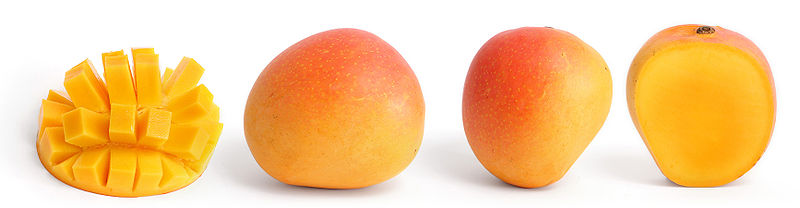
The mango is a tree crop indigenous to the Indian sub-continent, but presently grown world-wide in the tropics. While many local species exist, all commercially distributed mango cultivars fall under the species Magnifera indica. It is estimated that this fleshy fruit was domesticated around 4000 years ago, and as such you can imagine that mangoes are not only economically, but culturally significant through Southeast Asia and the Pacific Isles. Though the fruit is a relatively recent arrival in the Americas, hitching a ride during the 'Age of Discovery' in the 15th and 16th centuries, it now supplies the bulk of exports to North America and Europe (see above map).

Mangoes are suited admirably to weathered, nutrient-deficient tropical soils, thriving in the less-fertile substrate. While it's hard to get info on the sustainability of specific countries' mango production, after surfing the interwebs it is apparent that mangoes follow a similar trend of other tropical commodity crops. Originally understory plants, they are now largely grown in plantations/orchards. Honestly, I couldn't really uncover much about typical practices, so I don't have a good handle on the impacts of mango production ... would welcome any insight! You can find mangoes in fair trade and organic varieties, so perhaps that would be the most environmentally-sound choice available.

But why am I even contemplating mangoes? While at a recent meeting of the agriculture/ development variety, it dawned on me (not for the first time) that the local food "movement" is a double-edged sword. On the one hand, it is a lovely idea for a society to grow, sell, and consume comestibles within a reasonable geographic region. However, the livelihoods of millions of people primarily in developing countries (not to mention entire countries' economies) rely on agricultural commodity exports. Yes, fair trade and organic options probably yield some additional benefits to these people, but it's hard to tell. This is where I struggle. I don't have answers for this dilemma, and vacillate between pro- and anti- tropical produce purchases. What do you think? Does local and seasonal win out over these tropical imports? Is there a balance you try to reach?
One of the reasons mango has been on my mind, is because I increased my consumption of the fruit during my quasi-raw diet week. While I mainly just eat chunks of frozen mango, I tried to branch out for a bit of creativity, with smoothies and this quinoa dish:

Raw Mango Sticky "Rice" (serves 2)
1/2 cup sprouted quinoa
1/4 cup coconut
5-10 drops stevia
1-2 tbs agave nectar
1 tbs ground flax seed
2 tbs coconut milk
1/2 large mango, diced

1. Sprout quinoa (directions are in Ani's Raw Food Essentials). You can also use 1/2 cup coconut milk and 1/2 cup water or unsweetened almond milk to cook quinoa as normal (maybe until slightly softer than usual).
2. If you are going for the cooked variety, you can really just add the rest of the ingredients after the quinoa is done and eat up! For the raw version, I combined all the ingredients, except for the diced mango, in a food processor and whizzed together. Start low with the sweetener, and adjust as necessary. The mango will add a kick of sugar, so err on the side of not sweet.
3. Add mango. Eat immediately or refrigerate for up to a day ... otherwise the quinoa starts sprouting big time and it gets a little awkward to eat.

Happy eating; please consume consciously!

Further Reading:
Recent New York Times Mango Recipes -
Litz, R.E. ed. 2009. The Mango, 2nd Edition: Botany, Production, and Uses. CAB International: Oxfordshire, UK.

Also, check out some other Slightly Indulgent recipes at Simply Sugar and Gluten Free.